


Key Highlights
- KOSPI index plummeted 5.35% Wednesday, crossing 20% decline threshold from June peak
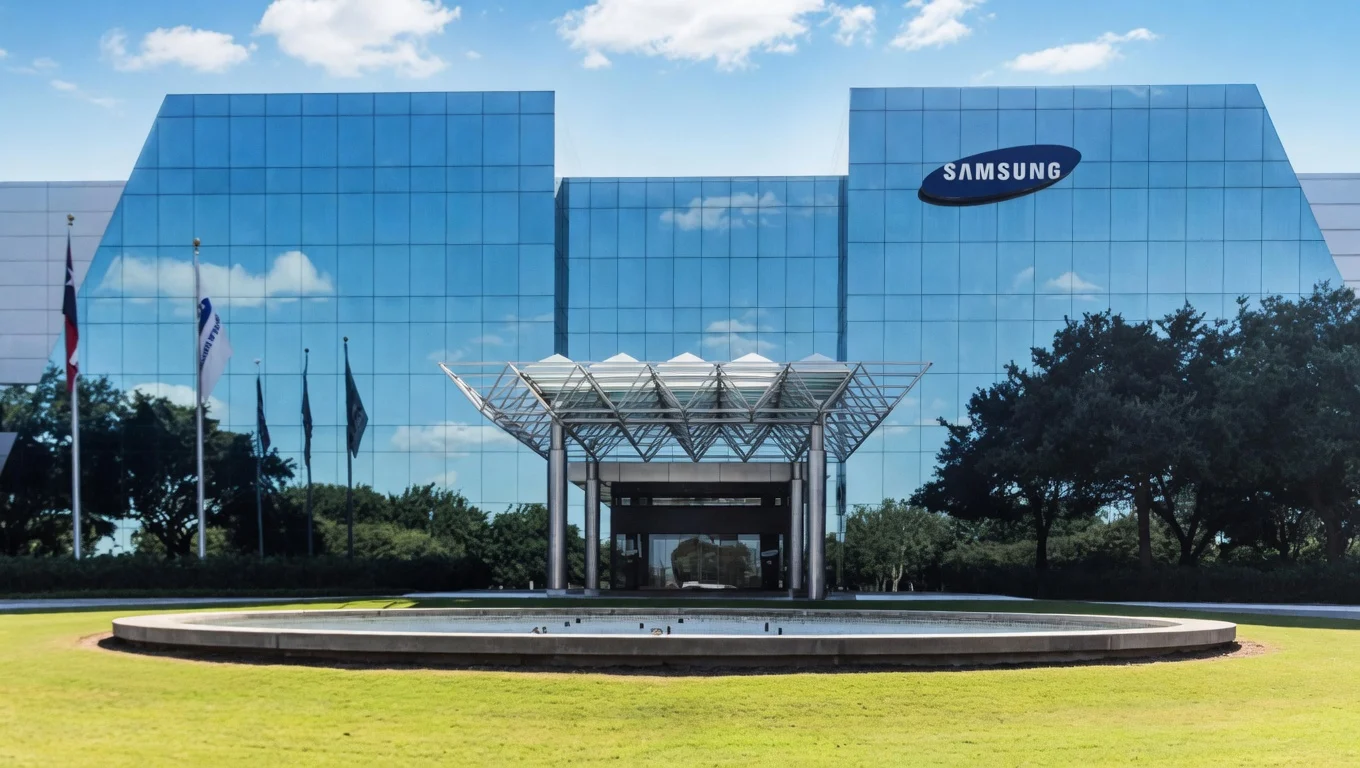
- Samsung Electronics declined 6.3% even after posting record-breaking Q2 earnings
- SK Hynix shares slid 5.7% following previous day’s 6% retreat
- South Korea’s Finance Minister issued caution regarding leveraged ETFs tracking semiconductor companies
- Korean won surged beyond 1,500 per dollar threshold, supported by SK Hynix’s planned American equity offering
South Korea’s benchmark equity index officially crossed into bear market terrain Wednesday following a severe downturn propelled by semiconductor sector losses and mounting skepticism surrounding artificial intelligence investment momentum.
The KOSPI tumbled 5.35% to settle at 7,246.79 points. This represents a decline exceeding 20% from its peak closing value of 9,114.55 reached on June 22, satisfying the traditional bear market threshold.
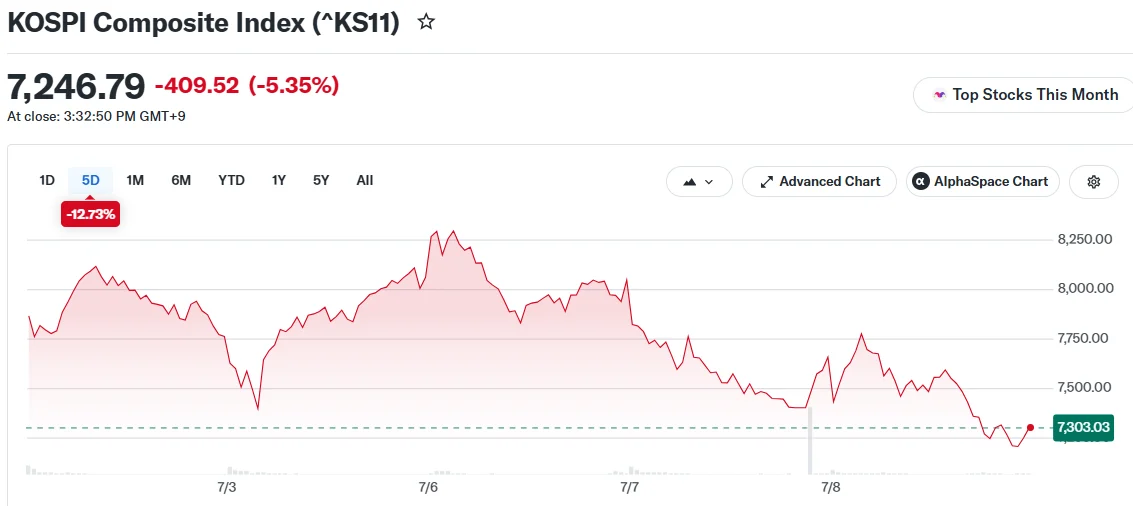
Market activity remained turbulent across the trading session. The benchmark initially gained 1.8% before reversing sharply to tumble as much as 6.1%, activating a “sidecar” mechanism that temporarily halted algorithmic trading activity.
Record Samsung Profits Fail to Stem Investor Exodus
Samsung Electronics dropped 6.3% Wednesday despite unveiling record second-quarter financial results. The concern centered on revenue figures that disappointed elevated analyst forecasts.
This shortfall sparked uncertainty about whether Samsung and comparable companies can sustain the growth trajectory that investors had anticipated. Following a stock price surge of more than 100% over twelve months, numerous shareholders opted to liquidate positions.

SK Hynix similarly declined 5.7%, extending the prior session’s 6% loss. Market sentiment deteriorated further following reports suggesting Apple might source chips from Chinese manufacturers amid South Korean supply constraints, potentially impacting memory chip pricing dynamics.
Leveraged Financial Products Amplify Volatility
Finance Minister Koo Yun-cheol announced enhanced government scrutiny of risks associated with single-stock leveraged exchange-traded funds tracking semiconductor equities. Multiple such products have debuted since May, with elevated leverage ratios intensifying the market correction.
This marked the sixth circuit breaker activation for the KOSPI in 2025, and the twelfth occurrence throughout the index’s history.
Hyundai Motor, which had surged 120% during the preceding twelve months driven by Nvidia collaborations and artificial intelligence initiatives, retreated 4.7% Wednesday.
The Philadelphia Semiconductor Index in America fell 4.7% during the prior session, compounding pressure on South Korean chip manufacturers.
Currency Gains Ground as International Capital Returns
The South Korean won appreciated past the 1,500 threshold, advancing 1.2% to trade at 1,498.5 against the dollar. This marked its most robust level since May 29.
The currency strengthening stemmed partially from dollar liquidation connected to SK Hynix’s forthcoming American equity offering, projected to rank among the world’s largest new share issuances.
International investors purchased Korean equities worth 335.9 billion won Wednesday, breaking a thirteen-session selling streak.
Deputy Finance Minister Moon Ji-sung indicated that pressure from foreign profit realization should diminish during the year’s second half as market dynamics stabilize.
The KOSPI had ranked as the top-performing major international equity benchmark year-to-date before the recent reversal. The index’s decline mirrors a widespread reassessment of artificial intelligence sector valuations.
Get 3 Free Stock Ebooks
Discover top-performing stocks in AI, Crypto, and Technology with expert analysis.
- Top 10 AI Stocks - Leading AI companies
- Top 10 Crypto Stocks - Blockchain leaders
- Top 10 Tech Stocks - Tech giants



