



Key Takeaways
- Despite Iran-related geopolitical tensions, the S&P 500 remains within 1.5% of record territory
- CNBC’s Jim Cramer identifies declining interest rates as the primary force supporting equity markets
- Treasury yields hit a peak on March 27 before reversing course downward
- The Federal Reserve appears likely to view tariff and energy inflation as transitory factors
- Technology shares outperformed while energy sector stocks underperformed despite elevated oil prices
Despite escalating geopolitical tensions involving Iran that have driven crude prices higher, the S&P 500 has managed to recover to within striking distance of its January peak—less than 1.5% away. According to CNBC host Jim Cramer, the market’s resilience boils down to one critical factor: interest rates continue to stay depressed.
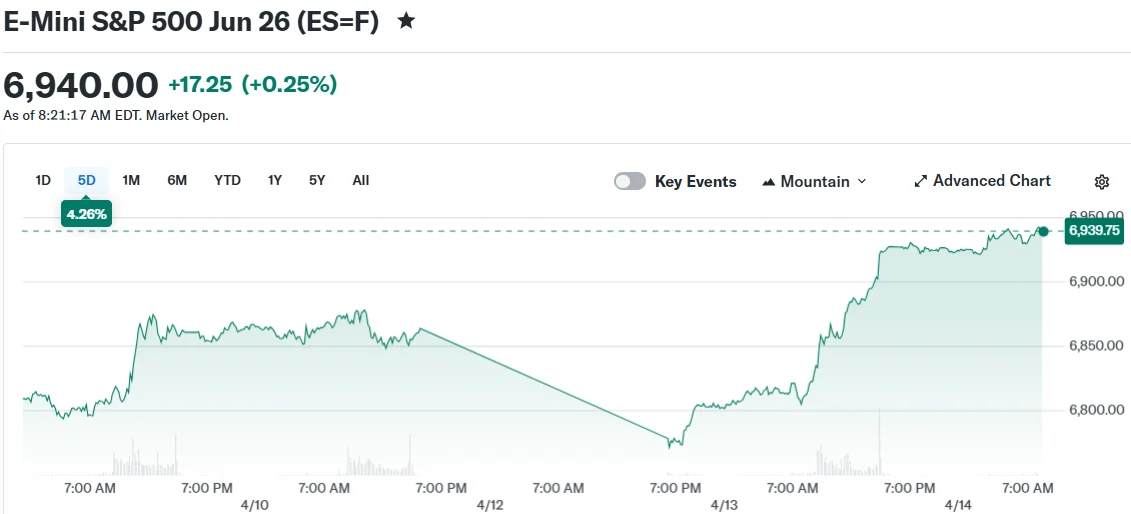
“If interest rates were spiking, this market would be very different,” Cramer emphasized during his Mad Money broadcast.
Following the U.S. and Israeli military strikes on Iran that occurred February 28, Treasury yields initially jumped. However, the 10-year yield reached its zenith on March 27 before beginning to decline. The S&P 500 bottomed out for the year on March 30, subsequently mounting an impressive recovery.
According to Cramer, this sequence of events is far from random.
When borrowing costs decline, the present value of future corporate profits increases. This mathematical reality encourages investors to accept higher valuation multiples for equities. This fundamental relationship has persisted despite crude oil’s ascent amid supply disruption fears surrounding the strategically vital Strait of Hormuz.
Historically, simultaneous increases in oil prices and geopolitical instability would have severely pressured stock valuations. Cramer noted that traditional market patterns are “being disobeyed and ignored” in the current environment.

What Makes This Oil Shock Different From Previous Crises
A significant factor explaining why surging petroleum prices haven’t inflicted greater damage on equities is America’s reduced dependence on oil compared to previous decades. Modern vehicles deliver substantially better fuel economy, while natural gas has assumed a more prominent position in the nation’s energy infrastructure.
“Natural gas, not oil, is our secret weapon,” Cramer explained.
The United States enjoys dramatically lower natural gas costs compared to most global competitors. This pricing advantage helps contain inflationary pressures that might otherwise accelerate during oil price spikes.
Cramer further suggested the Federal Reserve may refrain from treating current inflationary readings as justification for monetary tightening. While tariffs and energy expenses have elevated consumer prices, central bankers could interpret these as transient shocks rather than entrenched inflation.
“The Fed will most likely asterisk these increases as all one-off price increases,” he noted.
Kevin Warsh, President Trump’s selection to succeed Jerome Powell as Federal Reserve chairman, is scheduled to assume leadership next month following Powell’s term expiration. Cramer indicated the incoming Fed regime is unlikely to pursue higher short-term borrowing costs and might even implement rate reductions should inflationary pressures moderate.
Technology Outperforms While Energy Sector Stumbles
Monday’s trading patterns validated Cramer’s analysis. Technology stocks powered market gains while energy sector equities lagged, even as petroleum prices remained elevated.
Cramer highlighted that Middle Eastern geopolitical developments bear no meaningful relationship to profit forecasts for the vast majority of American corporations.
“What’s the Strait of Hormuz have to do with the price-to-earnings ratio of Bristol Myers?” he questioned. “The answer is nothing.”
The 10-year Treasury yield edged lower Monday as equity indexes maintained positions near recent peaks.
Get 3 Free Stock Ebooks
Discover top-performing stocks in AI, Crypto, and Technology with expert analysis.
- Top 10 AI Stocks - Leading AI companies
- Top 10 Crypto Stocks - Blockchain leaders
- Top 10 Tech Stocks - Tech giants



