


Key Takeaways
- Shares of Intel rallied approximately 7–8% Thursday following President Trump’s Truth Social post claiming Apple has committed to partnering with Intel for chip design and production in the United States.
- The President offered limited specifics regarding the partnership, while both Intel and Apple have remained silent without official confirmation.
- Wedbush analysts characterized a confirmed agreement as a “genuine endorsement” for Intel’s foundry operations, though they noted the partnership appears to be in early stages.
- Industry observers believe any Apple manufacturing at Intel facilities would likely focus on older-generation or budget silicon rather than premium application processors, which continue to be sourced from TSMC.
- Over the past year, Intel shares have skyrocketed 464%, bringing the semiconductor giant’s valuation to $608.7 billion.
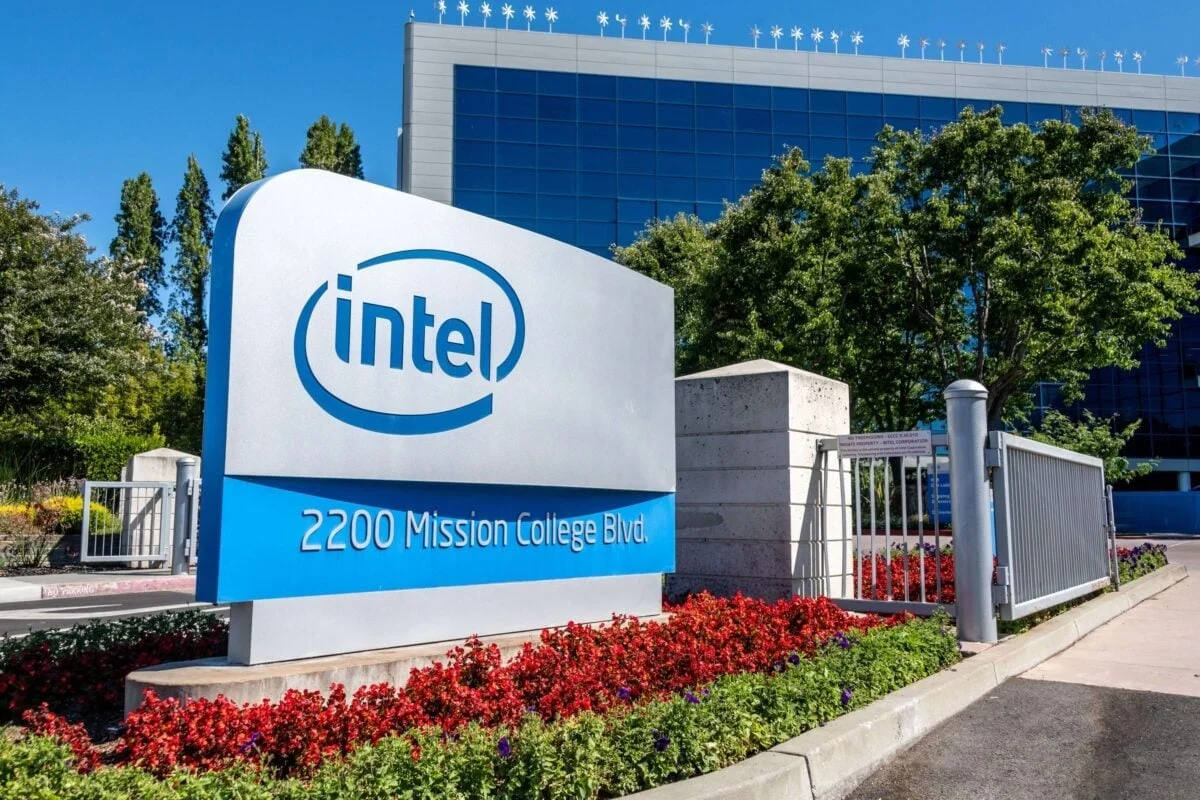
Shares of Intel (INTC) jumped approximately 7–8% Thursday morning following President Donald Trump’s Truth Social announcement that Apple has committed to collaborating with Intel on designing and producing semiconductors domestically.
In his Truth Social message, Trump stated plainly: “Apple has agreed to work with Intel to design and build its Chips in America.” The President positioned the announcement as component of a wider initiative to restore semiconductor production to American shores.
Intel shares climbed roughly $8.86, reaching approximately $129.96 during early Thursday sessions. Apple shares experienced a modest uptick of around 1.3% in premarket activity.
Trump’s statement also mentioned Nvidia and Elon Musk’s Terafab initiative, presenting what he characterized as multiple domestic semiconductor commitments facilitated by his administration.
“I decided to help Intel because we need to design and build our Chips right here in America,” the President stated.
The Terafab initiative, which Trump labeled “the largest Chip Factory in the World,” represents what would be Intel’s foundry division’s first significant external client, as the unit had historically manufactured semiconductors exclusively for internal use.

Both Intel and Apple have refrained from releasing official statements verifying the arrangement. CNBC reported reaching out to both corporations and the White House seeking clarification.
Wall Street’s Perspective
Wedbush analysts characterized a confirmed collaboration as a significant victory for Intel’s transformation efforts under CEO Lip-Bu Tan, describing it as a “genuine endorsement” of the company’s foundry objectives. Securing Apple alongside Nvidia and government-supported initiatives would significantly elevate Intel’s standing as a contract manufacturer.
However, Wedbush emphasized that specifics remain scarce. Trump’s remarks seem to reference a tentative agreement lacking comprehensive details.
The analysts further anticipate that any semiconductors Apple manufactures through Intel would involve mature-node or entry-level chips — not the cutting-edge application processors powering iPhones and Mac computers. Those premium processors are projected to remain with TSMC.
Wedbush reaffirmed its Outperform rating on Apple shares with a $400 price objective. Apple was recently trading near $299.
Tan’s Intel Transformation Strategy
Tan assumed the CEO position in early 2024 and has focused on restoring investor confidence following years of manufacturing challenges and competitive losses to industry peers.
Intel was notably absent during the early artificial intelligence boom. However, a succession of prominent announcements — including Nvidia’s commitment to utilizing Intel’s foundry services — has transformed market perception.
The stock has appreciated 464% during the trailing 12 months, elevating Intel’s market capitalization to $608.7 billion.
The semiconductor industry broadly has experienced strong momentum. The PHLX Semiconductor Sector Index, monitoring the 30 largest domestically-traded chip companies, has advanced 90% year-to-date.
Wedbush observed that the Apple partnership, should it materialize, would enable Apple to broaden its manufacturing ecosystem and decrease dependency on TSMC amid expanding semiconductor requirements.
Trump indicated the Apple-Intel collaboration followed his assistance in securing Nvidia’s participation. “First, we helped bring in Nvidia, and they agreed to build their first level Chips with Intel,” he wrote.
Get 3 Free Stock Ebooks
Discover top-performing stocks in AI, Crypto, and Technology with expert analysis.
- Top 10 AI Stocks - Leading AI companies
- Top 10 Crypto Stocks - Blockchain leaders
- Top 10 Tech Stocks - Tech giants



