


Quick Summary
- The Dollar Index maintained levels above 101.00 while market participants awaited June inflation figures
- Crude oil gains fueled by regional Middle East conflict are weighing on risk-sensitive currencies including the Indian rupee
- Financial markets are assigning approximately 50% probability to a Federal Reserve rate increase in July
- The kiwi dollar led G10 currency gains following hawkish Reserve Bank commentary
- EUR/USD could test 1.10 support if energy market pressures intensify
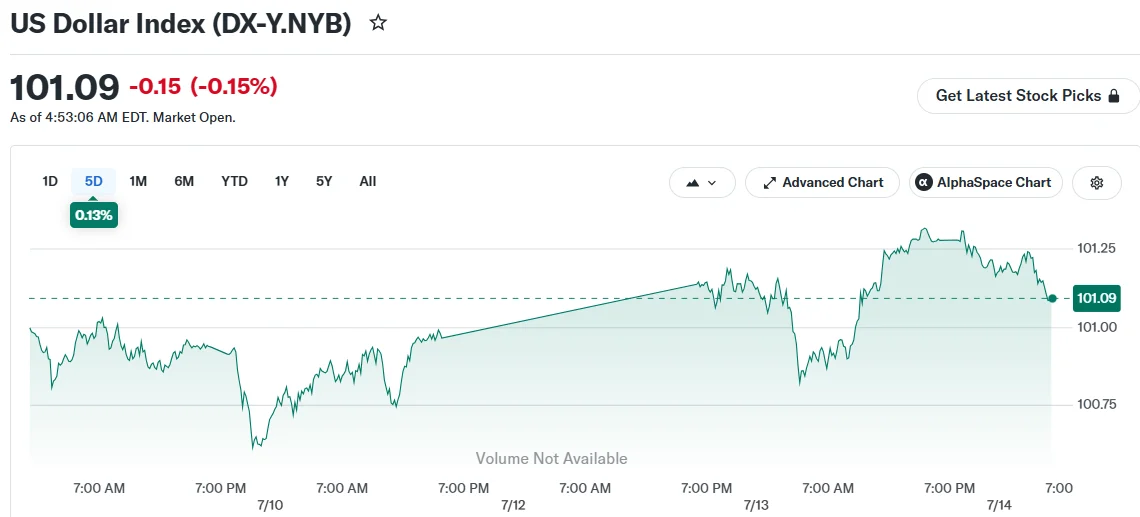
The greenback maintained stability on Tuesday as market participants positioned for upcoming inflation releases while crude oil prices extended gains amid intensifying geopolitical tensions in the Middle East. The Dollar Index hovered just above 101.00 throughout European trading sessions.
Economists anticipate June Consumer Price Index figures will reveal annual inflation moderating to 3.8%, down from the prior month’s 4.2% reading. Monthly headline inflation is projected to decline primarily on reduced energy expenses, though core price pressures hovering around 0.2% monthly suggest underlying inflationary dynamics remain stubborn.
Federal Reserve Tightening Expectations Build
Financial markets are currently assigning roughly 50% odds to a Federal Reserve interest rate increase at the upcoming July policy meeting, with approximately 43 basis points of monetary tightening priced in through year-end. Fed Governor Chris Waller indicated Monday that additional tightening may prove necessary in the near term should core inflation metrics remain elevated.
Chair Kevin Warsh commenced his inaugural House testimony on Tuesday. Additional Fed officials including Barr, Goolsbee, Cook and Bowman were scheduled for public appearances throughout the session.
According to ING analysts, a continued Strait of Hormuz blockade scenario could rapidly push the Dollar Index toward 102.0.

Energy Markets and Regional Conflict Shape FX Dynamics
Brent crude advanced to $84 per barrel on Tuesday, buoyed by continued US military operations conducted for a third straight day on Monday. Iranian media sources reported detonations near Kish, Qeshm, Abu Musa and the coastal city of Bandar Abbas.
US petroleum stockpiles, encompassing both commercial and strategic reserves, registered 730.8 million barrels as of July 3, marking the lowest inventory level recorded since 1984.
The Indian rupee touched a fresh seven-week nadir versus the dollar, with the currency pair advancing near 96.13. Domestic crude futures opened more than 4% higher during trading.
The euro retreated below 1.1400 against the greenback. EUR/USD faces potential downside momentum toward 1.10 should Brent climb to $90-$100 per barrel while European natural gas prices advance to €55-€60 per megawatt hour.
European Central Bank President Christine Lagarde was scheduled for discussions with US Treasury Secretary Scott Bessent on Tuesday and planned remarks on economic projections.
The New Zealand dollar emerged as the strongest G10 performer this week. The currency appreciated approximately 0.8% on Tuesday following Reserve Bank of New Zealand Chief Economist Paul Conway’s comments that additional monetary easing might be warranted should Middle East-driven inflationary pressures prove durable. Markets are currently pricing in 60 basis points of tightening in New Zealand through year-end.
The Japanese yen traded in a narrow range above the 162.00 threshold. Japan’s Finance Minister Satsuki Katayama noted that significant shifts in the asset management landscape could trigger a reassessment of the Government Pension Investment Fund’s allocation strategy.
The British pound stabilized near 1.3350 ahead of UK GDP statistics for May, scheduled for release later in the week.
Get 3 Free Stock Ebooks
Discover top-performing stocks in AI, Crypto, and Technology with expert analysis.
- Top 10 AI Stocks - Leading AI companies
- Top 10 Crypto Stocks - Blockchain leaders
- Top 10 Tech Stocks - Tech giants



