


Key Highlights
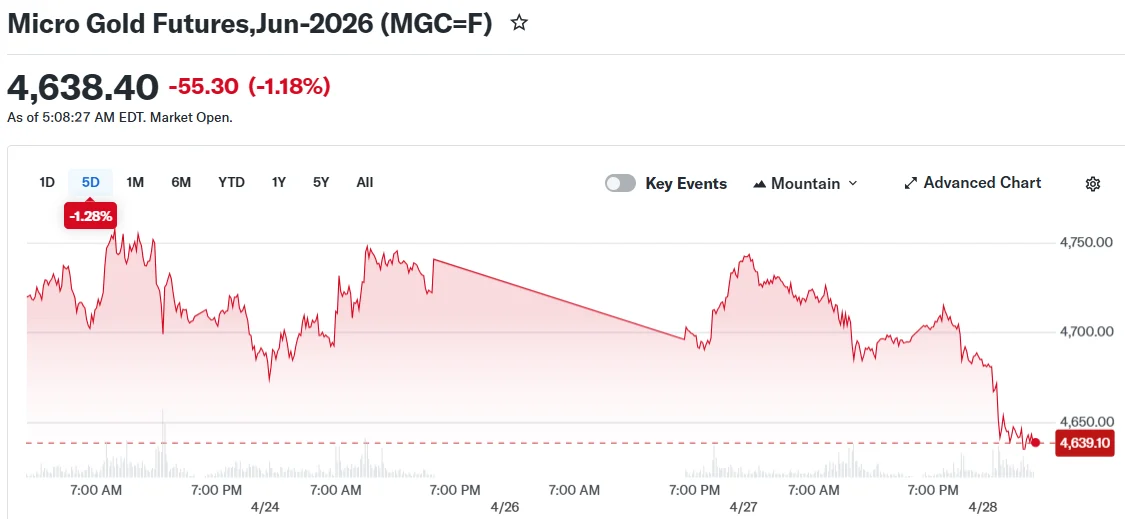
- Gold declined more than 1% to approximately $4,625 per ounce following the breakdown of US-Iran diplomatic discussions
- Tehran proposed reopening the Strait of Hormuz in return for ending the American port blockade, but the US remains doubtful
- Japan’s central bank maintained current rates but issued warnings about inflation pressures from elevated oil costs
- The Federal Reserve convenes Wednesday for what could be Jerome Powell’s final session as Chairman
- The yellow metal has shed approximately 12% in value since hostilities between the US and Iran erupted in late February
The precious metal experienced a significant decline on Tuesday following the breakdown of diplomatic initiatives aimed at resolving the US-Iran military standoff, while global monetary authorities expressed growing unease about inflationary pressures.
Spot gold retreated approximately 1.2% to reach $4,624.99 per ounce during Asian trading sessions. Futures contracts for gold also experienced a similar 1% downturn, settling at $4,646.90 per ounce. Silver witnessed a more pronounced selloff, plummeting 3.3% to trade near $73 per ounce. Both platinum and palladium recorded losses as well.
The Strait of Hormuz, a critical chokepoint for worldwide energy transportation, continues to operate at minimal capacity. Transit volumes through this strategic waterway have plummeted to virtually zero since hostilities commenced approximately two months ago.
Tehran introduced a fresh diplomatic proposal at the start of this week. The Iranian government suggested it would reopen Hormuz on the condition that Washington lifted its blockade on Iranian maritime facilities. The administration is anticipated to deliver its response within days.
Nevertheless, intelligence suggests the Trump administration’s national security apparatus remains unconvinced. A primary obstacle involves Iran’s insistence on postponing discussions regarding its atomic weapons development program, a demand Washington seems unwilling to accommodate.

Diplomatic negotiations over the weekend collapsed when neither party agreed to convene in Pakistan. The timeline for resuming discussions remains ambiguous.
Monetary Policy Decisions Weigh on Gold Markets
Japan’s central banking authority left its policy rate untouched at 0.75% on Tuesday, while adopting a more restrictive policy stance. The BOJ revised upward its price growth projections for fiscal 2026 and indicated that additional rate increases appear probable should inflation prove persistent.
The monetary authority highlighted elevated oil and energy costs as primary contributors to accelerating prices. These remarks created headwinds for gold, which typically becomes less attractive to investors when borrowing costs are expected to climb.
The Federal Reserve concludes its two-day policy session on Wednesday. Financial markets anticipate the Fed will maintain current rates, though concerns exist that the central bank might also adopt a more restrictive tone considering recent inflation metrics.
March price data revealed a substantial acceleration in inflationary pressures throughout the United States. The greenback remained resilient, creating additional challenges for gold.
Powell’s Concluding Fed Session
Wednesday’s Federal Reserve gathering is anticipated to mark Jerome Powell’s final meeting as Chairman. His tenure concludes on May 15.
Former Fed governor Kevin Warsh is positioned to succeed him. Warsh appeared before Congress during confirmation proceedings last week.
Market participants are monitoring this week’s monetary policy announcements across the United States, European Union, United Kingdom, and Canada with keen interest.
Marc Loeffert, a commodities trader at Heraeus Precious Metals, noted that the continuing closure of Hormuz “extends market instability.” He observed that elevated inflation combined with economic sluggishness might provide support for gold over extended timeframes, though immediate prospects remain challenged by expectations of higher interest rates.
Gold has now surrendered roughly 12% of its value since military tensions between the United States and Iran erupted at February’s conclusion.
Get 3 Free Stock Ebooks
Discover top-performing stocks in AI, Crypto, and Technology with expert analysis.
- Top 10 AI Stocks - Leading AI companies
- Top 10 Crypto Stocks - Blockchain leaders
- Top 10 Tech Stocks - Tech giants



