



TLDR
- Precious metal declined as much as 1.9%, settling near $4,562–$4,571 per ounce during Monday’s session
- President Trump unveiled “Project Freedom” initiative to escort vessels through the Strait of Hormuz
- Iranian naval forces reported repelling American warships and issued warnings about unauthorized transit
- Dollar appreciation and petroleum-fueled inflation concerns are driving central banks toward tighter policy, pressuring bullion
- Global central banks accelerated gold purchases in Q1 at the quickest rate in over twelve months, signaling sustained appetite
Bullion experienced a significant downturn Monday as market participants monitored escalating friction between Washington and Tehran concerning the Strait of Hormuz, a critical artery for global energy transport.
Spot prices for the precious metal plunged as much as 1.9% during the session before moderating to approximately 1.1% lower, hovering around $4,562–$4,571 per ounce in London markets. Futures contracts similarly declined 1.5%, settling at $4,573.94.
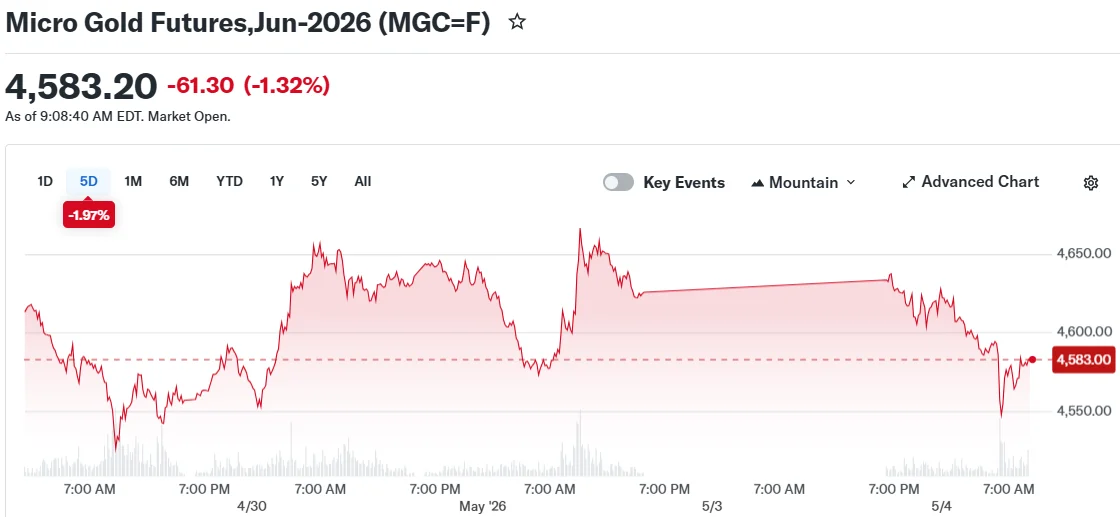
The selloff followed President Donald Trump’s weekend announcement of “Project Freedom,” an initiative designed to facilitate the resumption of maritime traffic through the Strait of Hormuz, a waterway responsible for transporting roughly one-fifth of global petroleum supplies.
The administration outlined plans to begin escorting commercial vessels uninvolved in the Iranian dispute through the contested passage beginning Monday, though operational specifics remained limited.
Tehran’s response was immediate and forceful. Iranian naval commanders claimed they successfully rebuffed hostile vessels following what they characterized as a “swift and decisive warning.” The US Central Command countered that no American naval assets sustained damage.
An unidentified Iranian official informed state-controlled media outlets that the nation “will not be bullied” and maintained contingency plans ready for deployment as circumstances warrant. Iran’s military establishment further cautioned that commercial shipping must obtain authorization from Iranian armed forces before attempting passage.

The Associated Press documented that the US-coordinated Joint Maritime Information Center established an “enhanced security area” positioned south of conventional shipping corridors. Officials indicated that standard routes remained “extremely hazardous” due to naval mines requiring additional clearance operations.
Petroleum Surge and Inflation Worries Undermine Bullion
Brent crude futures rebounded above the $110 per barrel threshold Monday. Petroleum prices have maintained significantly elevated levels since hostilities commenced in late February, intensifying global inflation anxieties.
Escalating oil prices are compelling monetary authorities worldwide toward more restrictive policy stances. As a non-interest-bearing asset, bullion typically underperforms during periods of rising borrowing costs.
The US dollar index strengthened Monday, compounding downward pressure on the precious metal. A robust greenback elevates acquisition costs for international buyers, potentially dampening overall demand.
Manav Modi, commodities strategist at Motilal Oswal Financial Services, observed that dollar resilience combined with petroleum-driven inflation concerns are prompting hawkish rhetoric from leading central banking institutions.
The yellow metal has surrendered approximately 12% of its value since military operations began at February’s conclusion.
Institutional Appetite Remains Robust
Notwithstanding recent price deterioration, several market observers maintain constructive views regarding gold’s extended-term trajectory.
The World Gold Council documented that monetary authorities expanded their bullion reserves at the most aggressive tempo in over twelve months throughout the opening quarter.
Tether Holdings has continued its acquisition campaign, establishing itself as the planet’s largest identified non-banking, non-governmental gold holder.
Market participants will monitor this week’s US Treasury financing announcements, Federal Reserve official commentary, and the monthly employment report for indications regarding monetary policy direction.
Get 3 Free Stock Ebooks
Discover top-performing stocks in AI, Crypto, and Technology with expert analysis.
- Top 10 AI Stocks - Leading AI companies
- Top 10 Crypto Stocks - Blockchain leaders
- Top 10 Tech Stocks - Tech giants



