


TLDR
- Gold advanced as much as 1.3%, reaching $4,540 per ounce during Tuesday’s session
- Mixed messaging from Washington and Tehran regarding diplomatic negotiations fueled volatility
- Crude oil’s retreat helped alleviate concerns about runaway inflation
- Manufacturing sector posted strongest expansion in four years during May
- Precious metal trades approximately 14% beneath pre-conflict levels from February
Precious metals rallied Tuesday as market participants digested contradictory information emerging from ongoing diplomatic discussions between Washington and Tehran.
Spot gold advanced 1% to reach $4,528.93 per ounce during London market hours. The yellow metal achieved an intraday peak of 1.3%, momentarily surpassing the $4,540 threshold.
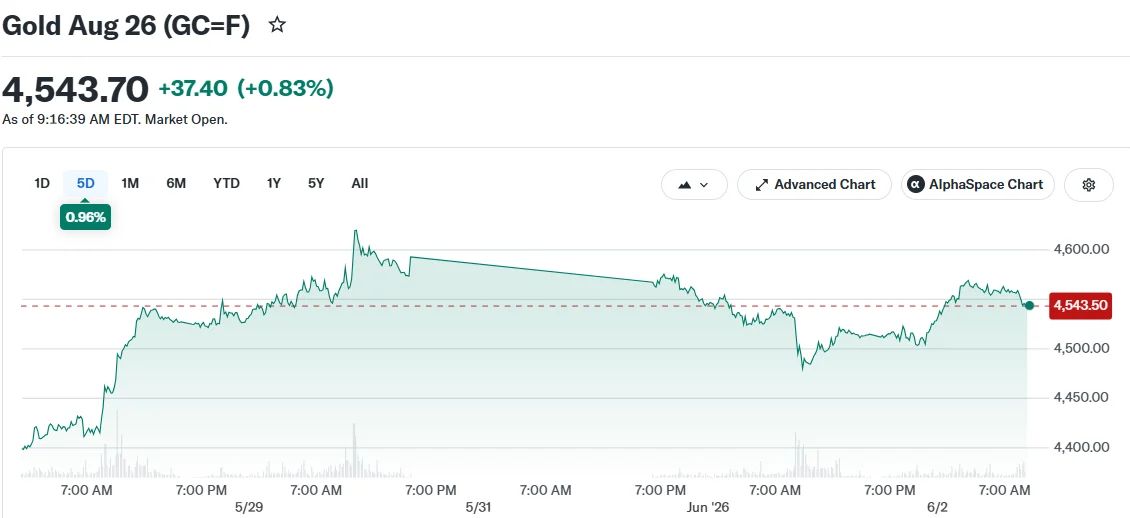
Tuesday’s advance reversed Monday’s sharp decline. The previous session’s selloff occurred after Tehran reportedly halted diplomatic communications transmitted through third-party intermediaries.
Tehran’s decision stemmed from escalating Israeli military operations targeting Hezbollah positions in Lebanese territory. This development intensified concerns that the Strait of Hormuz—a crucial chokepoint—might remain blocked indefinitely.
The strategic waterway handles roughly 20% of global petroleum shipments. Its ongoing closure has contributed to an international energy emergency now entering its fourth month.

Tuesday saw oil prices retreat following Monday’s dramatic surge. The pullback in energy markets helped diminish anxieties about inflation accelerating due to elevated fuel costs.
“Crude is experiencing softer trading after yesterday’s rally, which has sparked renewed upward momentum in gold,” explained Ole Hansen, Saxo Bank’s head of commodity strategy.
Conflicting Statements From Trump and Netanyahu on Diplomatic Progress
President Donald Trump stated Monday that negotiations with Iranian officials were progressing “at a rapid pace.” During an ABC News interview, he expressed optimism that an agreement might materialize “over the next week.”
Trump acknowledged encountering “a little glitch,” attributing the temporary communication breakdown to Tehran’s opposition to Israeli military actions in Lebanon.
The coordinated American-Israeli military operation against Iran commenced in late February. Israeli forces have simultaneously deployed troops into southern Lebanese territory as part of the expanding regional confrontation.
Beirut announced a limited ceasefire arrangement between Hezbollah and Israeli forces, though Lebanon’s Washington embassy clarified the agreement wouldn’t terminate hostilities. Israeli defense officials reported intercepting two projectiles launched from Lebanese territory Tuesday.
Disparate accounts of a telephone conversation between Trump and Israeli Prime Minister Benjamin Netanyahu regarding Lebanon further muddied the diplomatic landscape.
Strong Manufacturing Report Complicates Federal Reserve Policy Outlook
Despite gold’s Tuesday advance, certain market analysts maintain reservations about the metal’s near-term trajectory.
American manufacturing activity expanded during May at its most robust pace since 2021. The fifth consecutive month of sectoral growth could diminish Federal Reserve incentives for implementing interest rate reductions.
Reduced borrowing costs generally benefit gold since the asset generates no yield. Sustained elevated rates could potentially pressure precious metal valuations.
“Gold’s trajectory remains dependent upon Middle Eastern developments,” noted Rhona O’Connell from StoneX Financial. She suggested prices would likely maintain range-bound behavior, “potentially exhibiting downward pressure based on interest-rate projections.”
Gold currently trades approximately 14% beneath its late February levels recorded immediately before hostilities commenced. Silver climbed 2.1% to $76.42 per ounce, while platinum and palladium also registered gains Tuesday.
Get 3 Free Stock Ebooks
Discover top-performing stocks in AI, Crypto, and Technology with expert analysis.
- Top 10 AI Stocks - Leading AI companies
- Top 10 Crypto Stocks - Blockchain leaders
- Top 10 Tech Stocks - Tech giants



