



Key Takeaways
- The precious metal rebounded 0.3% to approximately $4,343 per ounce Monday following an 11-week bottom
- Tehran declared a cessation of hostilities with Israel, temporarily reducing geopolitical risk
- Crude markets retreated following the announcement, dampening inflation concerns
- Robust employment data from last Friday strengthened expectations for Federal Reserve tightening, pressuring gold prices
- The People’s Bank of China purchased 10 tons in May, marking the largest monthly acquisition since 2024
The precious metal staged a recovery Monday following Tehran’s announcement that it had suspended military actions against Israel, providing temporary relief to markets shaken by renewed hostilities between the nations.
Spot prices climbed 0.3% to reach $4,343.70 per ounce during mid-morning trading in New York. Earlier in the session, the metal had plunged as much as 1.4%, marking its weakest level since March 23.
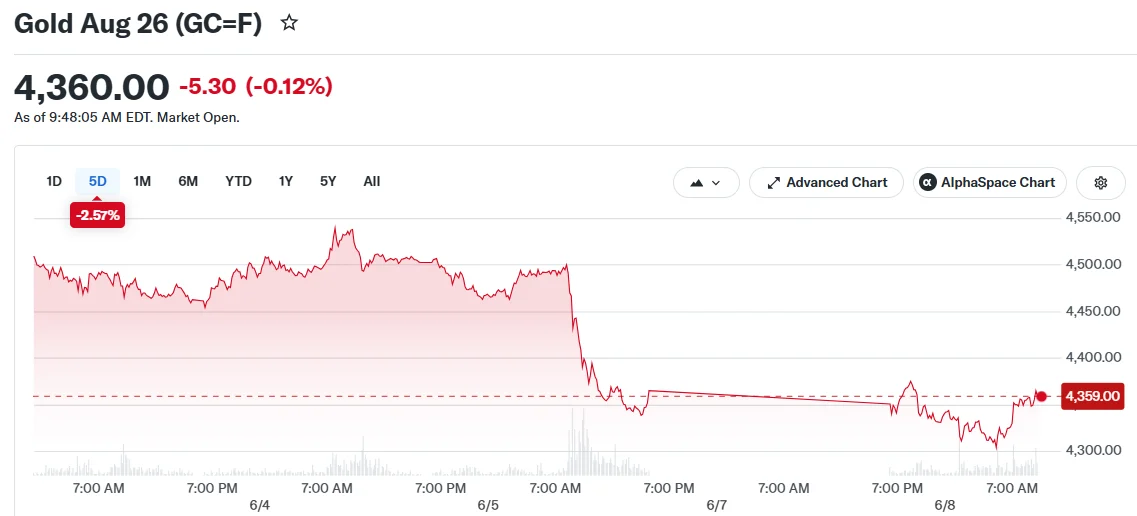
The turnaround followed confirmation from Iran’s central military command through the semi-official Fars news agency that operations had concluded. Nevertheless, Tehran issued a stern warning that additional Israeli aggression would provoke “much harsher and more crushing actions.”
Regional Tensions Fuel Market Swings
The current escalation originated with an Israeli military strike on Beirut. Tehran retaliated with counterstrikes, prompting Israel to launch attacks on locations in central and western Iranian territory.
This marked the initial direct confrontation between the nations since a fragile truce was established in April.

The military exchange represented the most severe deterioration in regional stability since the ceasefire agreement. The yellow metal had declined nearly 5% during the previous week as tensions mounted.
Oil prices had surged amid the hostilities before retreating following ceasefire developments. The conflict has interrupted energy transit through the Strait of Hormuz for four months, elevating crude prices and amplifying inflation anxieties.
Yemen’s Iranian-aligned Houthi forces intensified concerns by declaring a blockade targeting Israeli vessels in the Red Sea on Monday.
Employment Figures and Central Bank Policy Impact Bullion
Gold faced additional downward pressure from robust U.S. employment figures released Friday. The American economy generated 172,000 positions in May, surpassing projections, while the jobless rate remained steady at 4.3%.
The figures prompted market participants to factor in a Federal Reserve rate increase at the December policy meeting. ING analysts noted that a December hike is currently “fully priced.”
Elevated interest rates present challenges for gold, as the metal generates no income. Both U.S. Treasury yields and the dollar strengthened following the employment report.
The U.S. dollar index retreated modestly Monday after reaching a two-month peak Friday. A softer dollar can bolster gold valuations by reducing costs for international purchasers.
Market participants are now focusing on U.S. consumer and producer inflation metrics scheduled for release later this week for additional insight into price pressures.
Chinese Central Bank Maintains Accumulation Strategy
A positive factor supporting the precious metal is sustained accumulation by China. The People’s Bank of China expanded its holdings by approximately 10 tons in May, representing the largest monthly increase since 2024.
This continues China’s unbroken gold acquisition pattern to 19 straight months.
StoneX analyst Rhona O’Connell noted that critical issues stemming from the Middle East conflict remain “unresolved,” and that the firm retains a “downward bias” while monitoring for value-seeking opportunities.
Silver advanced 0.5% to $68.19 per ounce Monday, following a nearly 10% decline during the prior week.
Get 3 Free Stock Ebooks
Discover top-performing stocks in AI, Crypto, and Technology with expert analysis.
- Top 10 AI Stocks - Leading AI companies
- Top 10 Crypto Stocks - Blockchain leaders
- Top 10 Tech Stocks - Tech giants



