



Key Takeaways
- Precious metals retreated Wednesday with gold sliding 1.1% to approximately $4,786 per ounce
- The decline follows diplomatic momentum in US-Iran negotiations, reducing geopolitical risk premium
- Oil market disruptions triggered inflation concerns, contributing to gold’s 9% decline since hostilities commenced
- President Trump indicated the conflict is nearing resolution, with potential agreement before the British monarch’s US visit
- A 14-day truce between Washington and Tehran remains effective through April 21, with renewed negotiations anticipated
Precious metal markets experienced downward pressure Wednesday as market participants assessed emerging diplomatic developments between the United States and Iran alongside persistent inflationary headwinds and dollar strength.
Spot gold contracts decreased approximately 1% to $4,795 per ounce in London morning sessions. Futures contracts similarly retreated, registering a 0.7% decline to settle at $4,817.70 per ounce.
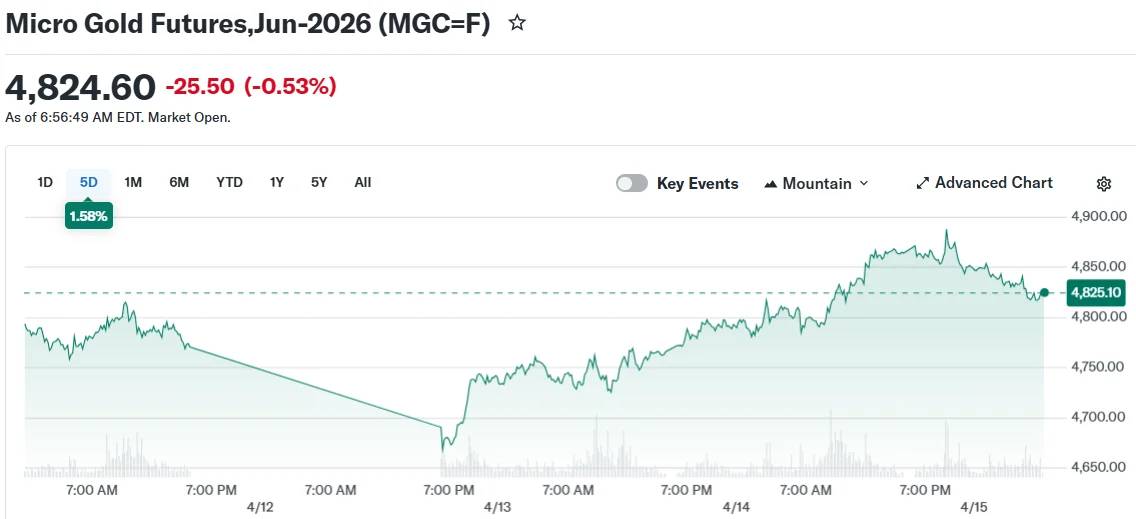
Notwithstanding Wednesday’s pullback, the yellow metal has appreciated approximately 1.6% during the trailing seven-day period. This weekly performance reflects mounting market optimism that the military confrontation, which erupted in late February, could be nearing its conclusion.
Hostilities commenced following coordinated American and Israeli military operations against Iranian targets. Subsequently, global energy infrastructure faced significant disruption, particularly affecting the Strait of Hormuz — a critical maritime passage facilitating roughly 20% of worldwide petroleum shipments — which has experienced severe operational constraints.
Gold has depreciated nearly 9% since combat operations initiated. During the conflict’s initial phase, market liquidity challenges compelled investors to liquidate precious metal positions to offset portfolio losses elsewhere.

Conflict Impact on Precious Metals
The military engagement propelled oil prices substantially upward, amplifying concerns regarding worldwide inflationary acceleration. This development prompted market expectations that monetary authorities would maintain or elevate benchmark rates, creating unfavorable conditions for non-yielding assets like gold.
Market participants simultaneously increased dollar allocations during the crisis period, rather than traditional gold safe-haven positioning, partially attributed to America’s net energy exporter status and reduced vulnerability to Hormuz-related supply disruptions.
The dollar index currently trades marginally above pre-conflict valuations, as diplomatic advancement diminishes safe-haven currency demand.
“Markets have grown more confident that the Middle East crisis is moving toward a resolution,” analysts at ING said in a note.
President Donald Trump characterized the confrontation as nearing completion during media appearances on Fox News and Sky News. He suggested a comprehensive ceasefire arrangement was achievable before King Charles’s scheduled American diplomatic visit.
Trump additionally informed media representatives that subsequent negotiation rounds with Iranian counterparts could commence within 48 hours, following initial discussions conducted in Pakistan during the previous weekend.
Ceasefire Timeline and Sticking Points
Washington and Tehran currently maintain a 14-day cessation of hostilities extending through April 21. International mediators are addressing three principal obstacles: Iran’s nuclear development program, Strait of Hormuz access restrictions, and conflict reparations.
The Associated Press, referencing regional diplomatic sources, indicated both parties anticipate returning to structured negotiations and that mediator initiatives to prolong the temporary ceasefire have demonstrated advancement.
Underlying tensions persist. American military authorities confirmed complete implementation of maritime embargo measures targeting Iran. Israeli forces simultaneously continue conducting operations against Hezbollah positions in Lebanese territory, potentially complicating broader de-escalation efforts.
Israeli and Lebanese representatives convened for unprecedented direct diplomatic engagement in Washington this week. Israeli officials have contested Iranian assertions that Lebanon was incorporated within current ceasefire parameters.
Pepperstone strategist Dilin Wu said gold is “caught between easing conflict expectations and still-unresolved inflation pressures,” adding that the Federal Reserve’s higher-for-longer rate stance means gold “faces a natural ceiling.”
Silver markets similarly experienced Wednesday declines, dropping 1.4% to $78.40 per ounce, following the previous session’s 5%-plus appreciation.
Get 3 Free Stock Ebooks
Discover top-performing stocks in AI, Crypto, and Technology with expert analysis.
- Top 10 AI Stocks - Leading AI companies
- Top 10 Crypto Stocks - Blockchain leaders
- Top 10 Tech Stocks - Tech giants



