


TLDR
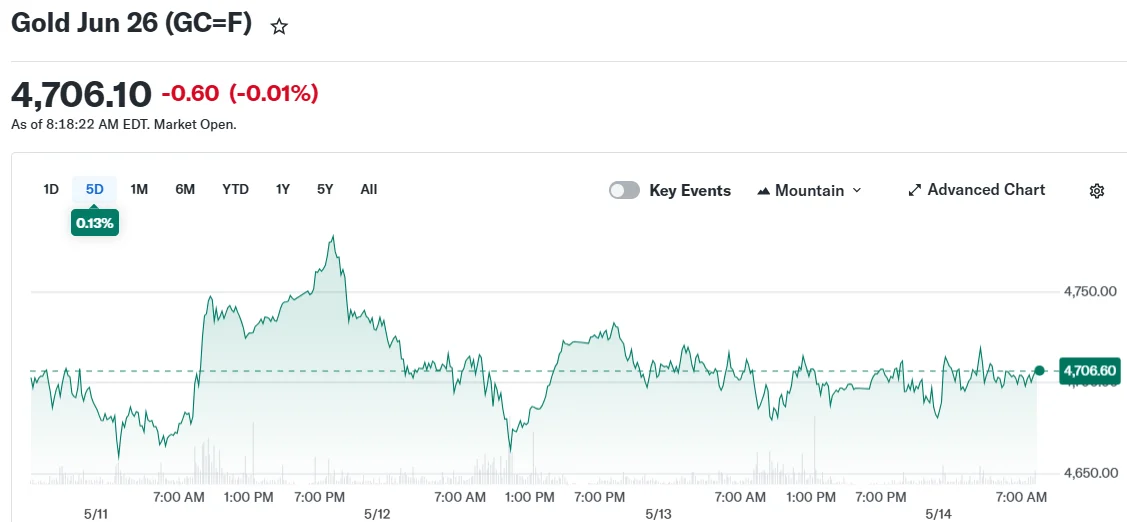
- Gold gained 0.3% to approximately $4,700 during the opening of the two-day Trump-Xi summit
- Xi indicated trade discussions were showing “positive progress”; Trump described bilateral relations as “better than ever before”
- U.S. producer price inflation accelerated to its highest level since 2022, capping gold’s upward movement
- India increased import duties on gold and silver from 6% to 15%, posing risks to physical demand
- Kevin Warsh secured confirmation as Federal Reserve chair while expectations for rate reductions remain muted
Gold prices registered modest gains on Thursday as investors monitored the significant diplomatic meeting between U.S. President Donald Trump and Chinese President Xi Jinping, though escalating inflation figures prevented more substantial price increases.
Spot gold climbed 0.3% to reach $4,700.25 per ounce during early market hours. U.S. gold futures declined 0.2% to $4,697.97. The marginal increase followed two consecutive trading sessions of declines.
The two presidents convened in China for a two-day diplomatic engagement that attracted significant interest from commodities traders. Xi informed state media outlets that trade discussions were demonstrating “positive progress.” Trump praised Xi as “a great leader” and projected that U.S.-China relations would become “better than ever before.”
Traders also remained attentive to developments concerning the ongoing Iran conflict and its implications for worldwide oil distribution. Both Iran and the U.S. have imposed blockades on the Strait of Hormuz, a critical maritime passage responsible for transporting approximately one-fifth of global oil supplies. This supply chain interruption has driven oil prices significantly above the $100 per barrel threshold.
Several market observers speculated that Trump might attempt to enlist China, a substantial purchaser of Iranian crude, to facilitate peace negotiations. Whether Beijing would accept such a diplomatic assignment remains uncertain.

Inflation Data Limits Gold’s Upside
Elevated oil prices have contributed to rising inflation throughout major global economies. U.S. producer price data for April revealed the steepest acceleration since 2022. Consumer price figures similarly exceeded analyst projections, propelled by increased energy expenses linked to the Iran situation.
The statistics strengthened market convictions that the Federal Reserve will maintain interest rates at current elevated levels for an extended period. This scenario represents a challenge for gold, which generates no interest income and typically struggles when borrowing costs remain high.
The U.S. Dollar Index remained close to a two-week peak following the inflation releases. A robust dollar increases gold’s cost for international buyers utilizing alternative currencies, potentially dampening overall demand.
The U.S. Senate also approved Kevin Warsh as the new Federal Reserve chair on Wednesday, succeeding Jerome Powell. Warsh assumes leadership during a period when the Fed confronts competing pressures from inflation worries and Trump’s advocacy for interest rate reductions.
India Raises Gold Import Duties
India unveiled an increase in import tariffs on gold and silver, elevating rates from 6% to 15%. The policy adjustment aims to curtail the nation’s foreign purchases and bolster its foreign exchange holdings.
India ranks among the globe’s largest gold-consuming countries, satisfying the majority of its requirements through international imports. Gold and silver collectively represent nearly 11% of the nation’s total import volume.
Analysts from ING Group indicated the tariff elevation will likely diminish physical gold demand within India over the short term, applying pressure to domestic purchasing activity and import volumes.
Silver decreased 0.6% to $87.01 per ounce. Platinum retreated 0.4% to $2,128.60. Copper futures traded on the London Metal Exchange fell 1.3% to $13,953.33 per ton, declining after reaching a peak of $14,191.48 per ton on Wednesday. Copper’s record high remains at $14,531.70 per ton, achieved in late January.
ING analysts observed that copper stockpiles outside the U.S. continue to register low levels, rendering prices vulnerable to any fresh demand surges.
Get 3 Free Stock Ebooks
Discover top-performing stocks in AI, Crypto, and Technology with expert analysis.
- Top 10 AI Stocks - Leading AI companies
- Top 10 Crypto Stocks - Blockchain leaders
- Top 10 Tech Stocks - Tech giants



