



Key Highlights
- Spot gold advanced 0.1% to reach $4,187.64 per ounce, yet remains poised for approximately a 6% monthly decline.
- Gold futures climbed over 1% following a retreat in U.S. Treasury yields from their multiyear peaks.
- Market participants are centering attention on the core PCE inflation data, which serves as the Federal Reserve’s primary inflation metric.
- John Williams, President of the New York Federal Reserve, indicated there’s no urgency to implement another rate increase in October.
- Market pricing for an October rate hike dropped to 42.6% from 70% earlier this week, based on CME FedWatch data.
Gold prices registered modest gains on Wednesday while staying on course for a monthly retreat. Market participants are awaiting a crucial U.S. inflation reading that may influence the Federal Reserve’s upcoming policy decisions.
Spot gold climbed 0.1% to settle at $4,187.64 per ounce. Meanwhile, gold futures advanced roughly 1% to reach $4,219.30 per ounce.
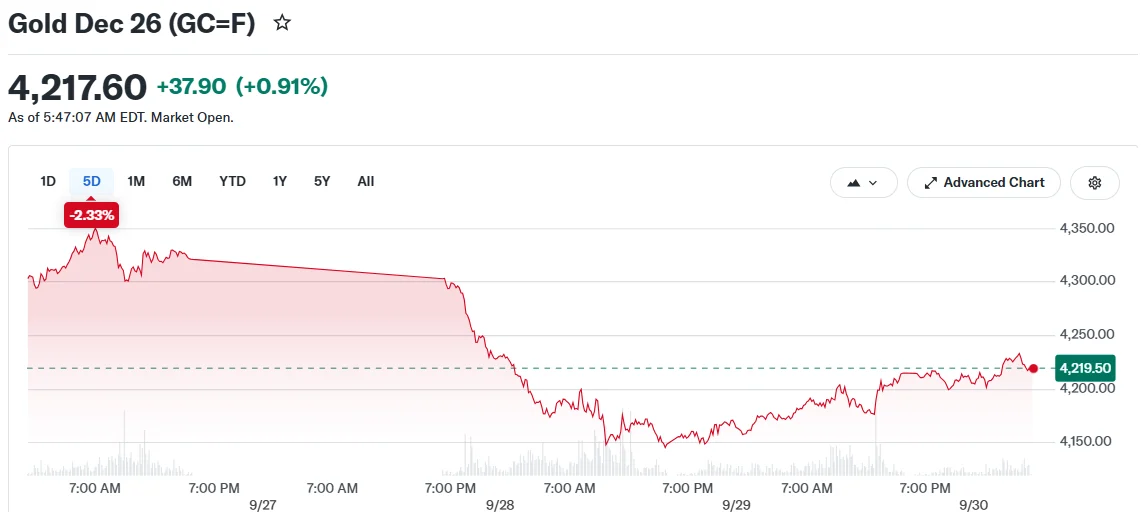
Notwithstanding Wednesday’s uptick, spot gold has declined approximately 6% throughout the past month. This would represent one of the metal’s more significant monthly retreats in the current year.
Core PCE Report Takes Center Stage
The primary focal point for market participants this week centers on the forthcoming core personal consumption expenditures price index. This metric represents the inflation indicator the Federal Reserve prioritizes most heavily.
Economic analysts anticipate the August core PCE measurement will show a 0.3% monthly increase. This represents a modest uptick from the 0.2% recorded in July.

The headline PCE measurement is forecast to increase 0.4% on a monthly basis, accelerating from the previous month’s 0.2%. Year-over-year, core PCE is anticipated at 3.3%, while the headline figure is expected to reach 3.7%.
These projections would align with July’s readings. Importantly, both metrics would remain significantly elevated above the Fed’s 2% inflation objective.
Elevated inflation figures could challenge the Fed’s policy trajectory. They may also influence gold’s appeal among investors, particularly since the precious metal generates neither interest income nor dividend payments.
The Federal Reserve implemented a quarter-point rate increase earlier this month. This action was designed to temper escalating prices throughout the broader economy.
Uncertainty persists regarding whether additional increases are warranted this year. John Williams, New York Fed President, stated this week that there’s no pressing requirement to implement another rate adjustment in October.
His remarks prompted traders to reassess October rate increase probabilities. The likelihood declined to 42.6%, down sharply from 70% at the week’s outset, per the CME FedWatch Tool.
Nevertheless, the majority of Fed policymakers oppose pausing. Among the 18 Federal Open Market Committee members, 16 advocated for no fewer than one additional rate hike before year-end.
Bond Yields and Global Tensions
Gold futures advanced more than 1% during early European market hours. This movement coincided with U.S. Treasury yields pulling back from multiyear elevated levels.
Declining yields typically provide support for gold valuations. This relationship exists because lower yields diminish the opportunity cost associated with maintaining a non-yielding asset.
Beyond monetary policy considerations, Middle Eastern developments are attracting market attention. Qatar is facilitating negotiations between Washington and Tehran.
These discussions allegedly encompass the potential reopening of the Strait of Hormuz. This strategic passage serves as a critical conduit for international oil transportation.
Nevertheless, a diplomatic resolution appears remote at present. President Donald Trump has refuted claims that the U.S. proposed sanctions relief to Iran, while Tehran maintains its own negotiating prerequisites.
Sustained high oil prices introduce additional inflationary pressure. This dynamic amplifies concerns regarding potential further monetary policy tightening from central banks.
Market participants are now directing attention toward Friday’s U.S. employment report. Combined with the PCE figures, these data points will inform expectations surrounding the Fed’s subsequent rate decision.
Get 3 Free Stock Ebooks
Discover top-performing stocks in AI, Crypto, and Technology with expert analysis.
- Top 10 AI Stocks - Leading AI companies
- Top 10 Crypto Stocks - Blockchain leaders
- Top 10 Tech Stocks - Tech giants



