



TLDR
- The yellow metal declined approximately 1% to settle near $4,444 per troy ounce
- Military strikes by Iran on American installations in Kuwait and Bahrain reduced optimism for diplomatic breakthrough
- Elevated crude oil costs are intensifying concerns about inflation and potential monetary tightening
- Greenback gains made the precious metal pricier for international investors
- Market participants remain cautious before Friday’s employment statistics release
The precious metal experienced downward pressure on Wednesday following renewed hostilities in the Middle East that undermined expectations for a diplomatic resolution between Washington and Tehran, as market participants positioned ahead of crucial employment figures that could influence monetary policy.
Spot prices for the yellow metal retreated 1.0% to settle at $4,444.86 per troy ounce. Futures contracts similarly declined 1.0% to reach $4,475.62 per ounce during early Wednesday trading sessions.
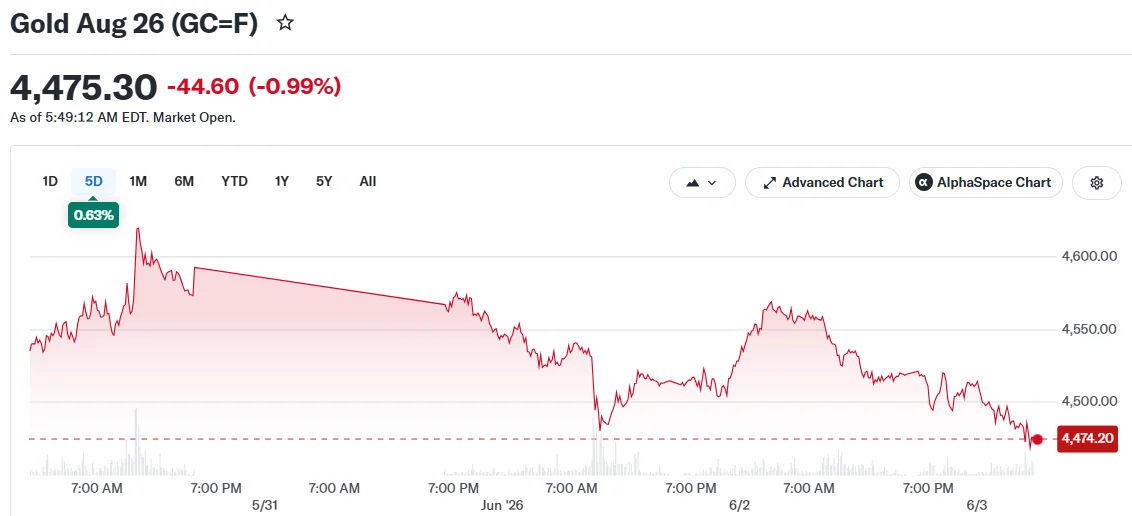
The decline followed confirmation from U.S. military officials that Iranian military forces conducted aerial assaults targeting locations in Kuwait, Bahrain, and additional sites across the region. American authorities indicated these offensive operations were either successfully countered or unsuccessful.
Meanwhile, Iranian government-controlled media outlets asserted that the Islamic Revolutionary Guard Corps successfully hit the headquarters of the U.S. Fifth Fleet situated in Bahrain. Tehran characterized these actions as retaliatory measures responding to an American strike on a communications infrastructure facility located near Qeshm.
President Trump indicated that diplomatic communications between the two nations continue. However, the latest military confrontations have diminished market confidence that an agreement is imminent.

Crude Prices Advance, Stoking Inflationary Pressures
Brent crude futures advanced in response to the escalating regional tensions. Market participants harbor concerns that prospects for reopening the Strait of Hormuz — a critical maritime corridor handling approximately one-fifth of global petroleum shipments — have diminished substantially.
Elevated oil prices amplify worries regarding inflation. Should inflationary pressures accelerate, monetary authorities may find themselves compelled to implement interest rate increases.
Current market pricing suggests the Federal Reserve will maintain its current rate stance at the upcoming June policy meeting. Nevertheless, traders continue to factor in possibilities for rate hikes during the latter portion of the year.
Gold, which generates no income stream, typically underperforms during periods of elevated or ascending interest rates.
The greenback also appreciated in value, a development that can elevate the cost of the precious metal for purchasers transacting in alternative currencies. Capital has gravitated toward the dollar throughout the Iran situation, influenced partly by America’s position as a significant energy producer.
Employment Statistics Command Market Attention
Figures published Tuesday revealed that U.S. job vacancies increased unexpectedly during April. This development strengthened perspectives that the Federal Reserve may maintain restrictive policy measures for an extended period.
Market watchers are now focused on multiple economic releases scheduled for Wednesday, including the ADP private sector employment assessment, the ISM services index, and manufacturing orders data.
These releases precede Friday’s nonfarm payrolls report, a closely monitored indicator for financial markets.
Simon-Peter Massabni of XS.com indicated that investors seem to be refraining from establishing significant new positions before that key release. “Without a clear signal from the data, gold is likely to continue trading in a consolidative pattern,” he stated.
Neil Walsh, Head of Metals at Britannia Global Markets, observed that “the market remained cautiously watchful regarding U.S.-Iran negotiations.”
The precious metal has continued to fluctuate beneath the $4,500 threshold as prevailing uncertainty keeps potential buyers hesitant to commit.
Get 3 Free Stock Ebooks
Discover top-performing stocks in AI, Crypto, and Technology with expert analysis.
- Top 10 AI Stocks - Leading AI companies
- Top 10 Crypto Stocks - Blockchain leaders
- Top 10 Tech Stocks - Tech giants



