


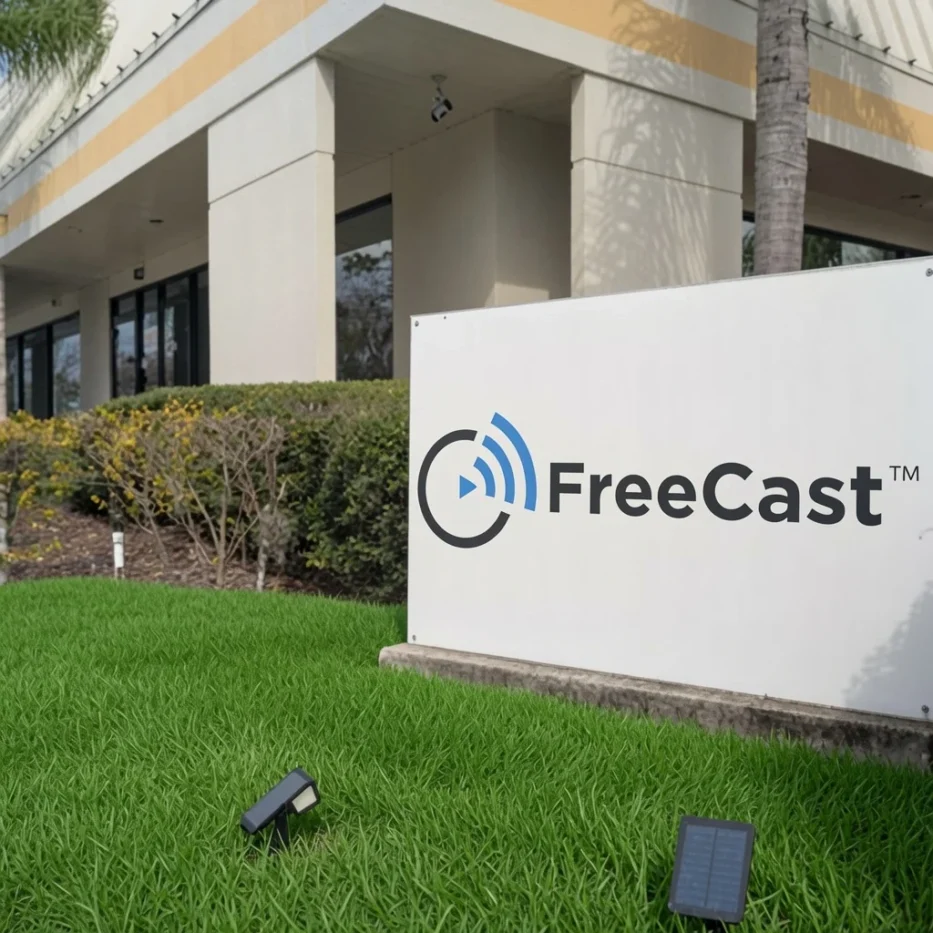
Key Takeaways
- Shares of FreeCast (CAST) climbed approximately 170% Thursday following the announcement of a Starlink Business satellite broadband reseller partnership.
- The partnership enables FreeCast to package enterprise-level internet connectivity alongside its streaming, advertising, and Platform-as-a-Service solutions.
- Key sectors being targeted include multifamily residential properties, hospitality venues, healthcare facilities, and underserved rural areas.
- This development comes on the heels of an expanded collaboration with DIRECTV announced recently.
- While shares surged dramatically, the company disclosed a net loss for Q1 2026 and raised concerns about its financial viability without additional funding.
Shares of FreeCast Inc. (CAST) skyrocketed approximately 170% Thursday morning, climbing to $13.80 during premarket hours before extending gains further after the streaming technology company revealed it had entered into a reseller partnership for Starlink Business satellite internet services.
FreeCast, Inc. Class A Common Stock, CAST
By midday trading, CAST was changing hands around $14.90, representing a gain of roughly 189% for the session.
The rally was swift and powerful. As a micro-cap player in the streaming technology sector, FreeCast represents the type of company that can experience dramatic price swings when catalysts emerge—and the Starlink partnership provided exactly that spark.
Through this arrangement, FreeCast gains the ability to offer enterprise-tier Starlink Business internet connectivity packaged together with its proprietary streaming aggregation technology, advertising solutions, subscription management tools, and Platform-as-a-Service (PaaS) infrastructure.

CEO William Mobley characterized the partnership as a fundamental transformation in service delivery. “Traditionally, connectivity and content have operated as separate offerings,” Mobley explained. “This collaboration empowers FreeCast to merge enterprise-quality broadband infrastructure with streaming television, localized content, advertising capabilities, community interaction tools, and digital commerce platforms.”
The company has identified specific vertical markets where the convergence of broadband access and digital media presents significant opportunities—including multifamily housing developments, university student housing, hotel and hospitality properties, healthcare systems, senior care communities, and geographically remote or digitally underserved populations.
FreeCast’s strategy centers on the premise that delivering connectivity and content through an integrated platform could streamline implementation for institutional clients while creating diversified revenue opportunities spanning broadband service fees, streaming subscription income, advertising dollars, and platform licensing arrangements.
Recent DIRECTV Expansion Fuels Growth Story
The Starlink partnership announcement didn’t occur in a vacuum. Shortly before revealing this agreement, FreeCast announced an enhancement to its existing relationship with DIRECTV, integrating DIRECTV offerings into FreeCast’s consumer-facing residential products and throughout its PaaS distribution network.
That previous announcement had already begun constructing a bullish narrative around the company’s expansion trajectory. The Starlink revelation amplified that momentum significantly.
Combined, these two strategic partnerships have dramatically expanded FreeCast’s service capabilities in a matter of weeks, now encompassing both satellite-based broadband connectivity and conventional pay-television distribution channels.
Financial Uncertainty Clouds the Picture
However, the situation isn’t without complications. FreeCast disclosed a net loss in its first-quarter 2026 financial results, and company leadership acknowledged there exists “substantial doubt” regarding the organization’s capacity to maintain operations as a going concern without securing additional financing.
This represents a significant red flag. Going concern disclosures indicate that company auditors have questions about whether the business can sustain operations in the foreseeable future without obtaining external capital.
While the Starlink and DIRECTV partnerships may generate incremental revenue down the road, they don’t provide an immediate solution to the company’s liquidity challenges.
Investors who bought into CAST Thursday are essentially wagering that these new strategic relationships fundamentally alter the company’s growth path—and that FreeCast can successfully secure necessary funding before exhausting its cash reserves.
Exceptionally high trading volume throughout Thursday’s session underscored the intense speculative appetite the Starlink announcement triggered among retail traders and momentum-oriented market participants.
As of midday Thursday, CAST shares were trading up approximately 189% at $14.90 per share.
Get 3 Free Stock Ebooks
Discover top-performing stocks in AI, Crypto, and Technology with expert analysis.
- Top 10 AI Stocks - Leading AI companies
- Top 10 Crypto Stocks - Blockchain leaders
- Top 10 Tech Stocks - Tech giants



