



Key Takeaways
- European energy authorities have issued warnings about a winter price crisis driven by Iran conflict disruptions to global energy markets.
- Current gas reserves across the EU stand at approximately 70% capacity, falling short of seasonal averages and trailing last year by 12 percentage points.
- With 80% of its gas coming from external sources, Europe faces significant vulnerability to supply chain interruptions from the Strait of Hormuz closure.
- EU flexibility provisions could allow member nations to reduce their storage objectives from 90% to 80%.
- Energy conservation measures including reduced heating in government facilities, banned outdoor heating, and dimmed public lighting have been recommended.
European Union officials are sounding the alarm over a potential winter energy crisis as ongoing conflict involving Iran creates turbulence in global oil and gas markets.
Dan Jorgensen, the EU’s Energy Commissioner, distributed a letter to energy ministers throughout member states. Both Reuters and Bloomberg obtained and reviewed the correspondence.
“We are facing a price crisis linking to a supply crisis,” Jorgensen stated in his communication.
Factors Behind Escalating Energy Costs
The European continent depends heavily on external suppliers for its energy requirements. Foreign imports account for approximately 80% of total gas consumption across the bloc.
This heavy reliance creates considerable exposure when international supply channels face disruption. Under normal circumstances, the Strait of Hormuz facilitates the transport of roughly 20% of global oil and liquefied natural gas shipments.
Current military operations have essentially shut down this critical passage. The closure has driven energy costs upward throughout European markets.

Gas prices across Europe have increased by more than 100% since conflict involving Iran and U.S.-led forces erupted in late February. Earlier this month, prices climbed to levels not witnessed since the end of 2022.
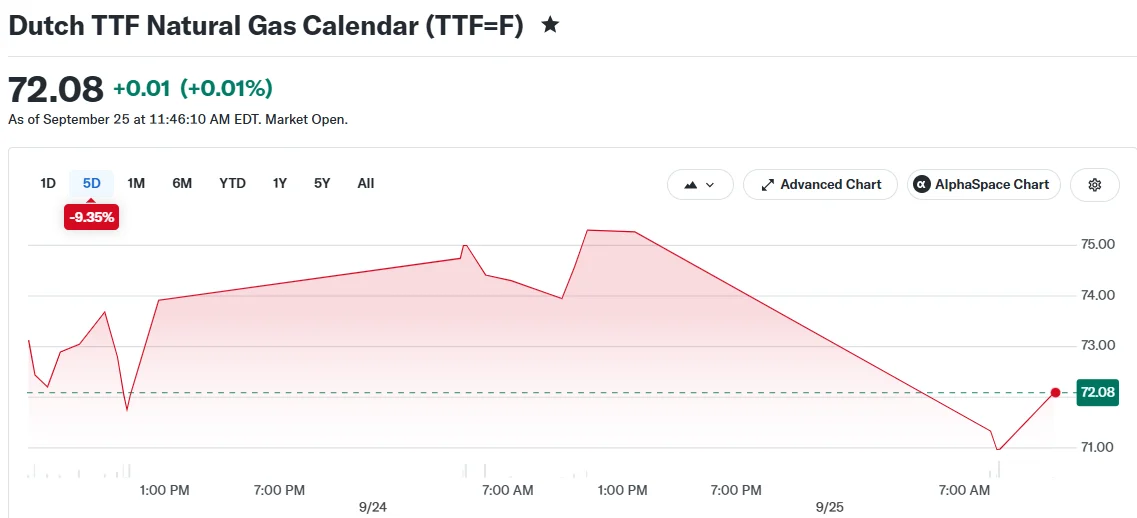
While Europe currently has adequate gas supplies available, the elevated costs are complicating efforts by nations to build up reserves ahead of the winter heating season.
Reserve Capacity Trails Expected Levels
Across the European Union, gas storage facilities are operating at roughly 70% of total capacity. This represents a decline of 12 percentage points compared to the same timeframe in the previous year, based on figures from Gas Infrastructure Europe.
These levels also fall below the typical seasonal benchmark of 86%. Elevated short-term pricing has increased the financial burden on countries attempting to continue filling their storage facilities throughout the summer period.
Jorgensen noted that the EU’s current situation represents an improvement over the 2021 crisis. During that period, Russia curtailed gas shipments to Europe, triggering significant supply challenges.
In response, Europe has expanded its infrastructure for importing liquefied natural gas. The continent has also increased renewable energy generation and achieved reductions in overall gas consumption.
Notwithstanding these improvements, Jorgensen emphasized the need for governments to intensify winter preparedness efforts. Heating requirements typically surge during the coldest months.
He noted that member states could utilize flexibility mechanisms embedded in EU gas storage regulations. These provisions would permit countries to adjust their filling requirements downward from 90% to 80%.
Implementing this adjustment could alleviate pressure on market prices and reduce the financial burden of replenishing storage facilities.
Jorgensen additionally urged governments to maintain gas injection programs into storage where appropriate. He requested that countries implement reductions in gas and electricity consumption for whatever duration proves necessary.
Recommended conservation actions include establishing temperature restrictions in government-owned buildings. Authorities also proposed prohibiting outdoor heating systems and deactivating non-essential public illumination.
A European Commission representative had not provided comment on the letter at the time of publication.
The communication underscores mounting anxiety among EU leadership as the winter season draws closer. Energy ministers throughout the bloc are currently evaluating the proposed recommendations.
Get 3 Free Stock Ebooks
Discover top-performing stocks in AI, Crypto, and Technology with expert analysis.
- Top 10 AI Stocks - Leading AI companies
- Top 10 Crypto Stocks - Blockchain leaders
- Top 10 Tech Stocks - Tech giants



