



TLDR
- European stocks declined on Monday following military confrontations between U.S. and Iranian forces in the Strait of Hormuz that drove Brent crude past the $90 threshold
- Following weekend U.S. strikes on three Iranian oil vessels, Tehran announced intentions to establish a military exclusion zone near the Strait of Hormuz
- Markets anticipate a 25 basis point rate increase from the ECB this Thursday, with Deutsche Bank projecting an additional hike in December
- Novartis shares plunged more than 3% following disappointing results from a critical cholesterol drug trial
- Upcoming U.S. CPI data this week could determine whether the Federal Reserve proceeds with a rate increase at its September policy meeting
[[LINK_START_1]]European stocks[[LINK_END_1]] began the week under pressure on Monday as escalating military tensions between Washington and Tehran disrupted energy markets, while market participants remained cautious ahead of the European Central Bank’s upcoming policy announcement.
The benchmark STOXX 600 index fluctuated between modest gains and losses throughout the session, remaining close to its recent multi-week lows. Germany’s DAX index declined 0.3%, while France’s CAC 40 also registered losses.
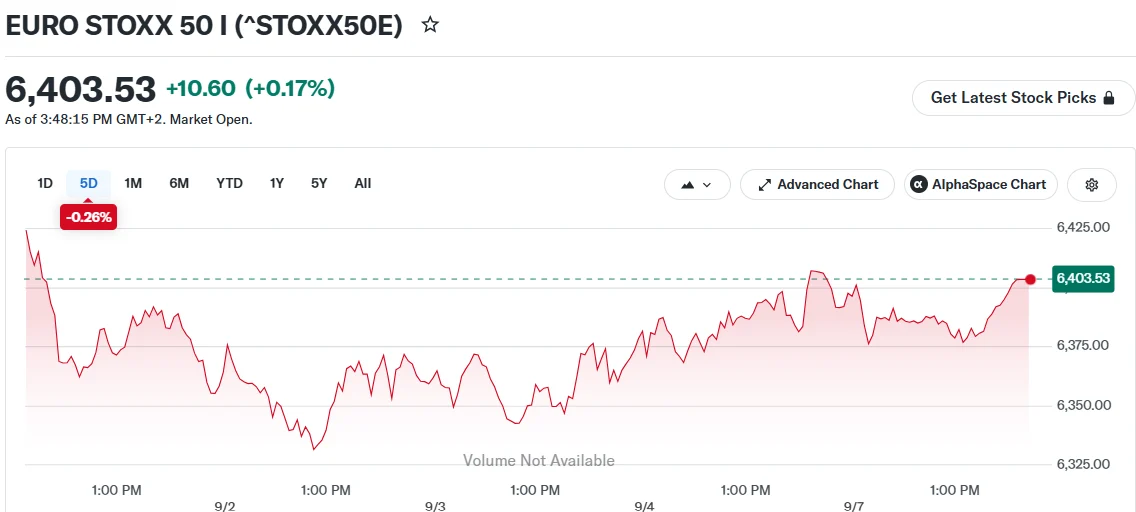
Switzerland’s primary stock index suffered a 1.2% decline, weighed down predominantly by pharmaceutical giant Novartis, whose shares tumbled over 3% following negative results from a highly anticipated clinical trial of its experimental cholesterol treatment.
Energy Prices Jump on Middle East Supply Concerns
Brent crude oil prices advanced more than $1 per barrel during Monday’s trading session, building on the previous week’s nearly 10% rally to maintain levels above the $90 mark.
The price surge followed weekend military action by U.S. forces that targeted and incapacitated three Iranian oil tankers. U.S. officials characterized the operation as a response to an Islamic Revolutionary Guard Corps ballistic missile assault on two American Navy vessels in the area.

Tehran countered by announcing its intention to establish a restricted military zone outside the Strait of Hormuz in the coming days.
Approximately 20% of the world’s seaborne petroleum and natural gas shipments pass through the Strait of Hormuz. Any interruption to this vital shipping lane increases the likelihood of elevated energy costs contributing to wider inflationary pressures.
European energy sector stocks provided one of the few positive notes, gaining 1.2% alongside rising crude oil prices.
Central Bank Rate Increase Anticipated This Thursday
Market consensus points to the ECB implementing a 25 basis point increase to its benchmark interest rate at Thursday’s policy gathering. The anticipated move follows Eurozone inflation climbing to 3.3% in August, with energy prices surging 14.3%.
Deutsche Bank analysts now forecast the ECB will implement another quarter-point rate increase in December following this week’s expected action. Market pricing also reflects expectations for at least one additional rate increase extending into 2027.
Higher interest rate expectations have maintained German 10-year government bond yields near multi-year peaks, creating headwinds for interest rate-sensitive sectors including real estate and construction.
Germany’s political landscape contributed additional uncertainty. The far-right AfD party secured 44% of votes in Saxony-Anhalt state elections during the weekend, representing a setback for Chancellor Friedrich Merz, although the party failed to achieve an absolute majority.
Italy’s Lottomatica defied the broader market weakness, climbing 6.8% after releasing information about how its planned merger with Spain’s Cirsa would expand its digital operations. Cirsa shares advanced 7%.
A survey published Monday indicated that investor confidence across the Eurozone reached its strongest level in more than four years during September.
Market attention now shifts to U.S. Consumer Price Index figures scheduled for release later this week. Stronger-than-expected inflation data could solidify Federal Reserve plans for a rate hike at its September 15-16 policy meeting, potentially creating additional headwinds for global stock markets.
Get 3 Free Stock Ebooks
Discover top-performing stocks in AI, Crypto, and Technology with expert analysis.
- Top 10 AI Stocks - Leading AI companies
- Top 10 Crypto Stocks - Blockchain leaders
- Top 10 Tech Stocks - Tech giants



