


TLDR
- Brent crude surged past $97 per barrel following weekend military confrontations between American and Iranian forces near the strategic Strait of Hormuz
- U.S. forces struck three Iranian oil tankers on Saturday; Tehran retaliated by attacking U.S. Navy ships and an unmanned naval drone
- Approximately 20% of the world’s oil supply typically transits through the Strait of Hormuz, with vessel traffic now at its lowest point since May
- Iranian security leadership announced plans to establish a new restricted maritime zone beyond the Strait of Hormuz in the coming days
- OPEC+ maintained current production levels for October, suspending six consecutive months of output hikes while negotiating 2027 production targets
Oil prices surged dramatically Monday following a weekend of military strikes between American and Iranian forces in the strategic Strait of Hormuz region, intensifying concerns about potential long-term disruptions to worldwide crude oil supplies.
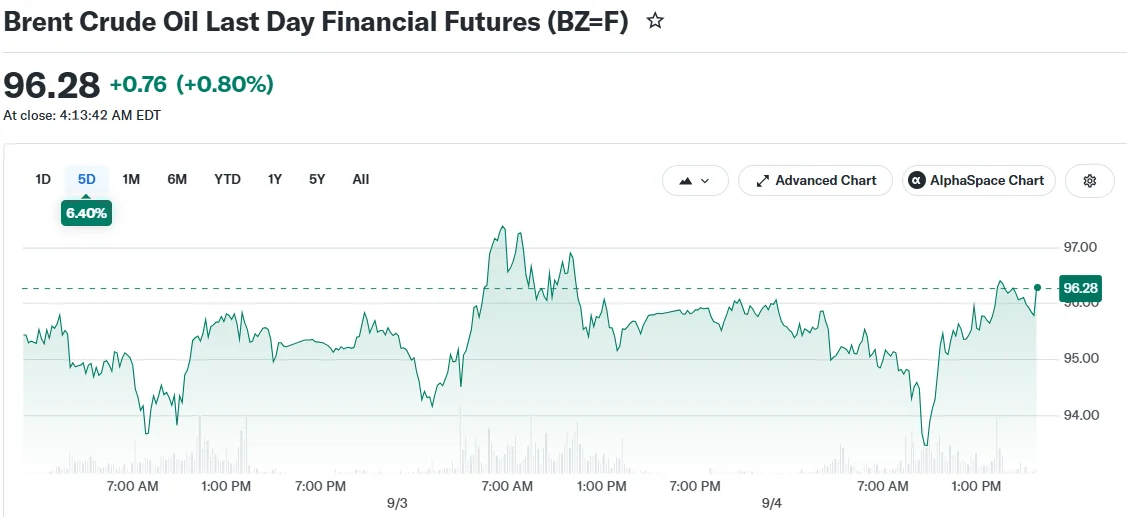
Brent crude futures climbed to $97.58 per barrel, marking approximately a 1.4% daily increase. West Texas Intermediate advanced 1.3% to reach roughly $92.69 per barrel. Both benchmark prices had already experienced significant gains during the prior week, with Brent jumping nearly 8% and WTI surging close to 10%.
The current crisis erupted Saturday when American military forces launched strikes against three Iranian oil tankers. One vessel was damaged near Kharg Island, situated close to Iran’s primary crude export terminal.
Tehran’s response was immediate. The Islamic Revolutionary Guard Corps Navy reported attacking three tankers navigating what it characterized as unauthorized shipping lanes within the Strait of Hormuz. Iranian forces also struck three additional American vessels in separate locations and subsequently targeted a U.S. naval drone.
A senior Iranian security official issued warnings that any additional U.S. military actions would provoke an even stronger retaliation. The official also revealed Tehran’s intention to declare a new restricted maritime zone outside the Strait of Hormuz in the near future. Ships entering this designated area could potentially face sanctions.

Maritime intelligence provider Marisks characterized Saturday’s incidents as a “major escalation in the maritime conflict.” The firm noted that commercial tankers are increasingly being weaponized as instruments of economic warfare, creating ambiguity between military operations and civilian shipping activity.
Shipping Volume Drops to Lowest Point Since May
Commodity vessel traffic through the Strait of Hormuz has declined to approximately 10 ships daily over the last ten days, representing the weakest flow since May, based on intelligence from analytics provider Kpler.
According to the U.S. energy secretary, crude oil transit through the waterway currently averages slightly above 9 million barrels daily, sustained in part by U.S. Navy escort operations.
Market analysts at Phillip Nova cautioned that additional slowdowns in tanker movement could prompt markets to factor in a substantially larger supply disruption. Early indicators suggest this process may already be underway.
Researchers at ING noted the oil market “remains well-supported with little sign of a peace between the U.S. and Iran,” while acknowledging that crude continues flowing currently.
ANZ’s research team projected that an extended standoff featuring sporadic military engagements represents the most probable scenario. They anticipate exports will remain limited throughout the remainder of 2026, with gradual normalization beginning only near the close of the fourth quarter.
Complete restoration to pre-crisis throughput volumes is not anticipated until late first quarter or early second quarter of 2027.
OPEC+ Maintains Current Production Levels for October
OPEC+ convened Sunday and elected to maintain existing production volumes for October. The coalition had been incrementally increasing output over six consecutive months but suspended those hikes to concentrate on negotiating fresh production allocations for 2027.
The organization’s decision arrives as the Hormuz crisis introduces additional uncertainty into global supply calculations. Given Iran’s status as a significant OPEC member, any further escalation could intensify market tightness.
Currently, crude oil continues transiting through the strait under U.S. naval protection, though the possibility of more severe disruption remains present as 2026 enters its final months.
Get 3 Free Stock Ebooks
Discover top-performing stocks in AI, Crypto, and Technology with expert analysis.
- Top 10 AI Stocks - Leading AI companies
- Top 10 Crypto Stocks - Blockchain leaders
- Top 10 Tech Stocks - Tech giants



