



Key Takeaways
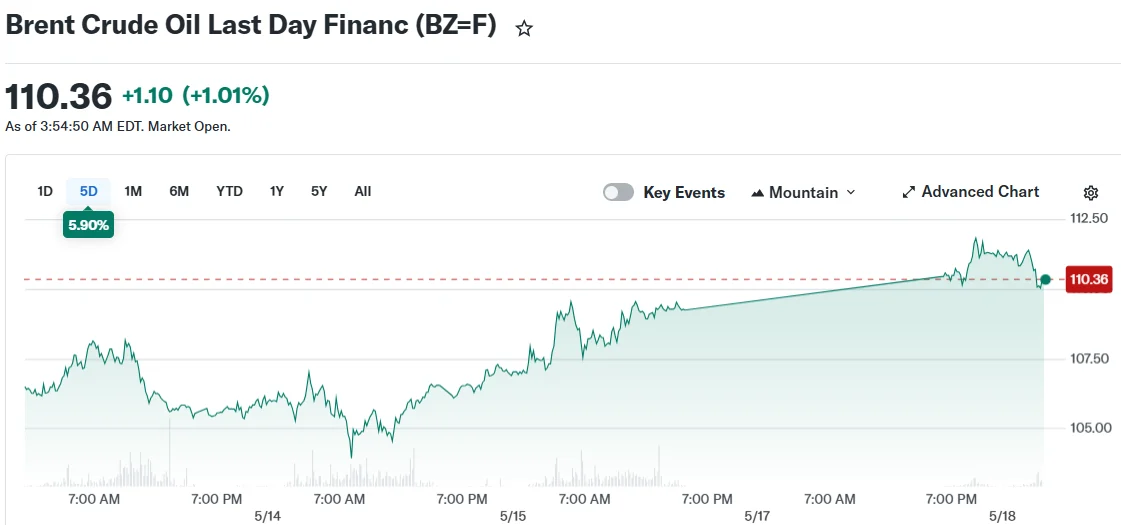
- Brent crude prices surged past $111 per barrel while WTI neared $108, continuing a three-day upward trend
- President Trump issued an urgent warning via Truth Social, demanding Iran act quickly or face total destruction
- Military coordination between the US and Israel suggests potential strikes could commence within days
- Iraqi crude shipments via the Strait of Hormuz plummeted to 10 million barrels in April from a typical 93 million monthly
- Weekend drone attack on UAE nuclear infrastructure heightened fears about energy facility vulnerabilities
Crude oil markets extended their rally Monday as President Donald Trump issued another stark warning to Tehran, emphasizing that diplomatic windows are rapidly closing for reopening the critical Strait of Hormuz shipping lane.
Brent crude futures pushed beyond $111 per barrel following last week’s nearly 8% surge. West Texas Intermediate climbed toward the $108 mark.
In a Sunday Truth Social post, Trump declared: “For Iran, the Clock is Ticking, and they better get moving, FAST, or there won’t be anything left of them. TIME IS OF THE ESSENCE!”
Military Operations Against Iran Reportedly in Final Stages
A recent Times of Israel report indicates that Washington and Jerusalem are finalizing military strategies for potentially launching renewed coordinated operations against Iranian targets, possibly beginning next week.
The president convened with national security advisors at his Virginia golf property Saturday. Additional meetings are scheduled Tuesday in the Situation Room with Vice President JD Vance, Middle East envoy Steve Witkoff, Secretary of State Marco Rubio, and CIA Director John Ratcliffe.
A high-ranking Israeli source speaking anonymously indicated military readiness for imminent operations. “Washington recognizes that diplomatic efforts with Tehran have reached a dead end,” the official stated. “We’re positioning for several days to multiple weeks of combat operations pending Trump’s ultimate authorization.”
Zev Elkin, serving on Netanyahu’s security cabinet, acknowledged Israel’s target identification is complete. “We have specific objectives we intend to strike,” he revealed during a Kan radio interview.
Hormuz Blockade Intensifies Supply Constraints
Oil values have climbed over 50% since coordinated US-Israeli operations against Iran began in late February. The Strait of Hormuz closure has severely restricted Persian Gulf production flows.

Iraqi crude exports transiting the strait collapsed to merely 10 million barrels during April, representing a dramatic decline from normal monthly volumes of 93 million barrels.
Morgan Stanley analysts warned last week that markets face “a race against time,” cautioning that current price-limiting factors may collapse should the waterway remain blocked through June.
“Risk premiums appear likely to remain elevated,” noted Charu Chanana, chief investment strategist at Saxo Markets. “While markets have witnessed numerous headlines suggesting potential resolutions, no reliable framework exists that genuinely eliminates the Hormuz supply threat.”
Diplomatic efforts mediated by Pakistan with Chinese backing have reached an impasse. Iran’s Mehr news agency reported that Washington provided “no meaningful concessions” while demanding concessions it couldn’t secure during active conflict.
Fars News from Iran disclosed that the US submitted five demands to Tehran, including transferring 400kg of highly enriched uranium to American custody, restricting operations to a single Iranian nuclear site, and denying release of frozen Iranian financial assets.
Nuclear Facility Drone Strike Heightens Regional Concerns
A drone strike targeted an electrical generator adjacent to the Barakah nuclear complex in the UAE Sunday, igniting a fire. Emirati authorities confirmed no casualties occurred and radiological safety remained uncompromised.
The Trump administration additionally allowed a waiver permitting Russian crude sales to expire, compounding global supply pressures despite Indian requests for extension.
US intelligence services are examining a suspected Iranian cyber operation that manipulated fuel gauge readings at gas stations across several American states, though official attribution remains pending.
Get 3 Free Stock Ebooks
Discover top-performing stocks in AI, Crypto, and Technology with expert analysis.
- Top 10 AI Stocks - Leading AI companies
- Top 10 Crypto Stocks - Blockchain leaders
- Top 10 Tech Stocks - Tech giants



