


Key Highlights
- Claude Opus 4.8 represents a significant advancement over version 4.7, delivering enhanced coding capabilities and superior reasoning
- Performance tests show Claude Opus 4.8 exceeding both OpenAI’s GPT-5.5 and Google’s Gemini 3.1 Pro across multiple AI evaluation metrics
- Users can now customize processing intensity through a newly introduced effort control feature, optimizing performance for specific tasks
- Coding error detection has improved dramatically, with a 75% reduction in undetected mistakes versus the previous version
- Cost structure remains unchanged: $5 per million input tokens and $25 per million output tokens under standard configuration
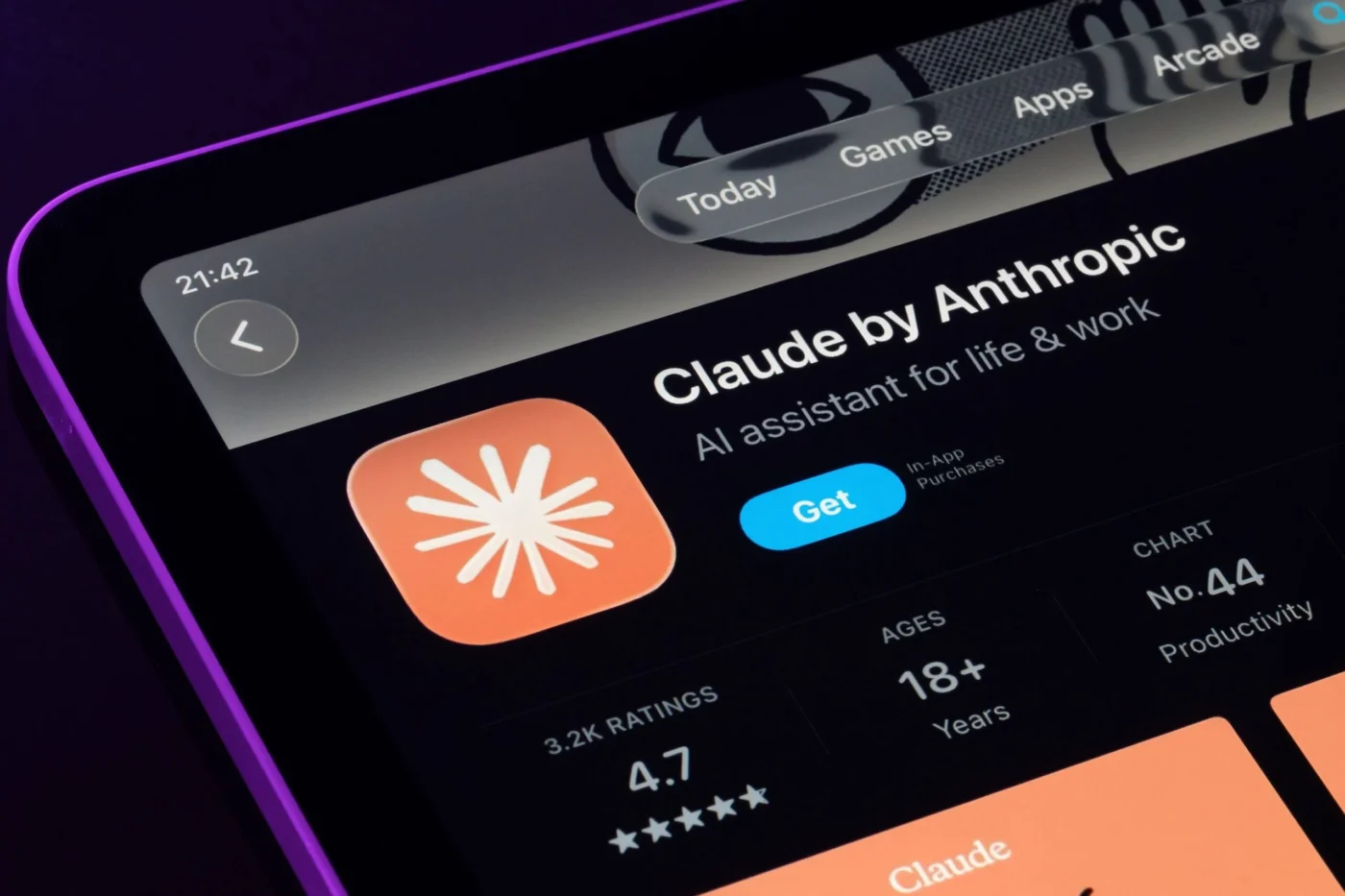
Anthropic has introduced Claude Opus 4.8, the company’s most advanced artificial intelligence model to date, with global availability beginning immediately. This release succeeds Opus 4.7 and delivers notable enhancements in programming capabilities, logical reasoning, and response accuracy.
Based on Anthropic’s internal testing, Claude Opus 4.8 achieves superior results compared to OpenAI’s GPT-5.5 and Google’s Gemini 3.1 Pro across various standardized AI evaluations. The model particularly excels in autonomous coding tasks, financial data analysis, and computer interaction scenarios.
Autonomous AI describes systems capable of executing complex workflows with minimal human oversight. As organizations expand their deployment of AI-powered automation, capabilities in this domain have become increasingly critical.
Customizable Processing Intensity
Among the most notable features is the introduction of adjustable effort controls, now accessible through Claude.ai and Claude Cowork platforms. This functionality enables users to calibrate the computational resources allocated to individual requests.
For straightforward queries, users can reduce processing intensity to accelerate responses and minimize token consumption. Conversely, complex challenges can receive maximum computational attention for more thorough analysis.
Tokens represent the fundamental measurement units AI services employ to quantify both input prompts and generated responses. Each interaction with an AI model consumes tokens, regardless of whether the request involves a basic question or sophisticated programming tasks.

Reducing computational effort directly decreases token usage, potentially generating significant cost savings for users with high-volume requirements.
Enhanced Code Quality and Business Features
Regarding reliability improvements, Opus 4.8 demonstrates a fourfold enhancement in detecting coding mistakes compared to Opus 4.7. This advancement represents substantial progress for software developers deploying the model in live production systems.
The company is simultaneously introducing an experimental preview of dynamic workflows within Claude Code. This capability orchestrates hundreds of concurrent sub-processes to manage extensive code repository transformations.
The model also exhibits greater transparency. According to Anthropic, it proactively identifies limitations in its own responses and refrains from presenting unverified information as fact.
Fast mode operations have become significantly more economical, delivering three times better cost efficiency than previously, while maintaining the published rate of $10 per million input tokens and $50 per million output tokens.
Standard tier pricing continues at $5 per million input tokens and $25 per million output tokens without modification.
Public Market Preparations Alongside OpenAI
The Opus 4.8 announcement arrives amid reports that Anthropic is finalizing a pre-IPO funding round exceeding $30 billion. Industry sources suggest this investment could establish a company valuation surpassing $900 billion.
While Anthropic has not officially announced plans for a public offering, financial analysts indicate a potential 2026 IPO timeline. This trajectory parallels comparable activities by OpenAI and SpaceX, which are similarly pursuing public market entries.
Anthropic emerged from a group of former OpenAI executives and has established itself as a dominant force in the global artificial intelligence industry.
Get 3 Free Stock Ebooks
Discover top-performing stocks in AI, Crypto, and Technology with expert analysis.
- Top 10 AI Stocks - Leading AI companies
- Top 10 Crypto Stocks - Blockchain leaders
- Top 10 Tech Stocks - Tech giants



