



Key Takeaways
- Bullion advanced 0.7% to reach $4,570.60 per ounce Monday before retreating from session highs
- The yellow metal touched its weakest level since the end of March during erratic trading
- Treasury yields declined following a period of sustained selling pressure across debt markets
- Aerial assaults on Emirati nuclear infrastructure and Saudi targets undermined truce optimism
- President Trump’s Beijing trip yielded no tangible progress regarding Tehran negotiations
Precious metals experienced uneven price action Monday as market participants monitored stabilizing government bond markets alongside escalating Middle Eastern hostilities.
Bullion climbed 0.7% to $4,570.60 per ounce during morning trade. However, the metal had previously declined to levels not witnessed since March 30 in early session activity, highlighting the volatile nature of current market conditions.
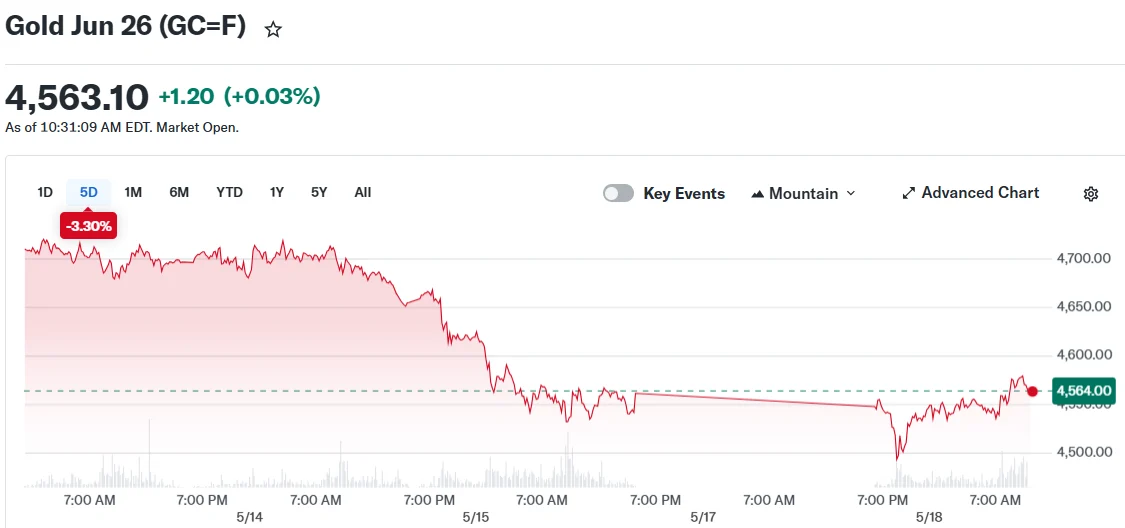
Futures contracts for gold registered a 0.3% decline to $4,574.20 per ounce at certain points throughout the trading day.
These fluctuations occurred as government bond yields retreated following a challenging period for fixed-income securities. The recent selloff had created anxiety among market participants.
Oil prices also experienced downward pressure. Iranian state media suggested Washington had proposed temporarily lifting petroleum sanctions against Tehran pending finalization of a comprehensive peace agreement.

Tehran Conflict Maintains Market Anxiety
Gold has surprisingly declined from its position when the Iranian confrontation began in late February. While this may appear counterintuitive given the continuing hostilities, there’s a logical explanation.
Market participants have instead sought refuge in the greenback as their preferred safety asset. The American currency has benefited from perceptions that the United States, being a significant energy producer, maintains better insulation from potential energy disruptions stemming from the conflict.
A robust dollar increases the cost of gold for international purchasers, potentially dampening overall demand.
Inflation anxieties have similarly pressured gold. Should the military conflict drive consumer prices upward, monetary authorities might implement rate increases. Elevated interest rates typically diminish the appeal of non-interest-bearing holdings such as precious metals.
Aerial Strikes and Diplomatic Disappointment Heighten Uncertainty
During the weekend, an unmanned aerial vehicle attack ignited a blaze at an Emirati atomic energy installation. Saudi Arabian authorities additionally reported intercepting three hostile drones.
These incidents raised renewed questions about the tenuous ceasefire arrangement between Washington and Tehran.
President Donald Trump communicated via social platforms that time is running out for Iran to finalize a peaceful resolution. He indicated American forces might recommence operations absent a negotiated settlement.
Certain investors had anticipated Trump’s recent Chinese visit might facilitate progress in Iranian discussions. Beijing maintains significant Iranian petroleum imports, providing it considerable influence in diplomatic proceedings.
However, the summit failed to generate immediate commitments from Chinese leadership.
David Morrison, Senior Market Analyst at Trade Nation, noted the weekend revived anxieties that had temporarily subsided during Trump’s Asian trip.
“It became painfully apparent that the Chinese trip was a non-event, while Iran appears in no mood to accede to the U.S. peace plan,” Morrison said.
With the ceasefire facing renewed challenges and diplomatic channels showing limited progress, bullion prices appear positioned for continued turbulence in coming sessions.
Get 3 Free Stock Ebooks
Discover top-performing stocks in AI, Crypto, and Technology with expert analysis.
- Top 10 AI Stocks - Leading AI companies
- Top 10 Crypto Stocks - Blockchain leaders
- Top 10 Tech Stocks - Tech giants



