


Key Highlights
- Brent crude reached $98.73 per barrel while WTI jumped to $94.14 following Iranian threats against Gulf energy assets
- Tehran announced plans for a maritime exclusion zone spanning the Persian Gulf as retaliation against U.S. economic sanctions
- Focus intensifies on the Strait of Hormuz as Iran negotiates shipping arrangements with Oman
- Saudi Aramco facilities in Jazan suffered an attack on Monday with minimal infrastructure damage
- Crude prices have surged over 30% since conflict escalation began in late February, including an 8% Brent increase last week
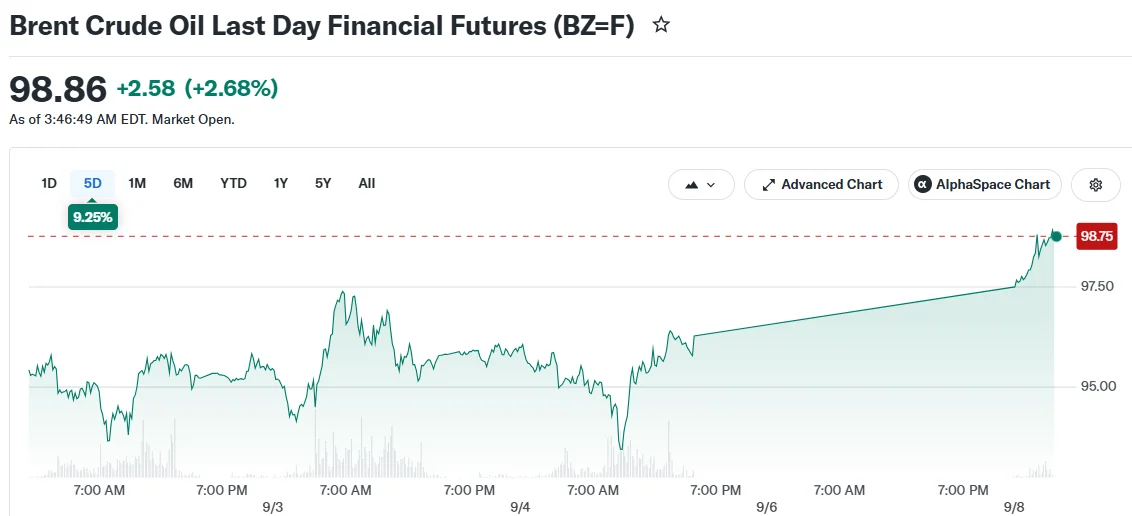
Oil prices experienced a significant rally on Tuesday as Tehran intensified its rhetoric against energy infrastructure throughout the Gulf region, bringing Brent crude within striking distance of the $100 threshold.
Brent futures advanced 1.6% to reach $98.73 per barrel, while U.S. West Texas Intermediate jumped 2.9% to hit $94.14. Monday had already seen Brent settle nearly 1% higher after momentarily touching the $98 level.
The price surge comes after a series of reciprocal military actions between Washington and Tehran over the weekend, including multiple incidents targeting vessels in Persian Gulf waters.
Tehran issued warnings about implementing a maritime exclusion zone throughout the Persian Gulf in response to what Iranian officials characterized as American “economic warfare.” Mohammad Baqer Qalibaf, Iran’s Parliament Speaker, emphasized that U.S. oil and gas operations in the area face significant vulnerability.
“The energy production infrastructure throughout this region is extensive, reachable, and vulnerable,” Qalibaf stated. “Any attacks on our facilities will be met with reciprocal action. We have already demonstrated our capability.”
Mohsen Rezaei, who serves as secretary of Iran’s Supreme National Security Council, declared via X that the United States had been issued a “definitive warning” and that continued economic aggression would result in maritime restrictions extending to match the perimeter of American blockade measures.

Hormuz Strait Becomes Primary Market Focus
The Strait of Hormuz, a critical chokepoint for global oil transportation, has become the primary concern for energy traders worldwide.
Iranian officials announced intentions to establish a new restricted maritime zone within the Gulf alongside an alternative shipping channel. These developments have heightened concerns about potential delays and disruptions to tanker movements through this vital waterway.
Tehran has also indicated that negotiations with Oman regarding Hormuz shipping protocols are nearing completion, characterizing the talks as entering their concluding phase. The prospective agreement would establish a temporary safe passage route through the strategic strait.
Despite these diplomatic efforts, energy markets remain doubtful that negotiations will yield a swift resolution to the underlying tensions.
Chris Wright, the U.S. Energy Secretary, reported that approximately 8 million barrels per day continue to flow from the Persian Gulf region on average, although many tankers are now deactivating their tracking transponders to evade monitoring.
Saudi Infrastructure Targeted
Saudi Aramco’s petroleum facilities located in Jazan near the Red Sea coastline were subjected to another assault on Monday. While the incident did not result in substantial infrastructure damage, it represents the most recent in a sequence of strikes that have already compelled a neighboring refinery to suspend operations.
Crude oil valuations have now climbed more than 30% since hostilities intensified at the conclusion of February. Last week alone saw Brent advance 8%, while WTI registered gains approaching 10%.
Market participants are monitoring developments intensely for indicators of either further escalation or potential diplomatic progress that could fundamentally alter supply projections.
Get 3 Free Stock Ebooks
Discover top-performing stocks in AI, Crypto, and Technology with expert analysis.
- Top 10 AI Stocks - Leading AI companies
- Top 10 Crypto Stocks - Blockchain leaders
- Top 10 Tech Stocks - Tech giants



