



Key Highlights
- BTC declined from $80,000 to below $77,000, reaching a monthly bottom at $76,020
- Coinbase premium indicator dropped to -0.0983%, marking the lowest reading this month and indicating institutional selloff
- Spot Bitcoin ETFs recorded $1.3 billion in withdrawals across four straight days
- Over 104,013 positions were liquidated within 24 hours, amounting to $257.67 million in losses
- Rising tensions between Iran and global powers contributed to market volatility
Bitcoin has experienced approximately a 4.5% decline over the past seven days, dropping from levels above $80,000 to reach a monthly bottom just above $76,000. Currently, BTC is changing hands at approximately $77,621, representing a 38% decrease from its October all-time high.
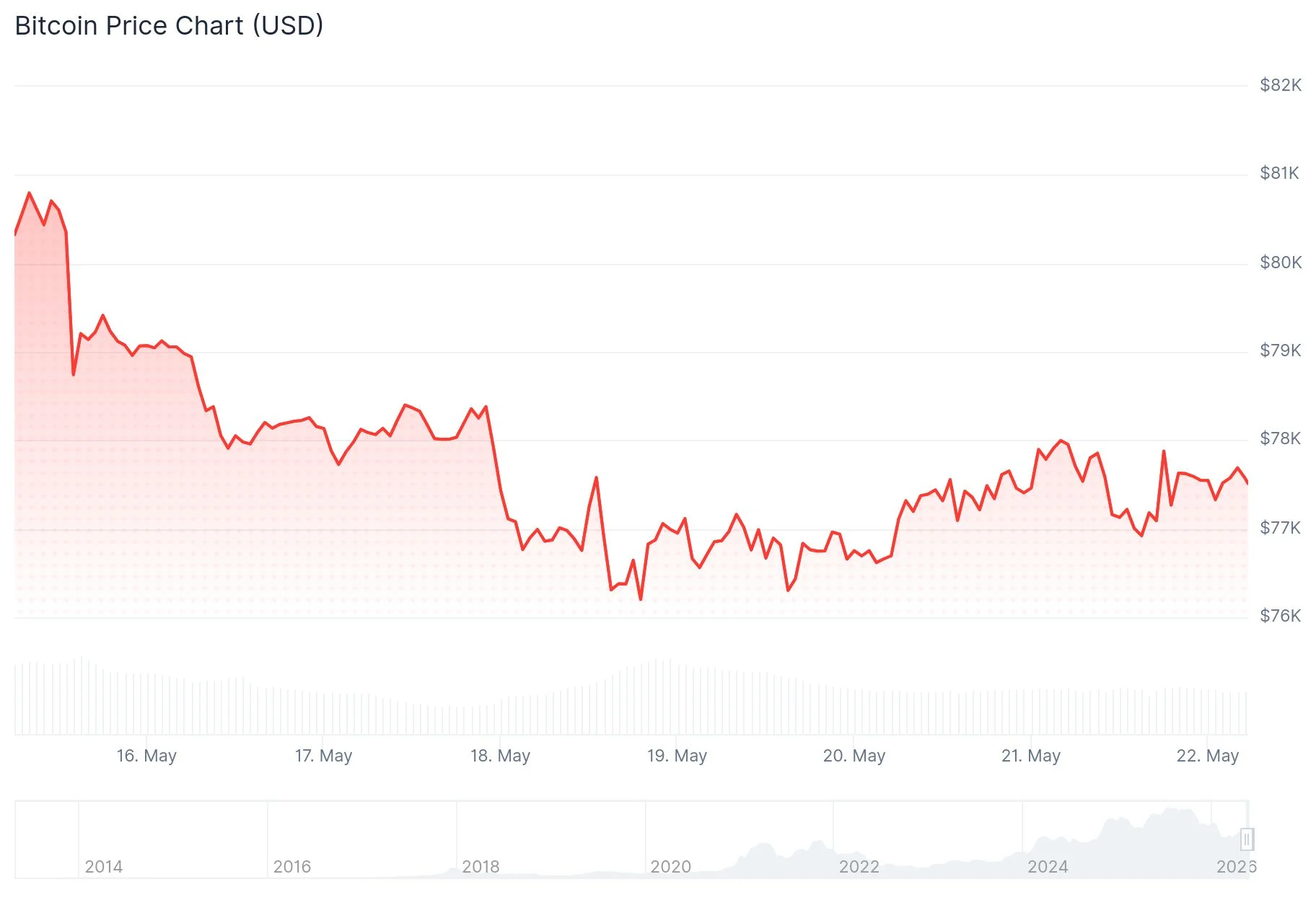
The downturn has been accompanied by significant position liquidations. Data from CoinGlass reveals that approximately 104,013 traders saw their positions liquidated in a 24-hour period, with aggregate liquidations totaling $257.67 million. The largest individual Bitcoin liquidation order occurred on Binance, reaching a value of $3.04 million.
The broader cryptocurrency market experienced similar pressure, with Ethereum dipping below the $2,300 threshold and XRP falling under $1.40, demonstrating that the selling pressure extended beyond Bitcoin.
Professional Investors Accelerate Selloff
The Coinbase premium indicator, a crucial measure of institutional trading behavior, has dropped to its monthly low of -0.0983% as of May 21. This metric tracks the price differential between Coinbase, the exchange favored by institutional US investors, and Binance, which attracts more retail participation.
According to CryptoQuant analyst Darkfost, institutional selling momentum “has intensified recently,” with professional market participants on Coinbase “selling more aggressively than investors trading on Binance.” He noted that macroeconomic uncertainty seems to be “pushing institutions toward hedging strategies while waiting for greater clarity.”
LVRG research director Nick Ruck suggested the downturn could reflect “net selling pressure from larger holders,” indicating that institutional players may be realizing gains or adjusting their portfolio allocations.

Market analyst Axel Adler characterized the data as demonstrating “zero confirmation from US spot demand.”
US-based spot Bitcoin ETFs have experienced four consecutive trading sessions of capital outflows totaling $1.3 billion starting May 14. Similarly, Ethereum spot ETFs have registered eight consecutive days of net withdrawals, losing $28.14 million on May 20 alone.
Chart Analysis and Global Risk Factors
Market analyst Ted Pillows observed that despite BTC breaking above the $78,000 threshold, “spot demand isn’t strong at all.” He projected Bitcoin might attempt a rally toward the $79,500–$80,000 range as short positions close out, but cautioned that the bearish trend could persist if spot buying remains subdued.
Blockchain data highlighted by analyst Ali Charts revealed that 9,664 BTC, valued at more than $744 million, were transferred to cryptocurrency exchanges during a five-day period — a pattern typically interpreted as preparation for selling.
Geopolitical developments involving Iran and the United States added pressure to risk assets. Crude oil prices jumped more than 4% following reports that Iran’s supreme leader refused proposals to transfer enriched uranium outside the country. This development prompted investors to reduce exposure to volatile assets.
Bitcoin is presently trading above the $77,200 support zone with immediate resistance located at $78,000. Critical support lies at $76,200, while the next significant downside level is positioned at $74,200.
Get 3 Free Stock Ebooks
Discover top-performing stocks in AI, Crypto, and Technology with expert analysis.
- Top 10 AI Stocks - Leading AI companies
- Top 10 Crypto Stocks - Blockchain leaders
- Top 10 Tech Stocks - Tech giants



