



TLDR
- For the week concluding May 15, 2026, spot Bitcoin ETFs saw net outflows totaling $1 billion
- The withdrawals terminated a six-week positive streak that accumulated $3.4 billion
- The heaviest single-day exodus occurred on Wednesday, totaling $635.23 million
- Every one of the 11 Bitcoin ETF products experienced withdrawals on Friday’s trading session
- Technical analyst Ali Charts identified a 17% realized profit metric as concerning, marking the peak level since October 2025
Spot Bitcoin exchange-traded funds experienced their most significant weekly capital exodus since January, marking the conclusion of six consecutive weeks of steady institutional accumulation. The investment vehicles shed precisely $1 billion during the five-day period through May 15, 2026, based on figures compiled by SoSoValue.
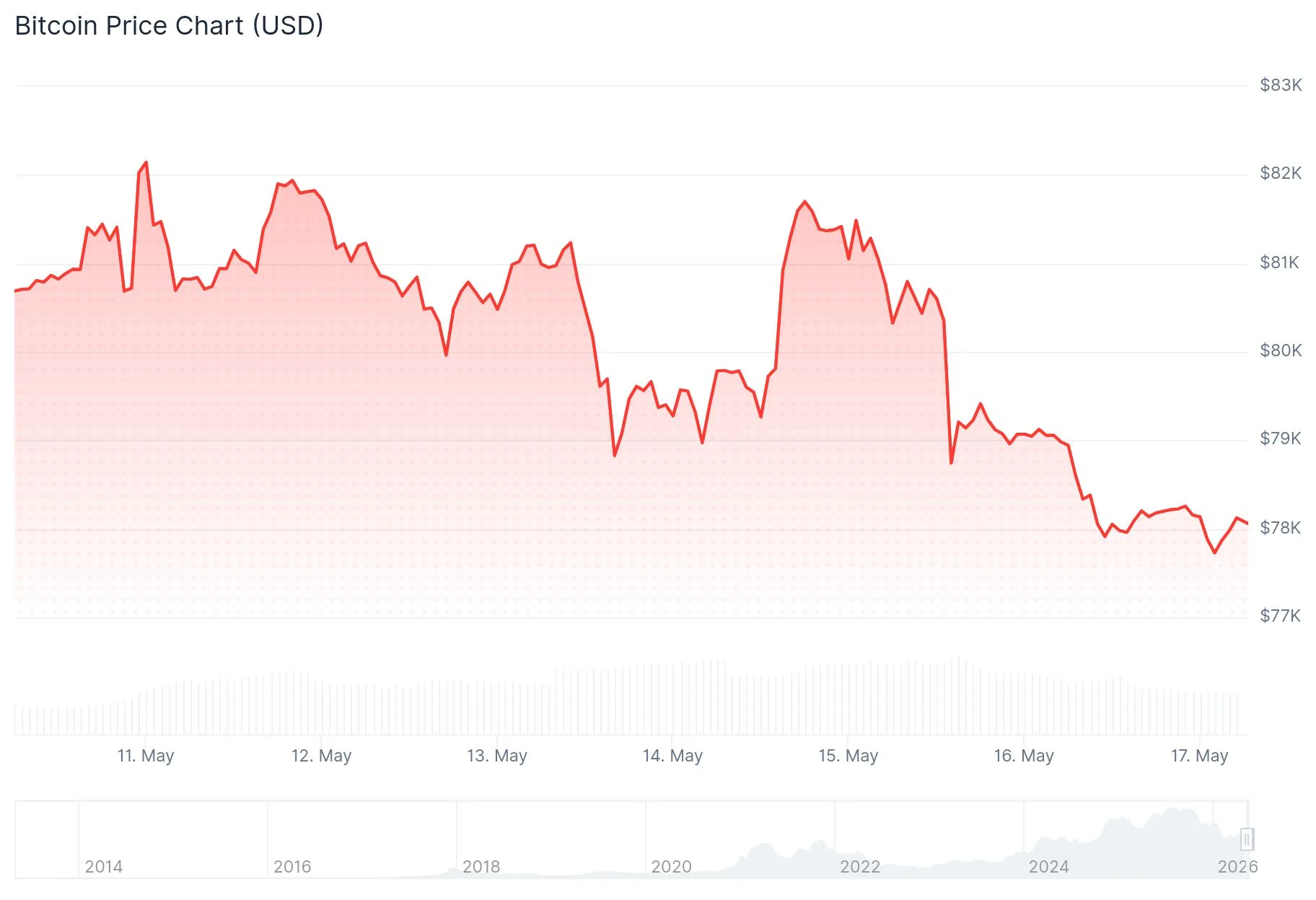
Monday’s trading session opened the week on a modestly optimistic note, registering $27.29 million in net inflows. However, sentiment shifted dramatically by Tuesday, as investors withdrew $233.25 million from the products.
Mid-week proved particularly brutal for the ETF category. Wednesday witnessed outflows reaching $635.23 million, representing the most severe single-day redemption activity throughout the entire period. Thursday provided temporary relief with $131.31 million returning to the funds.
The week concluded negatively on Friday. An additional $290.42 million departed the investment products, with every single one of the 11 spot Bitcoin ETF offerings recording net outflows—not a single fund managed to attract capital.
The recently concluded six-week accumulation period had generated $3.4 billion in aggregate inflows, averaging approximately $568 million weekly. April independently contributed $1.97 billion, establishing itself as 2026’s most robust monthly performance. The week beginning April 17 stood out as the strongest individual period, attracting $996.38 million.

Aggregate net assets throughout the entire spot Bitcoin ETF ecosystem currently total $104.29 billion. Since launching in January 2024, cumulative net inflows have reached $58.34 billion.
Macro Conditions Drove the Reversal
Broader economic factors contributed significantly to the trend reversal. April’s Consumer Price Index registered 3.8%, while the Producer Price Index matched 2022 levels at 6%. The benchmark 10-year Treasury yield advanced to 4.54%, marking its most elevated reading since May 2025. CME’s FedWatch tool indicated greater than 44% probability for a Federal Reserve rate increase by year-end December.
Market strategists at Bitunix characterized the capital movement as “aggressive” reallocation toward artificial intelligence equities and institutional crypto adoption. Technology giants NVIDIA, Google, and Apple advanced toward record valuations. AI semiconductor manufacturer Cerebras experienced a remarkable surge exceeding 70% following its initial public offering.
Analyst Warns on Profit Margins
Cryptocurrency market analyst Ali Charts issued a cautionary message via social media platforms. His analysis revealed that Bitcoin’s average trader realized profit margin currently stands at 17%, representing the highest measurement recorded since October 2025. Ali Charts characterized this development as “a major warning sign,” suggesting typical investors hold substantial unrealized gains and may consider liquidating positions.
He referenced historical precedent to support his assessment. The previous instance when profit margins touched 17% while Bitcoin simultaneously tested its 200-day moving average as overhead resistance occurred in March 2022, which subsequently led to a local price peak followed by an extended downward trajectory.
Spot Ethereum ETF products similarly experienced capital outflows throughout all five trading sessions. These instruments lost $254.46 million collectively for the week, reducing total net assets to $12.93 billion.
A recent institutional survey conducted by Nickel Digital revealed that 86% of professional asset allocators maintain expectations for cryptocurrency ETF inflows to expand throughout 2026 as regulatory frameworks become increasingly defined.
Get 3 Free Stock Ebooks
Discover top-performing stocks in AI, Crypto, and Technology with expert analysis.
- Top 10 AI Stocks - Leading AI companies
- Top 10 Crypto Stocks - Blockchain leaders
- Top 10 Tech Stocks - Tech giants



