TLDR
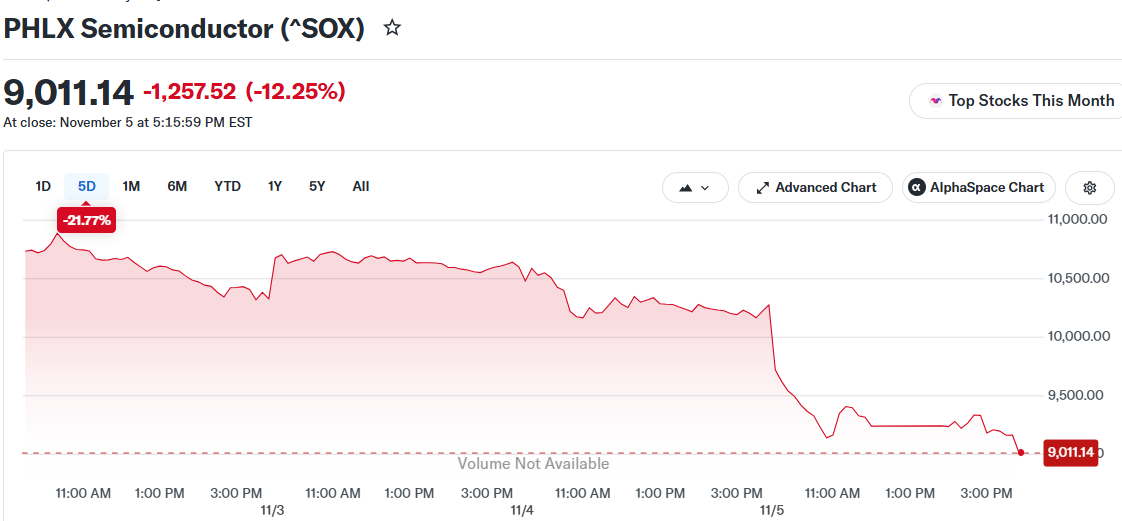
- The PHLX Semiconductor Index fell 12% on Thursday, its worst sell-off since 2020.
- Nvidia, AMD and Micron led a Friday rebound in chip stocks.
- Investors had reacted to what a Democratic win in Congress could mean for US data center plans.
- The October jobs report was strong and pushed Treasury yields higher.
- Nasdaq 100 futures rose 1.6% while Dow futures fell 0.9%.
Chip stocks moved higher on Friday after a hard fall the day before. The PHLX Semiconductor Index dropped about 12% on Thursday. It was the index’s worst one-day sell-off since 2020.
Nvidia shares rose more than 4% in early Friday trading. The stock had lost 9% in the prior session. The gain recovered only a small part of that decline.
AMD posted the largest jump among the big names, rising about 8%. On Thursday, the company’s shares had fallen 17%. That was one of the steepest drops in the sector.
Micron Technology gained more than 5% on Friday. The memory chip maker was among the stocks that bounced back after the sell-off. Premarket trading had shown even larger gains for the company.
What Drove the Thursday Sell-Off
Large parts of the artificial intelligence trade were hit hard on Thursday. Investors were working out what a Democratic win in Congress could mean for data center construction in the US. Many chip companies sell products that go into those facilities.
Intel shares fell 10% on Thursday. In premarket trading on Friday, the stock rose nearly 5%. That erased part of the previous day’s loss.

SK Hynix also rose in US premarket trading, gaining about 5%. In its home market, the stock fell sharply during Friday’s session. Samsung Electronics also dropped in Asia after the Wall Street sell-off.
Qualcomm and Arm Holdings were also among the chip names rebounding on Friday. Both companies are part of the wider semiconductor group that was hit on Thursday. Their gains followed the same pattern as the larger chip makers.
Jobs Report and Treasury Yields
The October jobs report came in strong on Friday. It pushed Treasury yields higher. The data gave the Federal Reserve room to raise interest rates in December.
The 10-year Treasury yield rose to 4.9%. The 30-year yield moved close to 5.3%. The 2-year yield, which tracks expectations for Fed rates, passed 4.5%.
Investors had already expected a rate rise next month. For that reason, stock futures did not move much on the jobs data. S&P 500 futures rose 0.2%.
Nasdaq 100 futures gained 1.6%, led by the tech rebound. Dow futures moved the other way. They fell 0.9%, or about 480 points.
Investors were watching for signs that stocks had stopped falling after Thursday’s sell-off. Early Friday trading showed buyers stepping back into chip names. The semiconductor index was poised to open higher.