


TLDR
- Brent crude fell to $105.45 and WTI to $97.35 on Friday, but both are set for weekly gains.
- WTI is up about 6% this week after a large draw in US crude inventories.
- Iran is stepping up strikes near the Strait of Hormuz, and flows were about 68% of the baseline.
- The IEA agreed to release more than 20 million barrels of diesel, pushing European margins down.
- The US is weighing sanctions relief for some shadow fleet vessels to lower freight rates.
Oil prices dipped on Friday, but both major benchmarks are still on track to end the week higher. Traders are weighing risks to Middle East supply and a bigger-than-expected drop in US crude stocks.
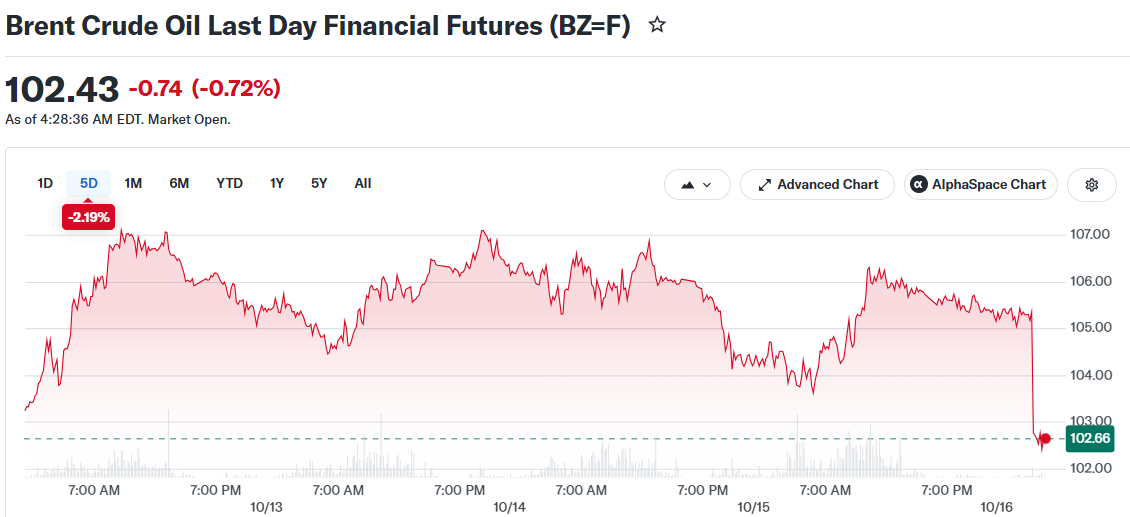
Brent crude futures were down 47 cents, or 0.44%, at $105.45 a barrel by 0747 GMT. West Texas Intermediate futures fell 62 cents, or 0.63%, to $97.35.
US Stock Draw Lifts WTI
WTI settled up more than 3% on Thursday after a large draw in US crude inventories. Hurricane-related production shut-ins contributed to the drop.
Reuters reported that WTI is up 5.9% for the week. Investing.com put the gain at 6.2%, while Brent is up between 0.7% and 0.9%.
Analysts at ING said uncertainty in the Middle East and worries about flows through the Strait of Hormuz have the market pricing in a risk premium. They said an agreement between the US and Iran would give buyers more confidence.
Iran said it is stepping up strikes near the Strait of Hormuz. It pointed to the US blockade of its ports and tougher sanctions introduced last month.

Kpler data showed Hormuz clearance averaged 11.62 million barrels per day in the seven days to October 13. That is about 68% of the 17.15 million bpd baseline.
Kpler analysts said the attacks pushed Gulf crude flows sharply lower. They expect a slower and more uneven recovery without a full political deal.
Diesel Release and Sanctions Talks
The International Energy Agency agreed on Thursday to release more than 20 million barrels of diesel. European diesel refining margins fell nearly 2% on Friday to $78.67 a barrel.
Margins had climbed as high as $95 a barrel in September. Diesel supply tightened because of the wars in Ukraine and Iran.
The IEA also said it will speed up the release of oil left from an emergency reserve pledged in March. It warned that diesel markets could stay tight well into 2027 and forecast lower global oil demand this year.
A US official said the Trump administration is considering lifting sanctions on some shadow fleet vessels. The goal is to cut record global freight rates, though it is unclear if the plan will go ahead.
These ships have carried oil and fuel from countries including Russia, Iran and Venezuela. Days earlier, President Donald Trump temporarily lifted sanctions on Russian diesel, which drew criticism from Ukrainian President Volodymyr Zelenskiy, European countries and some Republicans.
Elsewhere, the Houthis fired missiles at the presidential palace complex in Aden on Thursday, killing two guards. The Saudi-led coalition detailed dozens of attacks on Saudi infrastructure.
Ukraine said it will resume attacks on Russian energy infrastructure. The IEA said Middle East crude exports reached about 75% of prewar levels in September.
President Trump also said Washington was considering more military action against Iran after the November 3 midterm elections.
Get 3 Free Stock Ebooks
Discover top-performing stocks in AI, Crypto, and Technology with expert analysis.
- Top 10 AI Stocks - Leading AI companies
- Top 10 Crypto Stocks - Blockchain leaders
- Top 10 Tech Stocks - Tech giants



