


TLDR
- OKX has brought in new capital from Circle, Ripple, QRT, and Standard Chartered’s SC Ventures, maintaining its $25 billion pre-money valuation.
- The investment extends a funding initiative originally spearheaded by Intercontinental Exchange (NYSE parent) in March.
- Each new participant maintains operational relationships with OKX spanning stablecoins, trading liquidity, and institutional custody services.
- A newly formed OKX-ICE partnership launched tokenized equity trading for 63 U.S. corporations this week.
- OKX founder Star Xu emphasizes the platform’s transformation from pure crypto exchange to comprehensive financial technology ecosystem.
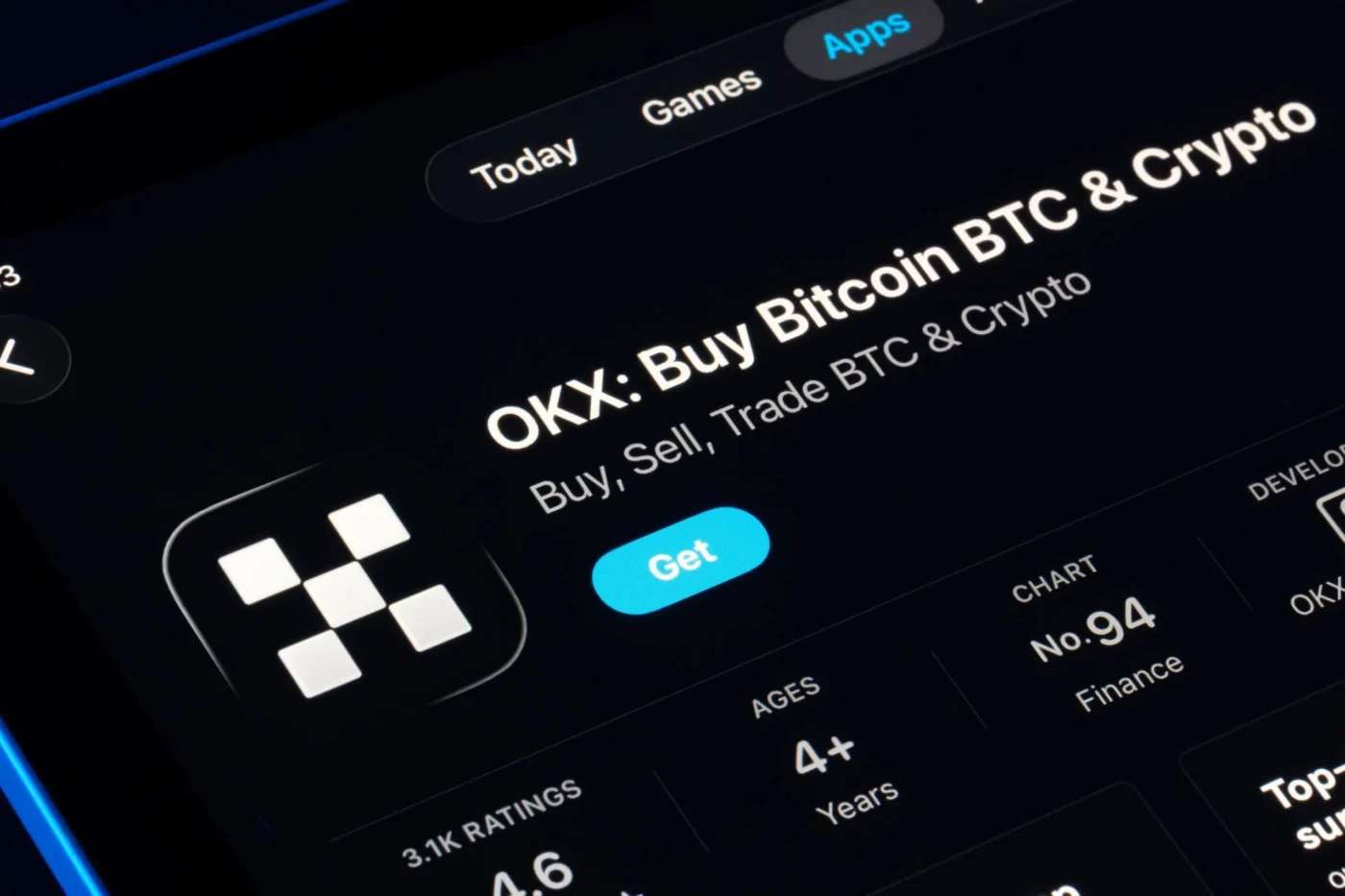
The crypto exchange OKX has brought aboard four strategic investors as part of its evolution from a digital asset trading platform into a broader financial services operation. Circle, Ripple, QRT, and SC Ventures (Standard Chartered’s innovation arm) have all joined the company’s cap table.
The financing maintains OKX’s $25 billion pre-money valuation established during an initial funding announcement earlier this year.
Intercontinental Exchange, which operates the New York Stock Exchange, anchored that March financing event. The current transaction represents a continuation of that round rather than a fresh valuation milestone.
Specific capital commitments from individual participants were not disclosed by OKX. The company similarly withheld details regarding the equity distribution among new backers.
Strategic Relationships Precede Capital Commitments
All four incoming investors maintain operational ties with OKX predating their equity participation. Circle’s USDC stablecoin powers settlement across multiple OKX trading environments. Ripple’s recently launched RLUSD stablecoin has been integrated into the platform’s unified liquidity system.
Quantitative trading firm QRT serves as a market-making partner for OKX, supplying depth and absorbing position risk. Standard Chartered’s infrastructure already supports portions of OKX’s institutional asset safeguarding operations.

Star Xu, who founded and leads OKX, characterized the exchange business as the company’s origin point. He outlined a vision for OKX as an international financial technology infrastructure provider.
According to Xu, the strategic ambition centers on enabling clients to manage their financial lives—holding assets, transacting, building positions, and generating returns—within a single integrated system. He noted the fresh capital would fuel this expansion trajectory.
Xu highlighted real-world asset tokenization as a particular area of focus for capital deployment. The company stopped short of providing a detailed allocation plan for the proceeds.
Round-the-Clock Tokenized Equity Trading Goes Live
The collaboration between OKX and ICE has deepened considerably since the March capital infusion. Earlier this week, a jointly controlled entity submitted regulatory documentation to commence tokenized equity trading under experimental guidance issued by the Securities and Exchange Commission.
OKXICE, the partnership vehicle, intends to facilitate trading in blockchain-represented shares of 63 U.S. corporations. Operations would function continuously without traditional market hours constraints.
The infrastructure relies on OKX’s X Layer blockchain network. Settlement transactions would execute using stablecoin denominations such as USDC, USDT, and USDG.
Tokenized securities on the system would preserve standard shareholder entitlements including dividend distributions and governance participation. The initiative represents an initial application of the SEC’s experimental five-year tokenization pathway.
Analysts at Macquarie noted that widespread adoption hinges on OKXICE’s ability to onboard sufficient corporate participants and market makers. The bank emphasized that maintaining price stability during overnight periods requires robust liquidity commitments.
Macquarie further observed that the provisional status of the regulatory exemption might discourage institutional participation. Market participants may prefer to defer technology investments until permanent rules are established. TD Securities echoed these reservations in independent commentary.
The Macquarie research team anticipates retail traders will embrace the platform ahead of institutional players. Traditional financial institutions already operate efficient equity trading channels and confront more stringent compliance obligations.
Jeremy Allaire, who heads Circle as CEO, framed the investment as a natural extension of expanding operational integration with OKX. He characterized USDC’s platform-wide adoption as demonstrating the potential when compliant dollar-backed tokens intersect with liquid crypto marketplaces.
Alex Manson, leading SC Ventures for Standard Chartered, emphasized that digital asset market maturation depends on robust operational foundations. He specifically referenced enterprise-quality custody infrastructure as essential.
Jack McDonald, serving as senior vice president at Ripple, positioned stablecoins as evolving into fundamental financial plumbing. He suggested the investment could catalyze expanded collaboration between Ripple and OKX going forward.
OKX characterized the transaction as a formal extension of the March financing event. The company reaffirmed that its $25 billion valuation remains consistent with the earlier determination.
Get 3 Free Stock Ebooks
Discover top-performing stocks in AI, Crypto, and Technology with expert analysis.
- Top 10 AI Stocks - Leading AI companies
- Top 10 Crypto Stocks - Blockchain leaders
- Top 10 Tech Stocks - Tech giants



