


Key Highlights
- SpaceX (SPCX) shares climbed 7% Friday following multiple successful rocket missions throughout the week.
- Three separate launches occurred within a 13-hour window: NASA’s Crew-13 ISS mission, the Transporter-18 rideshare, and an NRO classified payload.
- Starship achieved its first successful orbit, successfully deploying 26 next-generation Starlink V3 satellites.
- The Starlink division generated $4.3 billion in quarterly revenue with operating profit reaching $1.7 billion.
- The company’s AI computing division recorded a $1.3 billion loss, though new contracts could generate monthly revenue of $3.4 billion.
Shares of SpaceX (SPCX) advanced 7% during Friday trading. The rally followed an intensive period that saw the aerospace company execute three distinct rocket missions in less than 13 hours.
Space Exploration Technologies Corp., SPCX
Thursday marked the beginning of this packed launch schedule with NASA’s Crew-13 mission. The Falcon 9 lifted off from Cape Canaveral, transporting four astronauts toward the International Space Station.
The Dragon spacecraft completed docking in less than eight hours. This marked the quickest journey to the ISS ever achieved by an American-built vehicle.
According to SpaceX director Julianna Scheiman, favorable orbital mechanics played a key role. The station’s trajectory created ideal conditions for an accelerated rendezvous.

The astronauts are scheduled for a six-month orbital stay. Meanwhile, the first-stage booster executed a successful recovery, making it available for future flights.
Packed Launch Schedule Showcases Capabilities
Mission number two was Transporter-18, a rideshare flight delivering 130 commercial satellites to orbit. Among them was Google’s Project Suncatcher, an experimental platform designed to evaluate AI processing in the space environment.
Google’s objective centers on testing its TPU processor architecture under spaceflight conditions. The experiment will measure performance against cosmic radiation and thermal extremes.
This particular booster was completing its 25th mission. The company’s reliance on reusable rocket technology continues to expand.
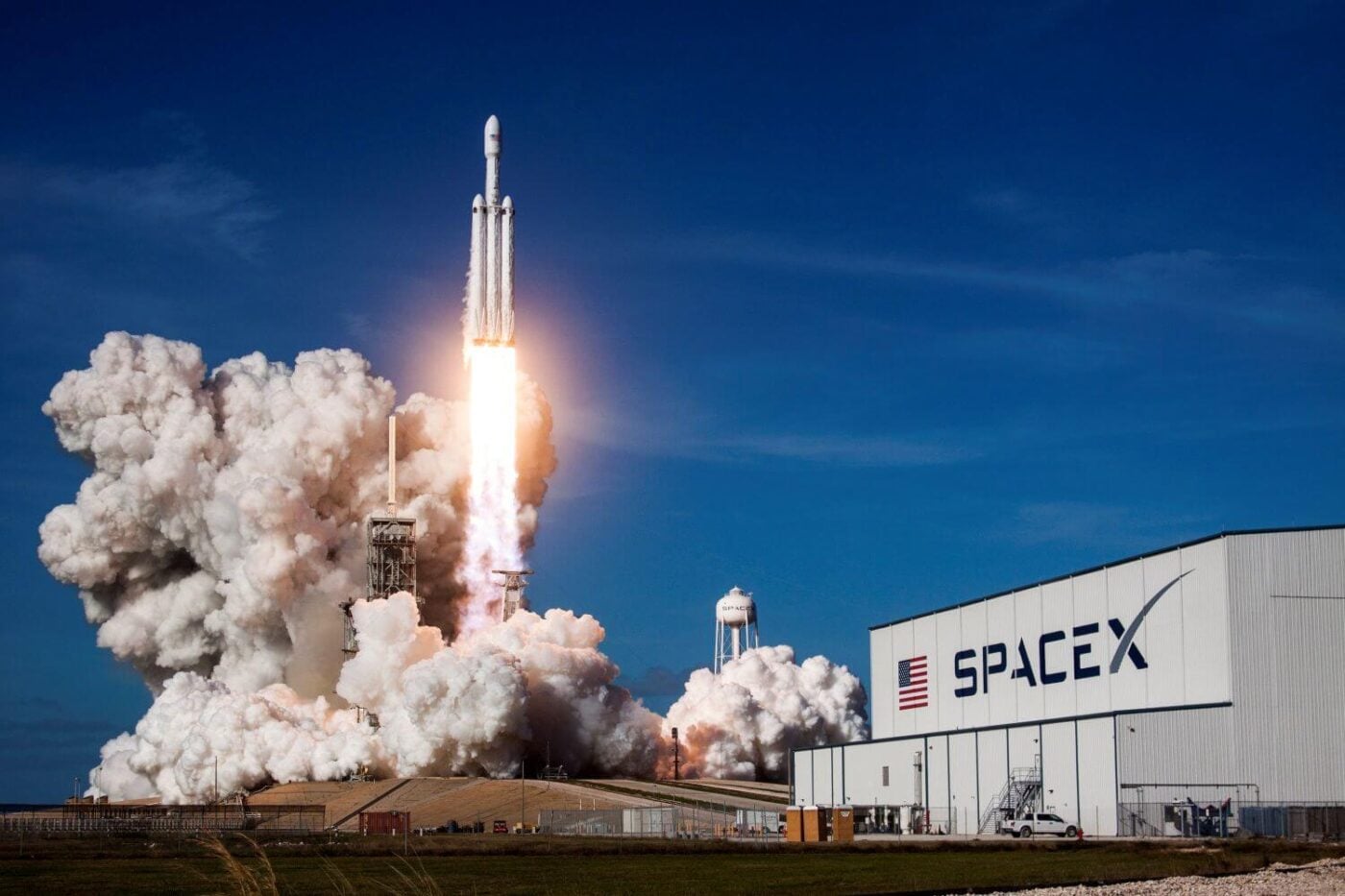
Launch three deployed a Falcon Heavy vehicle. The mission delivered a classified satellite for the National Reconnaissance Office, representing the first time this heavy-lift rocket has served that customer.
Both side-mounted boosters returned safely to landing zones in Florida. Combined across the three missions, SpaceX retrieved four first-stage boosters.
Earlier during the same week, Starship completed its inaugural orbital flight. The vehicle successfully released all 26 Starlink V3 satellites despite experiencing a single engine shutdown during climb.
Starship represents a cornerstone of SpaceX’s strategy to expand Starlink network capacity. An operational Starship fleet should also dramatically reduce satellite deployment costs.
Jon Edwards, a SpaceX executive, described the week as extraordinary on X. He highlighted the diversity of vehicles operated: Starship, Dragon, Falcon 9, and Falcon Heavy all flew within days.
Financial Performance Reveals Mixed Picture
The Connectivity division, dominated by Starlink operations, continues driving company earnings. Last quarter, this segment delivered $4.3 billion in revenue alongside $1.7 billion in operating profit.
The Space division, responsible for launch services, showed contrasting results. It recorded a $542 million operating loss against $962 million in revenue.
A portion of this deficit stems from internal accounting practices. When SpaceX launches proprietary Starlink satellites, the Space division doesn’t book corresponding revenue.
The Connectivity segment instead absorbs these launch expenses, distributing them over time as depreciation. This methodology inflates Starlink’s profitability while depressing Launch metrics beyond actual performance.
SpaceX’s newest division focuses on AI infrastructure. It reported a $1.3 billion quarterly loss on $2.6 billion in sales.
This situation appears poised for rapid transformation. New agreements with Anthropic, Alphabet, and additional clients for compute capacity leasing could generate as much as $3.4 billion monthly at full utilization.
Reaching that scale requires substantial investment. The AI division’s capital expenditures alone totaled $15.8 billion last quarter.
Get 3 Free Stock Ebooks
Discover top-performing stocks in AI, Crypto, and Technology with expert analysis.
- Top 10 AI Stocks - Leading AI companies
- Top 10 Crypto Stocks - Blockchain leaders
- Top 10 Tech Stocks - Tech giants



