


Quick Summary
- The precious metal gained 0.6% to reach $4,139.91 per ounce on Tuesday, staging a modest rebound following Monday’s sharp 4% decline.
- Escalating crude oil values linked to ongoing US-Iran disputes over the Strait of Hormuz are intensifying concerns about price pressures.
- The benchmark 10-year Treasury yield reached a 19-year peak, diminishing gold’s appeal as an investment option.
- The yellow metal has declined approximately 7% in the last 30 days following the Federal Reserve’s rate increase and hawkish policy signals.
- Market participants are focused on Wednesday’s inflation figures and Friday’s employment data for insight into future Fed policy direction.
Gold prices experienced upward movement on Tuesday following a challenging beginning to the trading week. The precious metal experienced a 4% decline on Monday, marking one of its most significant single-session losses in recent memory.
Spot gold advanced 0.6% to settle at $4,139.91 per ounce at 05:33 ET. Meanwhile, gold futures edged up 0.1% to $4,171.90 per ounce.
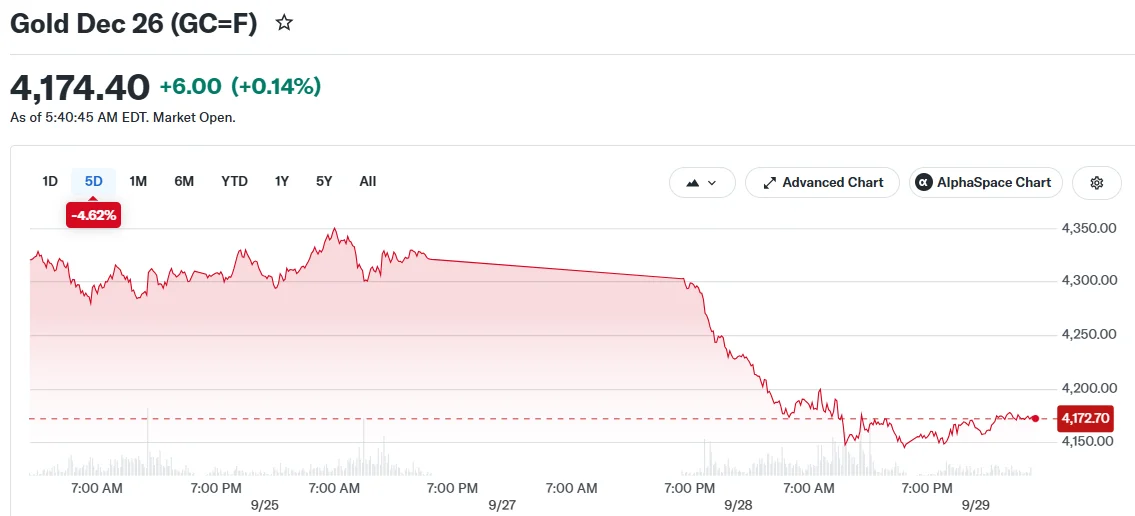
Notwithstanding the modest uptick, the yellow metal continues trading near its lowest level in seven weeks. Gold has faced headwinds from both increasing bond yields and a resilient US dollar.
US-Iran Tensions Support Energy Prices and Inflation Concerns
Oil prices continued their ascent as Iranian leadership maintained strict conditions for reopening the strategically vital Strait of Hormuz. This crucial passage serves as a primary channel for worldwide energy transport.
President Trump turned down Iran’s most recent proposal, which included provisions to reopen the waterway within a week. Sources close to Iranian leadership suggest they view a settlement as unlikely before November’s US midterm elections.

The standoff between Washington and Tehran has now extended into its eighth month, continuing to interrupt energy supply chains and amplify inflation anxieties.
Elevated crude prices typically contribute to broader inflationary pressures. This environment encourages central banking institutions to tighten monetary policy through rate increases, which negatively impacts gold since the metal generates neither interest payments nor dividend income.
Bond Yields Surge to Levels Not Seen Since 2006
The continued surge in energy prices intensified selling pressure in the US government bond market on Monday. The benchmark 10-year Treasury yield advanced to its loftiest level in nearly two decades.
Elevated bond yields increase the opportunity cost associated with maintaining gold holdings. Investors can secure better returns through interest-bearing securities rather than maintaining positions in a non-yielding asset.
Throughout the previous month, the precious metal has shed roughly 7% of its value. This downturn materialized after the Federal Reserve implemented its first rate hike since 2023.
Central bank policymakers have maintained a hawkish stance, signaling potential additional rate adjustments throughout the year. Current market pricing indicates approximately a 70% probability of another increase coming in October.
Experts at ANZ noted that near-term prospects for gold appear challenging. They highlighted elevated yields and inflationary risks as the primary obstacles confronting the metal.
An earlier analysis from the previous week documented gold futures declining across three consecutive trading sessions. Those losses materialized as the US dollar gained strength and the 10-year yield climbed to levels last observed in July 2007.
Silver experienced parallel weakness throughout that period, closing down 2.4% at $64.382 per troy ounce.
Market attention has now shifted to two critical economic releases this week. Wednesday will deliver the personal consumption expenditures index, representing the Federal Reserve’s primary inflation gauge.
Friday’s nonfarm payrolls release will provide fresh perspective on labor market conditions. These reports could significantly influence market expectations regarding the central bank’s upcoming policy decisions.
Currently, gold finds itself navigating competing market dynamics. While elevated energy prices and geopolitical instability bolster safe-haven demand, climbing yields and dollar strength continue exerting downward pressure on the precious metal.
Get 3 Free Stock Ebooks
Discover top-performing stocks in AI, Crypto, and Technology with expert analysis.
- Top 10 AI Stocks - Leading AI companies
- Top 10 Crypto Stocks - Blockchain leaders
- Top 10 Tech Stocks - Tech giants



