



Key Highlights
- Bitcoin declined 1.7% to reach $83,061 on Monday, breaking a two-week winning streak.
- The U.S. 10-year Treasury yield surged above 5%, marking its highest point since 2007.
- President Trump declined to rule out additional military operations against Iran ahead of midterm elections.
- Iran’s proposal for a seven-day ceasefire and reopening the Strait of Hormuz was dismissed by Trump.
- Major altcoins including Ether, XRP, Solana and Cardano experienced similar downward pressure.
The world’s leading cryptocurrency experienced a downturn on Monday, with Bitcoin sliding 1.7% to settle at $83,061 as of 6:30 GMT. This pullback marked the end of a consecutive two-week rally for the digital asset.
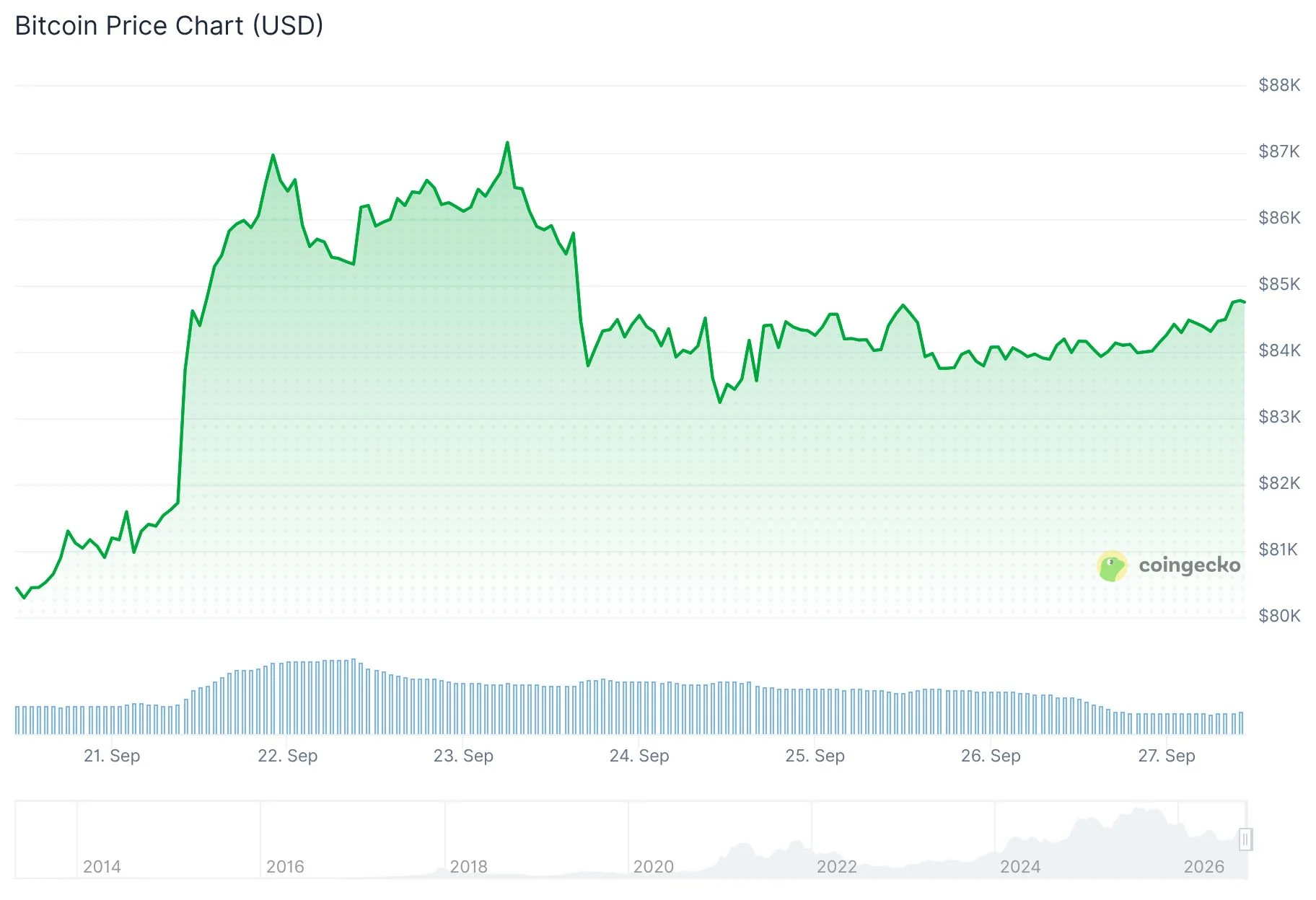
The cryptocurrency’s retreat occurred alongside a sharp rise in Treasury yields and persistent geopolitical instability involving the United States and Iran. These combined factors dampened market enthusiasm for higher-risk investments such as digital currencies.
Treasury Yields Reach 17-Year Peak
Global government bond yields experienced widespread increases on Monday. Financial markets are pricing in continued central bank rate increases as policymakers combat persistent inflation.
The benchmark 10-year U.S. Treasury yield broke through the 5% threshold, reaching levels not witnessed since 2007. Japanese yields similarly climbed beyond three-decade highs.
Both the Federal Reserve and Bank of Japan implemented rate increases in September. Officials from both institutions have indicated additional tightening may be necessary given stubborn inflationary pressures.

Elevated interest rates typically create headwinds for cryptocurrencies like Bitcoin. They constrict market liquidity and enhance the relative attractiveness of government securities as safer investment alternatives.
Escalating energy prices have been a primary inflation catalyst throughout the year. A significant portion of this surge stems from the continuing U.S.-Iran confrontation.
Trump Keeps Military Options Open Against Iran
During a Sunday interview, President Trump expressed optimism that hostilities with Iran would conclude shortly. However, he stopped short of excluding additional military operations before November’s midterm elections.
“I don’t want to say that. I mean, it’s possible, but I just don’t want to say that,” Trump responded when questioned about potential renewed strikes, according to Fox News.
The President emphasized continued U.S. pressure on Iran through combined military and economic strategies. Iran’s Foreign Minister Abbas Araghchi declared his nation’s readiness for further confrontation, even referencing the possibility of what he termed a “doomsday war.”
During the United Nations General Assembly, Iranian officials presented a diplomatic proposal. The plan outlined a seven-day reopening of the strategically vital Strait of Hormuz oil shipping lane, accompanied by a temporary ceasefire and negotiations.
Trump rebuffed the proposition. He characterized Iran’s diplomatic overture as a sign of weakness under mounting pressure, reiterating on Truth Social that Iran must not be permitted to acquire nuclear weapons capabilities.
The ongoing conflict has sustained elevated petroleum prices. WTI crude oil futures increased nearly 1% to reach $93.28 per barrel on Monday.
Broader Crypto Market Experiences Losses
Bitcoin’s decline rippled throughout the cryptocurrency ecosystem on Monday. Market participants appeared to be securing profits following the two-week price appreciation.
Ether, the second-largest cryptocurrency by market capitalization, decreased 2% to $2,652.25. XRP shed 2.7%, Solana declined 2.1%, and Cardano dropped 3.5%.
BNB retreated 1.3%. Within the memecoin sector, Dogecoin tumbled 3.8% while the Trump-branded token fell 4.4%.
Notwithstanding Monday’s setback, Bitcoin has delivered strong performance over recent months. The cryptocurrency has gained 42% during the past three months, surpassing other major asset classes including the Nasdaq index and gold.
One cryptocurrency exchange chief executive identified the $83,800 to $84,000 zone as a critical support threshold. He suggested the $85,000 to $85,800 range could serve as resistance should prices rebound.
Market participants are now focusing on upcoming economic releases this week, including U.S. inflation reports, manufacturing indicators, and employment statistics. These data points could influence market expectations regarding future Federal Reserve policy decisions.
Get 3 Free Stock Ebooks
Discover top-performing stocks in AI, Crypto, and Technology with expert analysis.
- Top 10 AI Stocks - Leading AI companies
- Top 10 Crypto Stocks - Blockchain leaders
- Top 10 Tech Stocks - Tech giants



