



Key Highlights
- Stock futures in the US advanced Friday morning following a retreat in Treasury yields from recent peaks.
- The 10-year Treasury note reached 5.16%, marking its highest point since the 2008 financial crisis, before moderating.
- Crude oil prices declined, with WTI falling to approximately $92 per barrel.
- Major energy sector stocks like Chevron, Exxon Mobil, Devon Energy, and Occidental Petroleum experienced premarket declines.
- Chinese President Xi Jinping’s White House visit concluded without significant new trade agreements being revealed.
US stock futures posted gains during Friday’s early trading session. Market participants analyzed a combination of domestic economic data and international developments that have influenced both Treasury yields and crude oil valuations throughout the week.
Dow Jones Industrial Average futures and S&P 500 futures both advanced approximately 0.3%. Futures tied to the Nasdaq 100 showed stronger momentum, climbing between 0.5% and 0.6%.
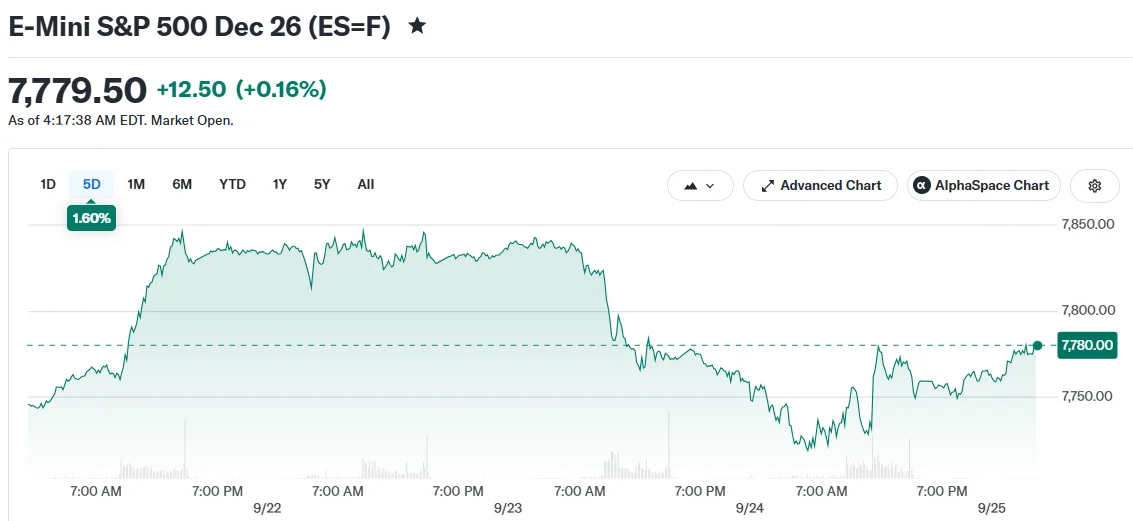
These gains followed a challenging period for equities influenced by volatility in the bond market. On Thursday, the yield on the 10-year Treasury note climbed to 5.16%, representing its peak level since the 2008 global financial crisis.
Treasury Yields Retreat After Reaching Multi-Year Peak
Heading into Friday’s session, yields showed signs of moderation. The 10-year Treasury yield dipped to approximately 5.17%, reflecting a slight decrease from Thursday’s elevated levels.
Rick Rieder from BlackRock shared his perspective with Yahoo Finance regarding the recent bond market turbulence. He characterized the situation as “not a crisis but an eye-opener.”

Richard Reyle, serving as chief investment officer at Questar Capital Partners, interpreted the bond market’s movements as a meaningful indicator. He suggested these signals point to the possibility that the Federal Reserve may implement additional interest rate increases before year-end.
“So far, stocks have been able to withstand the rising bond yields, but any further increase from current levels is a negative for stocks, plain and simple,” Reyle said.
Elevated yields increase borrowing costs across the board for both corporations and individual consumers. This dynamic has the potential to create headwinds for equity valuations as time progresses.
Crude Oil Prices Decline on Diplomatic Developments in Middle East
Oil prices experienced downward pressure on Friday. West Texas Intermediate crude fell to the $92 per barrel range. Meanwhile, Brent crude, which serves as the international pricing benchmark, hovered around $98 per barrel.
The decline followed a Reuters report indicating that diplomatic discussions between the United States and Iran were underway regarding the Strait of Hormuz. This strategic waterway represents a critical passage for international oil transportation.
Market participants interpreted this development as a positive indicator for potential de-escalation of tensions in the Middle East region. The softening in oil prices also contributed to the easing of bond yields.
However, despite this retreat in crude prices, gasoline prices across the United States remained elevated at approximately $4.50 per gallon on average. This pricing level continues to strain consumer finances.
The decline in crude oil values exerted downward pressure on energy sector equities before the market opening. Shares of Chevron, Exxon Mobil, Devon Energy, and Occidental Petroleum all registered losses in premarket activity.
The University of Michigan is scheduled to release its consumer sentiment report on Friday. This data will provide insights into whether American consumers’ expectations regarding inflation are beginning to shift.
Chinese President Concludes White House Visit
Chinese President Xi Jinping completed his White House visit on Friday. The diplomatic engagement included an elaborate state dinner Thursday evening, featuring red carpet treatment and participation from prominent American business leaders.
Notwithstanding the ceremonial elements, the visit yielded limited tangible policy achievements. The United States and China seemed to reach an understanding to maintain the status quo in their trade relationship for the coming months.
Following the meetings, no new tariff modifications or trade framework agreements were disclosed.
Market observers will remain focused on Treasury yield movements and oil price fluctuations in upcoming sessions. These two factors have emerged as the primary catalysts behind equity market volatility throughout this week.
Get 3 Free Stock Ebooks
Discover top-performing stocks in AI, Crypto, and Technology with expert analysis.
- Top 10 AI Stocks - Leading AI companies
- Top 10 Crypto Stocks - Blockchain leaders
- Top 10 Tech Stocks - Tech giants



