



Key Highlights
- Bitcoin stabilized around $84,420 following earlier declines triggered by surging oil prices and climbing Treasury yields.
- Treasury yields on 10-year U.S. bonds climbed past 5%, reaching levels not seen since 2007, creating headwinds for risk-sensitive assets including BTC.
- Brent crude oil surpassed $105 per barrel amid escalating U.S.-Iran diplomatic tensions impacting global energy markets.
- Large-scale investors accumulated approximately 30,269 BTC valued at around $2.57 billion throughout the recent price decline.
- Prediction market Polymarket indicates a 62% probability that the U.S.-Iran ceasefire remains intact until October 31.
Bitcoin maintained relatively stable trading levels on Thursday, clawing back some of its earlier declines. The cryptocurrency was priced at $84,420.2 at 17:53 ET, based on Investing.com market data.
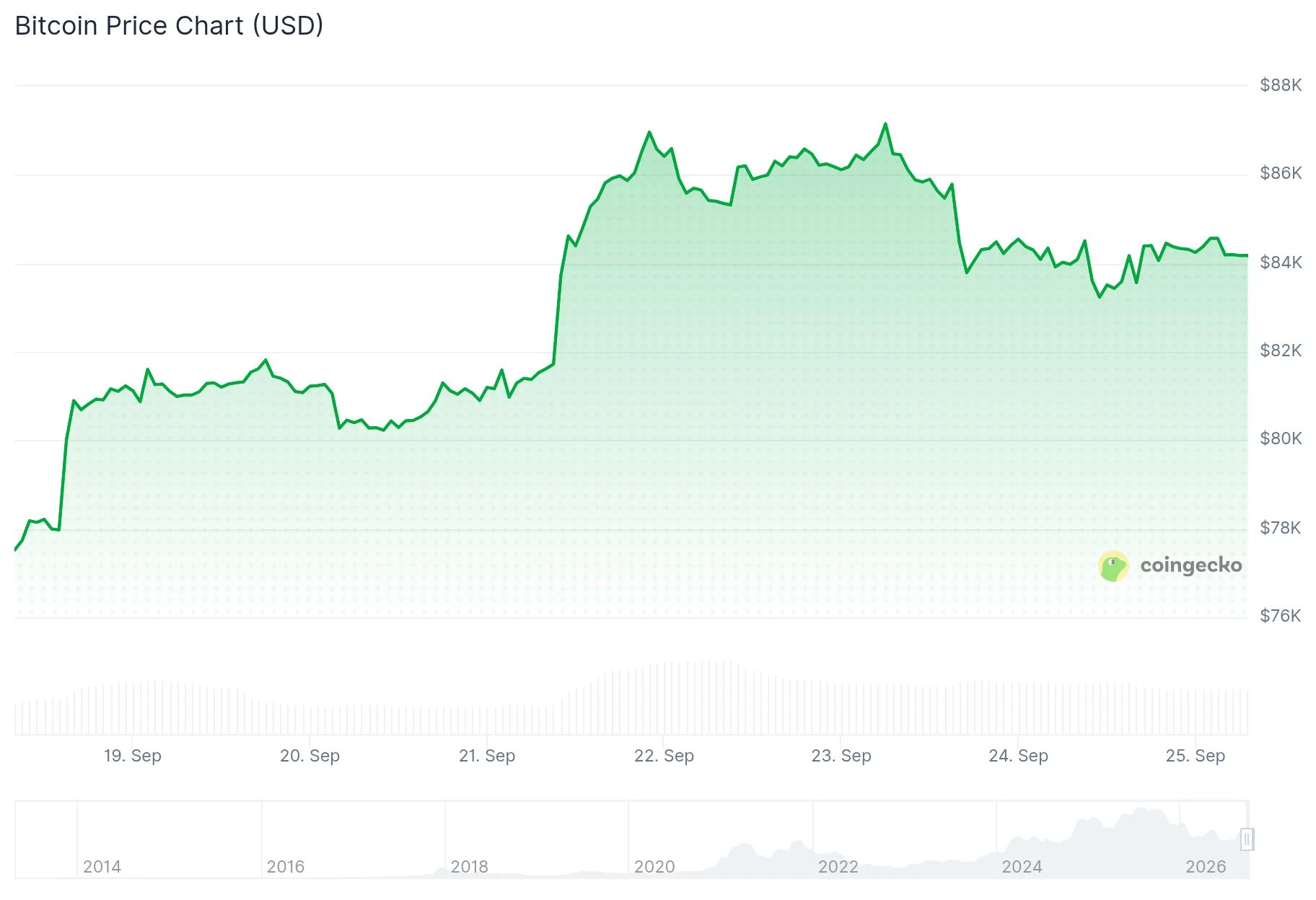
The downturn stemmed from multiple headwinds hitting financial markets simultaneously. Energy prices surged, government bond yields spiked sharply, and market participants increased expectations for additional Federal Reserve interest rate adjustments.
The wider cryptocurrency sector also trimmed its earlier losses. Most leading digital assets maintained weekly gains following a strong upward movement that began Monday.
Treasury Yields And Energy Prices Create Headwinds For Risk Assets
Treasury yields on 10-year U.S. government bonds pushed above the 5% threshold, marking the highest point since 2007.
Robust purchasing managers index data from the United States combined with hawkish rhetoric from a Federal Reserve policymaker amplified market expectations for continued rate hikes. The central bank had implemented a 25 basis point increase just the prior week.

Elevated bond yields typically diminish appetite for higher-risk investments such as Bitcoin. Fixed-income securities become more attractive in such conditions, prompting some capital to flow out of cryptocurrency markets.
Government bond yields advanced in other regions as well. Japanese 10-year yields reached a three-decade peak on Thursday.
Energy markets compounded the downward pressure. Brent crude climbed to $105.02 per barrel following diminishing prospects for diplomatic resolution between Washington and Tehran.
Iranian President Masoud Pezeshkian delivered critical remarks about the United States and President Donald Trump during an address at the United Nations General Assembly on Wednesday. The speech coincided with the most recent surge in crude oil valuations.
Notwithstanding these challenges, market analyst Ali Charts noted that substantial holders were actively purchasing during the price weakness. He highlighted that Bitcoin declined 5.24% from $87,400 down to a bottom of $82,800 beginning September 21, yet whale investors added nearly 30,269 BTC valued at approximately $2.57 billion during a 96-hour period.
Meanwhile, Bitcoin recovered from an intraday bottom near $83,000 to change hands around $84,300, per TradingView information. The bounce occurred alongside emerging reports suggesting U.S. and Iranian officials are discussing a gradual framework to reopen the Strait of Hormuz and terminate the existing blockade.
Geopolitical Tensions Continue Influencing Inflation Expectations
Market analyst Ted Pillows drew parallels between the present correction and a historical precedent. He noted Bitcoin experienced a 22% decline in 2023 following a comparable higher high formation, and although he doesn’t anticipate an identical scenario, he identified the $78,000 to $79,000 range as a potential support zone before the next upward leg.
Reuters coverage indicated that both parties in the Iran negotiations remain unwilling to relinquish their strategic advantages initially, leaving no definitive agreement in place.
The persistent conflict continues exerting upward pressure on energy commodities, with diesel fuel prices also climbing to fresh peaks. Consumer price inflation persists above the Federal Reserve’s 2% objective.
Polymarket prediction market data assigns a 62% likelihood that the current ceasefire agreement remains effective through October 31. U.S. Secretary of State Marco Rubio characterized discussions between both nations as constructive while acknowledging that no major breakthrough has materialized thus far.
Get 3 Free Stock Ebooks
Discover top-performing stocks in AI, Crypto, and Technology with expert analysis.
- Top 10 AI Stocks - Leading AI companies
- Top 10 Crypto Stocks - Blockchain leaders
- Top 10 Tech Stocks - Tech giants



