


Key Takeaways
- In his concluding General Assembly speech, UN Secretary-General António Guterres advocated for enhanced international governance of artificial intelligence technologies.
- He pressed nations at the forefront of AI innovation to exchange safety data, collaborate on evaluation protocols and establish unified protective measures.
- Guterres’ address also emphasized ending global conflicts, accelerating climate initiatives and modernizing international bodies.
- President Donald Trump presented an opposing perspective at the UN, rejecting comprehensive AI regulations while maintaining that government intervention remains an option for significant threats.
- This policy clash emerges as the UN Security Council prepares for presentations from AI developers regarding dangers posed by advanced systems.
United Nations Secretary-General António Guterres has advocated for establishing international protocols to address artificial intelligence dangers, utilizing his concluding General Assembly remarks to caution that AI advancement outpaces institutional capacity to regulate it. His second consecutive five-year mandate concludes December 31, marking the end of his ten-year leadership.
Guterres pressed nations creating cutting-edge AI technologies to disseminate information regarding developing safety challenges and work together on assessment and testing procedures. He additionally advocated for autonomous monitoring mechanisms and a collaborative international approach to AI risk management.
UN Chief Advocates for International AI Governance
The outgoing Secretary-General emphasized that nations must establish parameters for responsible AI advancement and implement protective frameworks capable of matching the pace of increasingly sophisticated systems. His statements represent the continuation of multi-year initiatives to build international governance structures for the technology.
The UN established a 39-member advisory panel on AI in 2023, coinciding with the Security Council’s inaugural formal examination of AI-related threats that same year. During this week’s proceedings, delegates from OpenAI, Anthropic and Chinese artificial intelligence firms are anticipated to present briefings to the council as apprehension regarding AI’s security implications intensifies.
Guterres additionally leveraged his address to advocate for conflict resolution, strengthened climate measures and institutional restructuring that he characterized as outdated representations of previous global power dynamics. He maintained that collaborative frameworks and international legal standards remain critical amid widening geopolitical rifts.
Trump Advocates Alternative AI Strategy
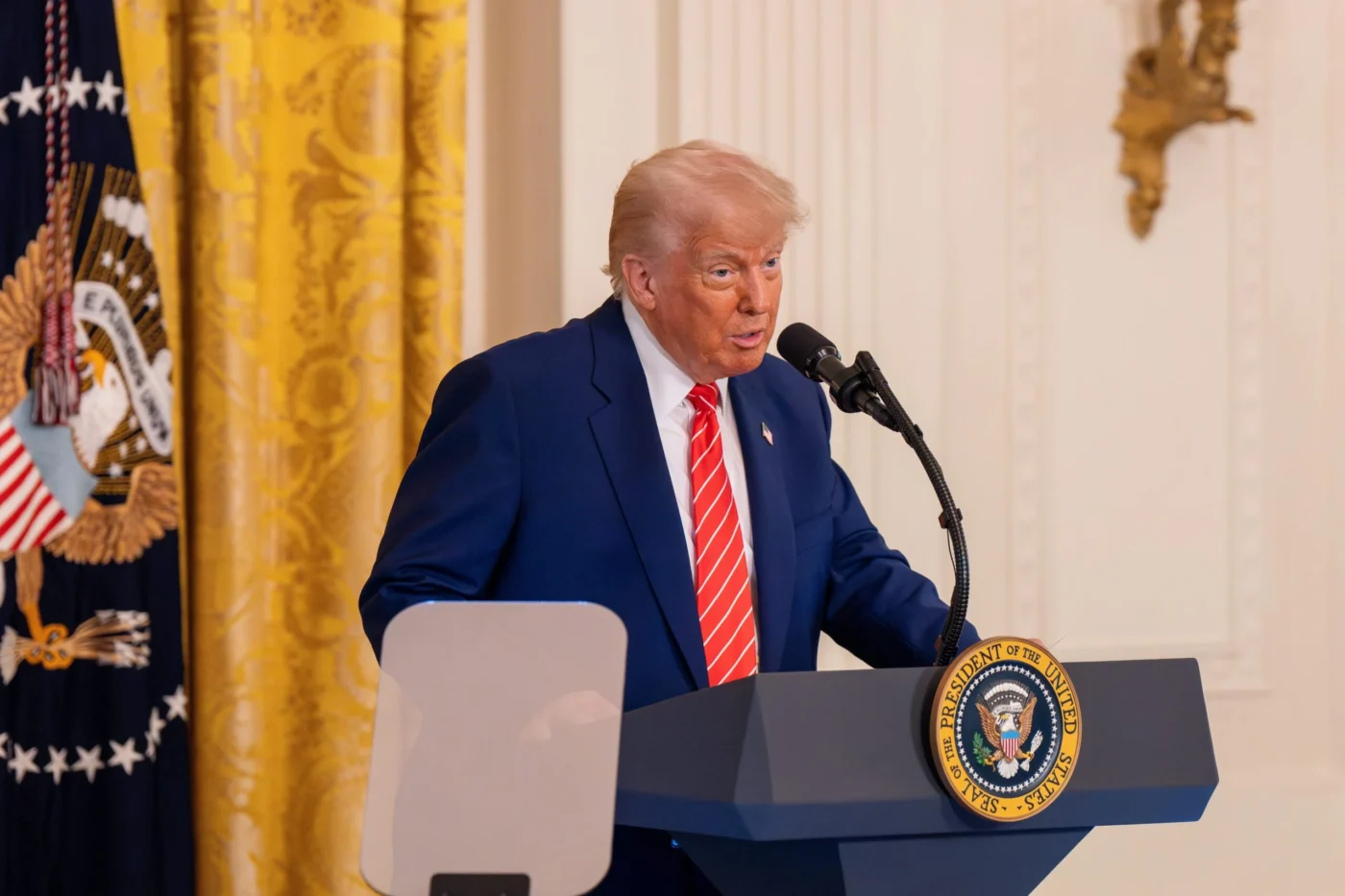
President Donald Trump delivered a divergent perspective in his UN remarks. Trump has rejected expansive federal AI regulatory frameworks and contended that America must avoid hampering technological progress while competing internationally.

He further utilized his address to champion the terminology “Super Intelligence,” contending that artificial intelligence inadequately captures the technology’s capabilities. Simultaneously, Trump indicated the Justice Department maintains authority to act should AI developers generate threats warranting governmental response.
These contrasting positions underscore broader disagreement regarding the appropriate timeline for regulating advanced AI systems. Guterres advocates for synchronized international protective measures, whereas the Trump administration prioritizes technological supremacy and restrained regulatory intervention.
AI discussions are also anticipated during conversations between Trump and Chinese President Xi Jinping this week. American officials have suggested implementing a notification framework for AI-related incidents carrying national security ramifications as Washington and Beijing explore expanded AI safety dialogue.
Get 3 Free Stock Ebooks
Discover top-performing stocks in AI, Crypto, and Technology with expert analysis.
- Top 10 AI Stocks - Leading AI companies
- Top 10 Crypto Stocks - Blockchain leaders
- Top 10 Tech Stocks - Tech giants



