


Key Takeaways
- Both Micron and SanDisk stand at the forefront of the AI infrastructure revolution, reaping substantial rewards from unprecedented demand.
- Over the last month, Micron stock has climbed nearly 20% with year-to-date gains exceeding 270% in 2026, while SanDisk has jumped over 25% monthly and nearly 700% annually.
- Micron’s diversified portfolio spans HBM, DRAM, and NAND memory solutions, whereas SanDisk concentrates primarily on NAND flash technology and enterprise-level storage systems.
- Nvidia recently revealed approximately $279 billion in supply chain and capacity obligations extending through fiscal 2032, with memory procurement representing the lion’s share.
- Remarkably, both stocks remain undervalued at approximately 6x and 8x forward earnings for Micron and SanDisk respectively, despite their explosive price appreciation.
Micron Technology and SanDisk have positioned themselves as dominant players in the AI infrastructure surge, with memory and data storage requirements reaching unprecedented levels. The market has rewarded both companies handsomely—Micron’s stock has skyrocketed more than 270% year-to-date, while SanDisk has delivered an astronomical nearly 700% return.
The massive computing infrastructure deployments by Nvidia alongside tech giants like Microsoft, Amazon, and Alphabet have created windfall opportunities for both companies. Yet their market positions and exposure to AI memory segments differ significantly, offering investors distinct value propositions.
Distinct Market Positions in the AI Memory Landscape
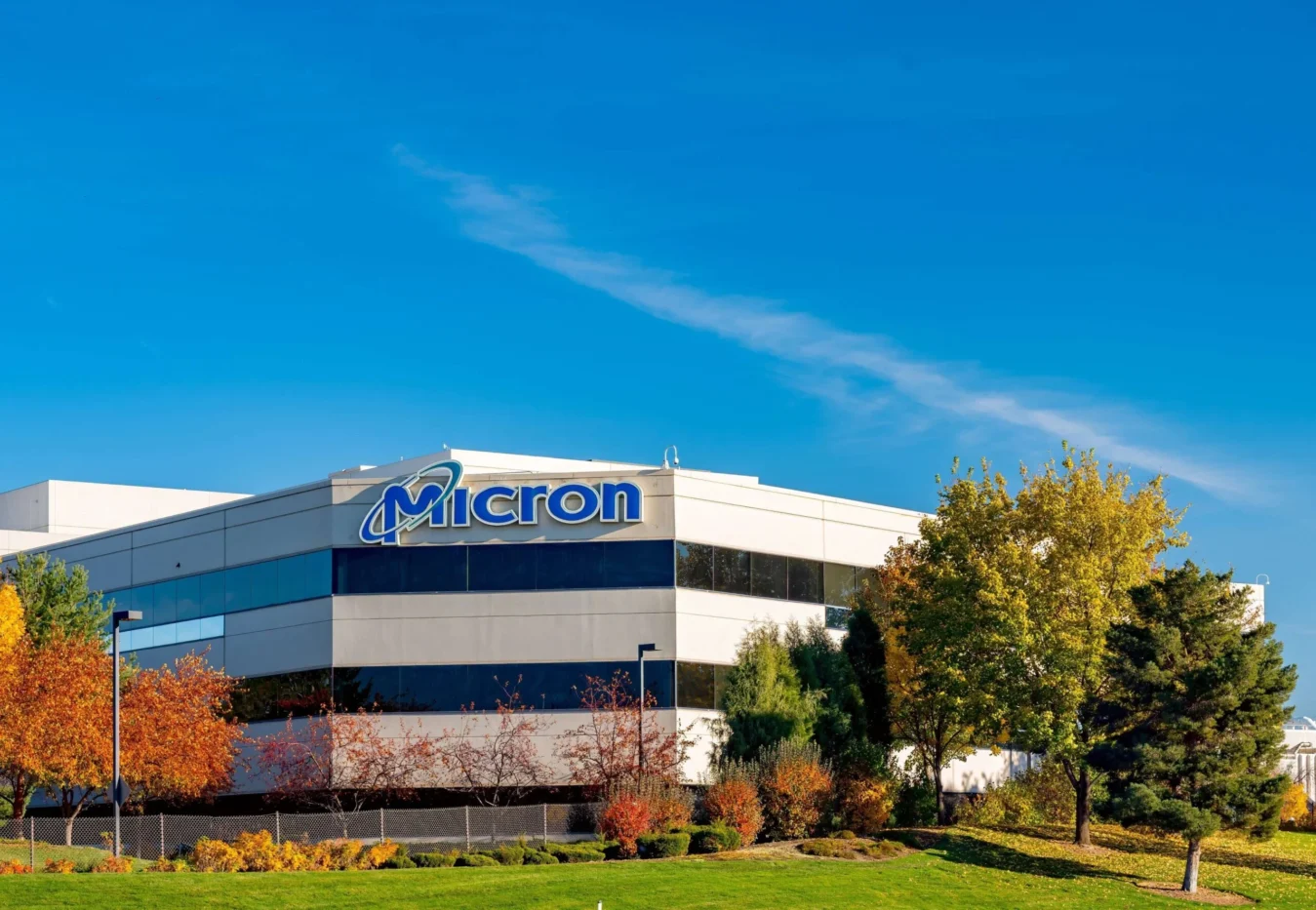
Micron’s product portfolio encompasses DRAM, NAND flash, and high-bandwidth memory (HBM), establishing a presence across multiple essential components of AI server architecture. HBM technology has become particularly crucial, positioned adjacent to GPUs to deliver the exceptional memory bandwidth required for sophisticated AI model training and inference operations.
The company has already commenced HBM4 shipments and anticipates launching its advanced HBM4E variants in 2027. This timeline positions Micron as a critical supplier for next-generation AI accelerator technology.

SanDisk, by contrast, concentrates on NAND flash memory solutions and storage hardware, including enterprise-grade solid-state drives. The company witnessed its data-center revenue surge by 437% throughout fiscal 2026, driven by exponentially growing data volumes generated by AI systems requiring robust storage infrastructure.
This differentiation is significant. Micron delivers memory solutions integrated directly with AI processing units alongside storage capabilities, whereas SanDisk offers investors more targeted exposure to the NAND flash and enterprise storage dimensions of AI infrastructure expansion.
Nvidia’s Massive $279 Billion Commitment Signals Market Dynamics
The extraordinary scale of AI memory requirements became apparent through Nvidia’s recent disclosure regarding long-term procurement agreements. The company revealed approximately $279 billion in supply and capacity obligations extending through fiscal 2032, with executive leadership indicating memory acquisition represents the predominant component.
Roughly $92 billion of these commitments fall due during the current fiscal 2027 remainder, with subsequent years requiring approximately $87 billion and $88 billion respectively. Nvidia characterized memory market conditions as exceptionally constrained, with demand persistently outpacing available production capacity.
HBM represents one of the most severely supply-limited components because its availability directly determines AI accelerator production and delivery volumes. DRAM supports broader server infrastructure requirements, while NAND stores training datasets, model checkpoints, operational logs, and other AI-generated information.
Consequently, Micron maintains direct exposure to the most supply-constrained elements of AI hardware infrastructure. SanDisk remains strategically positioned to capitalize on rapidly expanding storage needs as AI workloads transition from training phases into large-scale production deployment.
Revenue and Earnings Acceleration at Both Firms
Micron projects approximately $50 billion in revenue for its ongoing fiscal fourth quarter, anticipating an 86% gross margin alongside adjusted earnings near $31 per share. Zacks forecasts fiscal 2026 revenue potentially reaching $129.71 billion, representing a 247% year-over-year increase.
This momentum is anticipated to persist through fiscal 2027, with analyst consensus projecting revenue around $250.19 billion and earnings of $158.45 per share. Sustained demand for HBM and DRAM from AI accelerator production is expected to drive continued expansion.
SanDisk similarly demonstrates robust growth trajectories. Company guidance indicates fiscal first-quarter 2027 revenue between $10.3 billion and $10.8 billion, while consensus estimates position full-year revenue at $49.25 billion.
SanDisk’s earnings are forecast to surge approximately 201% to $213.31 per share in fiscal 2027. Enterprise SSD adoption and escalating NAND requirements from AI data centers remain fundamental to the company’s growth narrative.
Compelling Valuations Persist Despite Stock Price Surges
Notwithstanding their remarkable stock price appreciation, both companies maintain relatively modest valuations based on forward earnings projections. Micron trades at approximately six times forward earnings, while SanDisk commands roughly eight times, contrasting sharply with the S&P 500’s approximately 22 times multiple in the referenced analysis.
These compressed multiples partially reflect the memory industry’s historically cyclical characteristics. Memory stocks frequently appear most attractively priced when pricing dynamics, profit margins, and profitability approach cyclical peaks.
The critical question centers on whether AI infrastructure demand fundamentally alters this cyclical pattern. Extended supply agreements, constrained memory availability, and massive hyperscaler capital expenditures could potentially extend the current cycle beyond historical memory industry boom durations.
Micron delivers comprehensive exposure spanning HBM, DRAM, and NAND technologies, while SanDisk maintains stronger concentration in storage solutions. Both companies benefit from the identical fundamental driver: AI systems demand progressively larger memory quantities across virtually every layer of the computing infrastructure stack.
Get 3 Free Stock Ebooks
Discover top-performing stocks in AI, Crypto, and Technology with expert analysis.
- Top 10 AI Stocks - Leading AI companies
- Top 10 Crypto Stocks - Blockchain leaders
- Top 10 Tech Stocks - Tech giants



