


TLDR
- Brent crude climbed 1.3% to reach $101.59 per barrel on Tuesday, breaking a four-day losing streak
- WTI crude advanced 0.7% to $96.45 per barrel, bouncing back from Monday’s 4.5% decline
- Trump expressed willingness to meet with Iranian President Pezeshkian during UN General Assembly proceedings
- The Saudi kingdom boosted crude shipments via the Strait of Hormuz following pipeline complications
- Sharara oil field production in Libya plunged from 340,000 to 127,000 barrels daily following pipeline blockade by armed group
Oil prices staged a recovery Tuesday following four straight days of declining valuations. Brent crude futures advanced 1.3% to reach $101.59 per barrel, while West Texas Intermediate posted gains of 0.7%, settling at $96.45 per barrel.
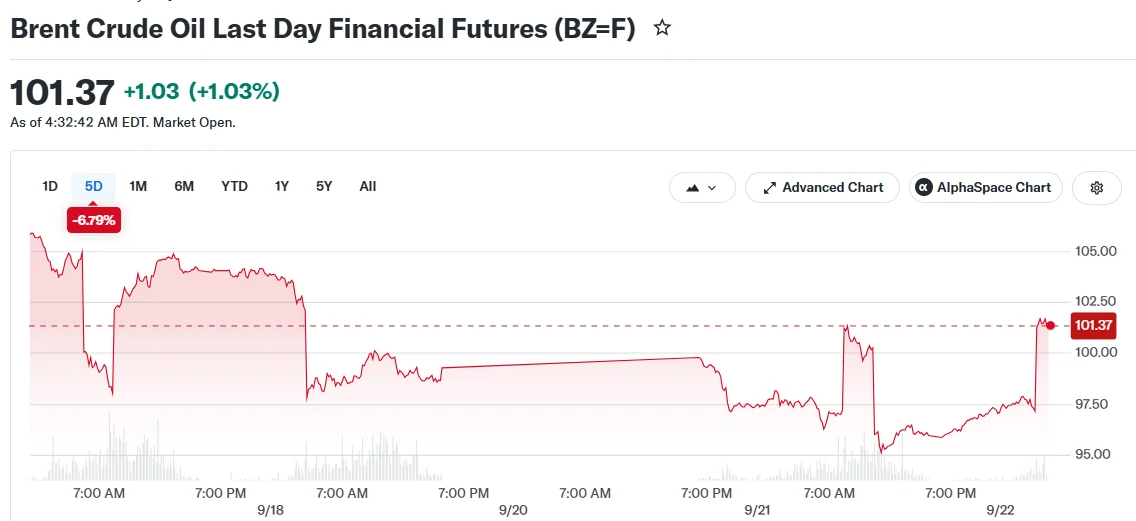
Tuesday’s gains followed a challenging session Monday when Brent dropped 3.4% and WTI plummeted 4.5%, marking their weakest closing positions since early September.
Market participants are closely monitoring possible diplomatic engagement between Washington and Tehran. President Donald Trump indicated receptiveness to a meeting with Iranian President Masoud Pezeshkian, who is present at the UN General Assembly in New York throughout the week.
Tehran has allegedly transmitted prerequisites for resuming negotiations via intermediaries. This development sparked optimism that diplomatic channels might alleviate regional tensions and minimize warfare’s influence on international energy supplies.
Crude has surged over 60% throughout the current year. Persistent Middle Eastern hostilities have interfered with energy transportation through the Strait of Hormuz, a vital passage for worldwide petroleum distribution.

Saudi Arabia Shifts Exports Through Hormuz
The Saudi kingdom recently experienced interruptions to its crucial east-west pipeline infrastructure. As a countermeasure, Saudi authorities redirected crude shipments back toward the Strait of Hormuz.
Satellite intelligence indicates Saudi observed cargo loadings from Persian Gulf terminals surged during the weekend period. Shipment volumes through the Strait of Hormuz reached approximately 2.9 million barrels daily across the previous six-day period, representing a substantial increase compared to August figures.
ING analysts observed that Middle Eastern geopolitical tensions maintained elevated risk premiums throughout the marketplace. Crude valuations recovered partial losses during Tuesday’s morning trading session driven by these apprehensions.
Yemen’s Houthi forces have additionally been contesting territorial control near the Bab el-Mandeb Strait. This confined passage connects the Red Sea with the Gulf of Aden and represents another critical transportation corridor for Saudi petroleum exports.
Libya Output Slumps, Russia Eyes Diesel Export Ban
Production interruptions extend beyond the Gulf region. Libya’s Sharara oil field, representing the nation’s most substantial production facility, has experienced dramatic output reductions.
Daily production collapsed from approximately 340,000 barrels to roughly 127,000 barrels. An armed faction obstructed a pipeline linking the production site to the Zawiya export facility.
Russia is simultaneously considering prolonging its prohibition on most diesel shipments abroad. Ukrainian strikes targeting Russian energy facilities have diminished refinery capacity, propelling diesel valuations to unprecedented levels across American and European markets.
The convergence of disruptions spanning multiple geographical areas has maintained heightened anxiety within petroleum markets. Trading professionals are monitoring UN diplomatic proceedings attentively for indicators of potential tension reduction that might alleviate supply apprehensions.
Get 3 Free Stock Ebooks
Discover top-performing stocks in AI, Crypto, and Technology with expert analysis.
- Top 10 AI Stocks - Leading AI companies
- Top 10 Crypto Stocks - Blockchain leaders
- Top 10 Tech Stocks - Tech giants



