


Key Highlights
- Satya Nadella, CEO of Microsoft, is scheduled to attend the White House state dinner honoring Chinese President Xi Jinping on September 24.
- Other prominent tech leaders expected include Jensen Huang of Nvidia, Sam Altman of OpenAI, Tim Cook of Apple, and Cristiano Amon of Qualcomm.
- The event coincides with bilateral discussions addressing artificial intelligence governance, economic relations, and trade matters.
- Representatives from both nations have explored establishing a dedicated AI communication framework for addressing national security matters.
- President Trump has resisted proposals to decelerate American AI innovation, citing competitive concerns regarding China’s technological advancement.
Microsoft chief executive Satya Nadella will be among a select group of technology industry leaders attending a White House state dinner honoring Chinese President Xi Jinping later this week.
The September 24 event will feature additional technology heavyweights including Jensen Huang from Nvidia, Sam Altman from OpenAI, Tim Cook from Apple, and Cristiano Amon from Qualcomm, Bloomberg has reported.
The dinner takes place against the backdrop of broader diplomatic discussions between the United States and China covering trade policies, artificial intelligence frameworks, and economic cooperation.
Technology matters are anticipated to occupy a central position as the planet’s two dominant economies navigate competition in AI innovation while simultaneously exploring potential collaborative opportunities.
Leading Tech Executives Converge at White House Event
Nadella’s anticipated presence brings Microsoft into a constellation of prominent American technology corporations represented at the diplomatic gathering.
Microsoft has not provided official comment regarding the reported attendance.

With executives from Nvidia, OpenAI, Apple, and Qualcomm confirmed to participate, companies at the forefront of semiconductor manufacturing, artificial intelligence platforms, consumer electronics, and wireless communications will all have representation.
The timing follows recent public statements from Anthropic’s CEO Dario Amodei advocating for a more measured approach to AI advancement.
Amodei has expressed concern that AI capabilities may be evolving more rapidly than the protective mechanisms designed to mitigate associated dangers.
OpenAI’s Sam Altman has voiced alignment with increased prudence in development, whereas Nvidia’s Jensen Huang has advocated against deliberately slowing innovation momentum.
The current administration has similarly dismissed suggestions for implementing widespread constraints on U.S. AI progress.
Trump has maintained that hampering American AI development velocity could enable China to narrow the technological advantage currently held by U.S. enterprises.
Chinese officials have likewise pushed back against cautionary narratives surrounding AI advancement, characterizing certain apprehensions as disproportionate.
Bilateral Discussions on AI Communication Framework
The state dinner arrives as representatives from both governments explore establishing a dedicated communication mechanism specifically addressing artificial intelligence concerns.
Treasury Secretary Scott Bessent convened with Chinese Vice Premier He Lifeng in New York this past Sunday in preparation for the Trump-Xi diplomatic engagement.
Bessent indicated that conversations included the possibility of forming a U.S.-China AI dialogue platform.
The contemplated framework could incorporate an alert protocol for AI-related incidents that escalate to national security significance.
Bessent suggested that enhanced communication between the world’s two preeminent AI-developing nations could strengthen transparency regarding mutual vulnerabilities.
Chinese official media characterized the exchanges as frank and productive, confirming that AI topics were addressed during discussions.
Both parties committed to maintaining ongoing dialogue.
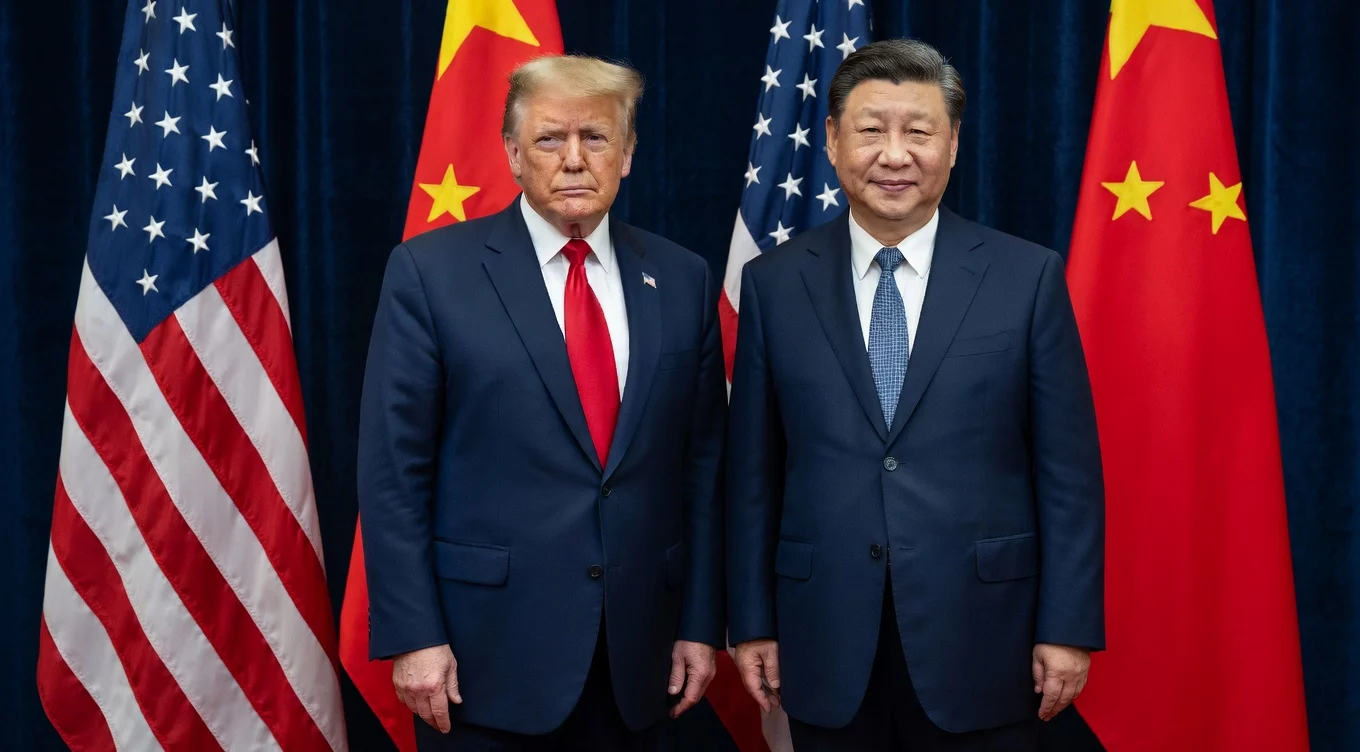
Trump and Xi are set to convene at the White House on Thursday.
Trade relations and investment policies are also expected to feature prominently in the agenda, alongside tariff negotiations, access to critical minerals, and AI regulatory approaches.
The summit unfolds as competitive dynamics between American and Chinese technology firms intensify across AI model development, semiconductor manufacturing, and computational infrastructure.
Currently, the proposed AI dialogue mechanism remains in preliminary stages, while the September 24 state dinner will assemble some of America’s most powerful technology executives alongside leadership from both governments.
Get 3 Free Stock Ebooks
Discover top-performing stocks in AI, Crypto, and Technology with expert analysis.
- Top 10 AI Stocks - Leading AI companies
- Top 10 Crypto Stocks - Blockchain leaders
- Top 10 Tech Stocks - Tech giants



