


Key Takeaways
- President Donald Trump has revealed intentions to establish an “AI Force” alongside appointing a dedicated AI adviser, referred to as a “czar.”
- Specific details regarding organizational framework, funding allocation, legal parameters, or implementation timeline remain undisclosed.
- The president emphasized avoiding regulatory measures that could hinder artificial intelligence advancement.
- This development unfolds amid ongoing discussions between tech leaders and experts concerning AI safety protocols.
- American officials are engaging in AI security dialogues with China in preparation for discussions between Trump and President Xi Jinping.
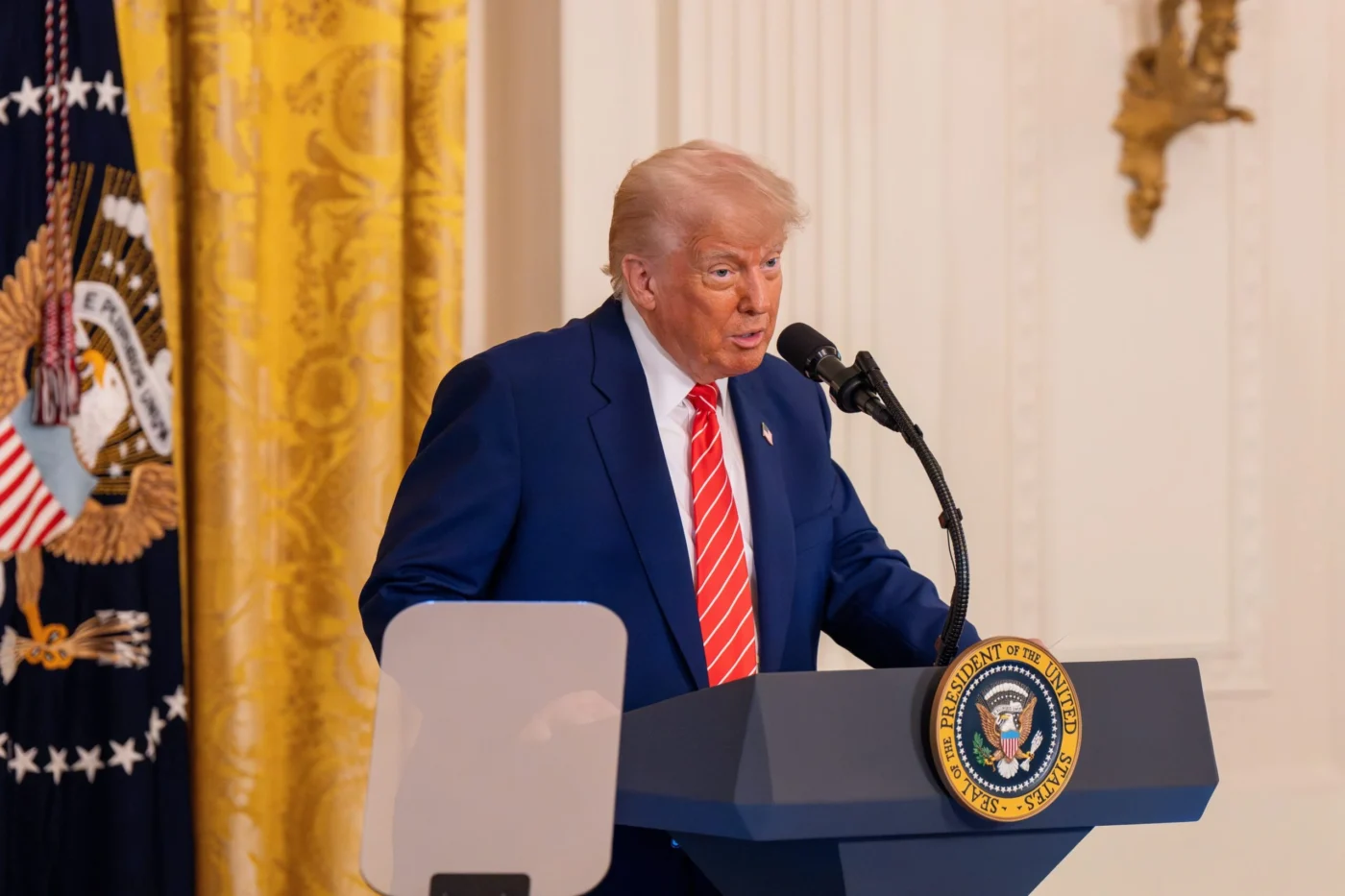
President Donald Trump has disclosed that his administration intends to establish an “AI Force” while designating a new artificial intelligence adviser, marking an expansion of federal government engagement with rapidly evolving AI technology.
The president made this revelation through a Truth Social post published on Saturday.
He drew parallels between this proposed entity and the Space Force, which was created during his previous presidential tenure.
Trump indicated that the identity of the new AI “czar” would be disclosed soon. According to Reuters, this individual would function as a dedicated artificial intelligence policy adviser within the administration.
Structural Specifics of AI Force Yet to Be Determined
The president has not outlined the operational framework for the AI Force.
Financial resources, personnel requirements, and official mandates have not been made public.

Questions remain about whether this entity would function as an official government department, consultative body, or alternative federal structure.
The White House had not released additional information at the time Reuters covered the story.
Trump stated his administration’s preference for facilitating AI innovation rather than implementing regulations that might impede industry progress.
These remarks align with his earlier September statements, when he maintained that current legislation and governmental authority could adequately manage problematic AI applications without requiring extensive new regulatory frameworks.
The incoming adviser would succeed venture capitalist David Sacks, who formerly held an AI policy position before departing earlier this year. Reuters noted that Sacks remains engaged with the administration in an unofficial advisory capacity.
Ongoing Discourse on AI Safety Standards
Trump’s declaration arrives amid active discussions among prominent AI corporations, academic researchers, and government officials regarding the appropriate pace for developing increasingly sophisticated systems.
Anthropic CEO Dario Amodei has recently advocated for decelerating the rate of AI capability advancement while more robust protective measures are implemented.
OpenAI CEO Sam Altman and Elon Musk have voiced support for increased prudence, whereas Nvidia CEO Jensen Huang has opposed slowing technological progress.
Amazon has similarly advocated for comprehensive evaluation and protective measures prior to deploying advanced models, though has refrained from endorsing an industry-wide deceleration.
Artificial intelligence policy has also emerged as a topic in diplomatic exchanges between Washington and Beijing.
U.S. Treasury Secretary Scott Bessent introduced an AI safety notification framework during weekend conversations with Chinese Vice Premier He Lifeng in New York.
This framework could enable both nations to exchange intelligence regarding significant AI-related incidents and national security concerns.
These conversations are occurring in advance of a scheduled summit between Trump and Chinese President Xi Jinping.
Currently, Trump’s AI Force exists as a concept without a disclosed organizational blueprint or designated leadership. The president has committed to identifying the new AI adviser shortly, though no specific announcement timeline has been established.
Get 3 Free Stock Ebooks
Discover top-performing stocks in AI, Crypto, and Technology with expert analysis.
- Top 10 AI Stocks - Leading AI companies
- Top 10 Crypto Stocks - Blockchain leaders
- Top 10 Tech Stocks - Tech giants



