



Quick Summary
- Investment bank reduces KOSPI 12-month forecast to 8,000 from 8,800, representing approximately a 9% reduction
- Key headwinds include elevated borrowing costs, won appreciation, and crude oil trading above $100 per barrel
- September marked the first negative month-over-month earnings-per-share revisions in 2024
- Despite downgrade, UBS maintains optimistic earnings outlook with 256% growth projected for 2026 and 38% for 2027
- Samsung Electronics and SK Hynix shares advanced following strength in US chip stocks
UBS has revised its 12-month projection for South Korea’s benchmark KOSPI index downward to 8,000 from the previous 8,800 target. The adjustment, amounting to roughly a 9% reduction, comes as mounting economic pressures including higher borrowing costs, currency strength, and elevated energy prices weigh on the market outlook.
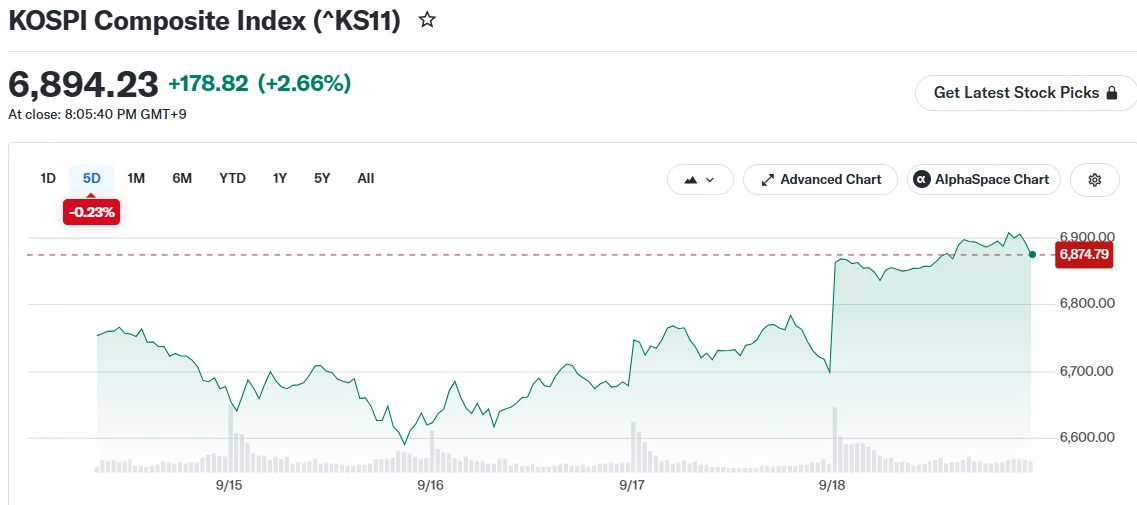
In a research note released Friday, analyst Yong-Suk Son detailed the rationale behind the downgrade. The firm reduced its implied valuation multiple to 7x from 8x, acknowledging intensifying macroeconomic challenges despite continued robust earnings momentum.
A significant development highlighted in the analysis is the shift in consensus earnings-per-share revisions, which turned negative in September for the first time this year. The 0.7% month-over-month decline marks a reversal from earlier positive momentum, particularly as memory chip sector upgrades that previously supported the index have now reversed course.
Notwithstanding the lowered price target, UBS maintains a bullish stance on earnings potential, forecasting KOSPI earnings-per-share expansion of 256% in 2026 followed by 38% growth in 2027. According to Son, the index is likely to trade within a confined range until third and fourth quarter earnings reports provide greater visibility into whether these projections remain achievable.
Monetary Tightening and Energy Costs Elevate Bond Yields
South Korea’s central bank has implemented two rate increases since July. The 10-year government bond yield has surged to 4.5% from 3.4% at year-start. Meanwhile, crude oil prices hovering above $100 per barrel continue to fuel inflationary pressures.

Currency appreciation presents an additional challenge. According to UBS calculations, each 1% strengthening of the Korean won translates to approximately a 1.1% decline in KOSPI corporate earnings.
The investment bank established an optimistic scenario target of 9,200 for the KOSPI alongside a bearish case of 5,100, reflecting considerable uncertainty in the current environment.
From a sector perspective, UBS continues to favor memory chip manufacturers. The firm highlights Samsung Electronics and SK Hynix as preferred investments. However, the strategy is evolving toward value-oriented and quality companies that deliver shareholder returns, acknowledging decelerating market momentum and tightening liquidity conditions.
Regional Equities and Semiconductor Shares Advance
In broader market developments, Asian equities and fixed income securities posted modest gains Friday as energy prices retreated. Brent crude declined 0.8% to approximately $104 per barrel, providing some relief from inflation worries.
[[LINK_START_3]]Samsung Electronics[[LINK_END_3]] and SK Hynix shares both registered gains after a major US semiconductor benchmark posted strong returns. US markets delivered their strongest performance since August in the previous session, recovering from declines that followed the Federal Reserve’s initial rate increase since 2023.
The benchmark 10-year US Treasury yield dropped nine basis points to 4.93% as oil prices eased. The yield had reached 5.02% earlier in the week following the Fed’s policy action.
MSCI’s Asia-Pacific equities benchmark advanced 0.5%, although declining stocks outnumbered advancing ones, indicating the rally lacked broad market participation.
Moderating energy costs could provide central banks additional flexibility to evaluate the effects of restrictive monetary policy, potentially offering near-term support for both equity and bond markets.
Get 3 Free Stock Ebooks
Discover top-performing stocks in AI, Crypto, and Technology with expert analysis.
- Top 10 AI Stocks - Leading AI companies
- Top 10 Crypto Stocks - Blockchain leaders
- Top 10 Tech Stocks - Tech giants



