



Key Highlights
- Bullion prices hover between $4,282 and $4,332 per ounce following consecutive September losses
- Federal Reserve rate increase probability stands at 92%, marking the first potential hike since 2023
- US Treasury 10-year yield touched 5.04%, a level not seen since 2007
- Major Saudi Arabian pipeline disruption maintains elevated crude prices, amplifying inflation worries
- September has witnessed more than 3% decline in gold after late-August highs exceeded $4,700 per ounce
Precious metal markets stabilized midweek as traders anticipated the Federal Reserve’s forthcoming monetary policy announcement. The yellow metal managed to halt a two-session slide and regain modest ground.
Spot bullion prices ranged between $4,282 and $4,332 per ounce during Wednesday’s early trading hours. Meanwhile, futures contracts climbed approximately 0.9%, settling at $4,372.92 per ounce.
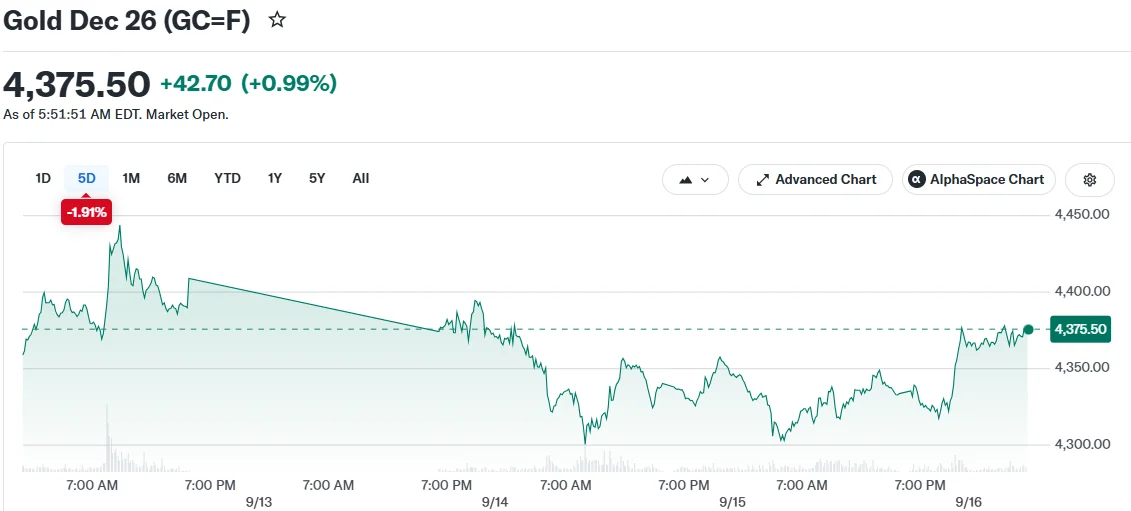
Since September began, the precious metal has shed over 3% of its value. This downturn follows peaks that surpassed $4,700 per ounce during the final days of August.
Treasury Yields Climb, Weighing on Precious Metals
On Tuesday, the benchmark 10-year Treasury yield momentarily reached 5.04%, marking its highest level in over sixteen years. This surge coincided with persistent energy market volatility and mounting inflation pressures.
Elevated bond returns diminish gold’s appeal since the metal generates no yield. As fixed-income securities offer increasingly attractive returns, capital flows away from non-yielding assets like bullion.

The strengthening greenback compounds these headwinds. International purchasers encounter steeper costs when dollar values appreciate, potentially dampening demand for dollar-denominated gold.
Current market pricing suggests a 92% likelihood of a Federal Reserve rate adjustment. Such action would represent the first increase in borrowing costs since 2023.
Market participants are focusing not only on the policy decision but also on Fed Chair Kevin Warsh’s accompanying commentary regarding future monetary moves. Market observers suggest aggressive rhetoric could strengthen the dollar further and intensify downward pressure on precious metals.
Neil Welsh, Head of Metals at Britannia Global Markets, noted that balanced communication from Warsh might support gold stabilization. However, he cautioned that hawkish messaging risks triggering additional dollar appreciation and heightened pressure on assets that generate no income.
Saudi Pipeline Crisis Intensifies Inflation Worries
The crucial east-west pipeline system in Saudi Arabia remains offline following last week’s incidents. This infrastructure previously transported several million barrels daily, providing an alternative route that circumvented the Strait of Hormuz.
Saudi Aramco has postponed shipments to certain European clients. The energy giant has yet to announce a timeline for restoring pipeline operations.
Oil prices posted gains across two consecutive sessions before stabilizing following reports of unexpected increases in American crude stockpiles. Nevertheless, prices remain elevated amid persistent supply concerns.
Escalating energy expenses are contributing to wider inflation anxieties. This dynamic continues pushing bond yields upward while maintaining downward pressure on gold valuations.
Silver prices held steady around $63.67 per ounce. Platinum declined 0.2% while palladium registered a modest 0.1% gain.
Bullion market participants are predominantly adopting a cautious stance. Many analysts maintain confidence that precious metals can rebound once monetary policy clarity emerges and gold reasserts its traditional function as a risk-hedging instrument.
The Federal Reserve’s policy announcement is scheduled for later Wednesday.
Get 3 Free Stock Ebooks
Discover top-performing stocks in AI, Crypto, and Technology with expert analysis.
- Top 10 AI Stocks - Leading AI companies
- Top 10 Crypto Stocks - Blockchain leaders
- Top 10 Tech Stocks - Tech giants



