


Key Takeaways
- Early stablecoin architects made incorrect assumptions about how digital dollar tokens would proliferate across the market.
- Current wallet designs prioritize ticker displays over issuer transparency, creating confusion for users.
- Schwartz advocates for a dual-ticker framework combining global currency codes with user-controlled preferences.
- Recipients would gain authority to determine which assets like RLUSD, USDT, and USDC meet their dollar acceptance criteria.
- The XRP Ledger’s trust line mechanism already provides infrastructure for selective asset acceptance by users.
Ripple’s CTO Emeritus and XRP Ledger architect David Schwartz has identified a fundamental miscalculation in how blockchain developers envisioned the evolution of digital dollars. This early design decision has resulted in a wallet interface challenge that affects how stablecoins appear to users today. Schwartz contends that current wallet designs emphasize ticker symbols over issuer identification, complicating what should be straightforward dollar transactions.
Early Design Assumptions Face Market Reality
According to Schwartz, the original development community anticipated that all dollar-pegged tokens would adopt “USD” as their standard currency designation. The expectation was that wallet applications would handle issuer differentiation separately, creating ticker mappings only when necessary. This framework meant the underlying ledger architecture would avoid requiring unique identifiers for each dollar-backed token.
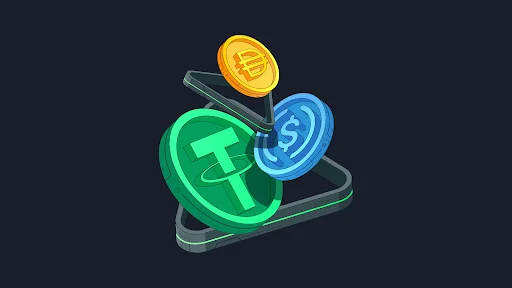
Market forces took a different path. Today’s landscape includes USDT, USDC, RLUSD, and numerous other dollar-pegged cryptocurrencies, each carrying its own distinct identifier. This fragmentation forces users to navigate between different token brands when conducting transactions, introducing unnecessary complexity to processes designed for simplicity.
A Dual-Ticker Framework Emerges
Schwartz outlined a solution that divides asset identification into two categories: universal tickers and customizable user preferences. Universal tickers would identify the base currency class, such as USD. User-defined settings would then specify which token issuers qualify as acceptable when receiving that currency type.
This framework allows individual users to configure their wallets to accept RLUSD, USDT, and USDC as interchangeable dollar instruments. Meanwhile, other users or commercial entities could establish stricter criteria, accepting only specific issuers. Authority shifts to the receiving party rather than requiring senders to master the distinctions between competing stablecoin brands.
XRP Ledger Trust Architecture Provides Foundation
The XRP Ledger incorporates trust lines that enable accounts to establish acceptance criteria for issued assets. Account holders can designate both currency type and issuer, maintaining control over which token balances their accounts can receive. This architecture supports diverse trust configurations while respecting the distinctions between various dollar-denominated tokens.

Schwartz emphasized that the challenge exists primarily within wallet user interfaces rather than blockchain protocols. Contemporary wallet applications typically feature prominent ticker displays while providing minimal issuer information. This presentation style creates artificial separation between tokens that recipients may consider functionally equivalent as dollars.
His recommendation transfers decision-making authority to recipients and their wallet software. Wallet applications would need to establish clear connections between currency classifications and approved issuer lists. Schwartz maintains that improved management of these relationships would streamline digital dollar transactions and enhance user comprehension while preserving the XRP Ledger’s established trust line architecture.
Get 3 Free Stock Ebooks
Discover top-performing stocks in AI, Crypto, and Technology with expert analysis.
- Top 10 AI Stocks - Leading AI companies
- Top 10 Crypto Stocks - Blockchain leaders
- Top 10 Tech Stocks - Tech giants



