


Key Takeaways
- Tesla shares declined 6% on Friday following a disappointing Cybercab launch event
- Elon Musk was notably absent from the invitation-only event, which wasn’t livestreamed to the public
- Federal regulators initiated an audit inquiry examining the Cybercab’s safety self-certification process
- Analysts from RBC and Wells Fargo highlighted lingering concerns about pricing strategies, manufacturing timelines, and initial service problems in Austin
- The decline erased Thursday’s 5.4% rally that preceded the launch event
Shares of Tesla (TSLA) stock retreated 6% during Friday trading after the electric vehicle manufacturer’s Cybercab introduction event in Austin, Texas failed to satisfy investor expectations.
The selloff completely reversed Thursday’s 5.4% advance, which occurred as traders positioned themselves ahead of the anticipated unveiling.
Thursday’s rollout event remained restricted to invited guests only, without any public streaming option, and notably excluded CEO Elon Musk from attendance. Through its Tesla Robotaxi application, the company enabled users to schedule autonomous Cybercab trips within a designated operational zone surrounding Austin.
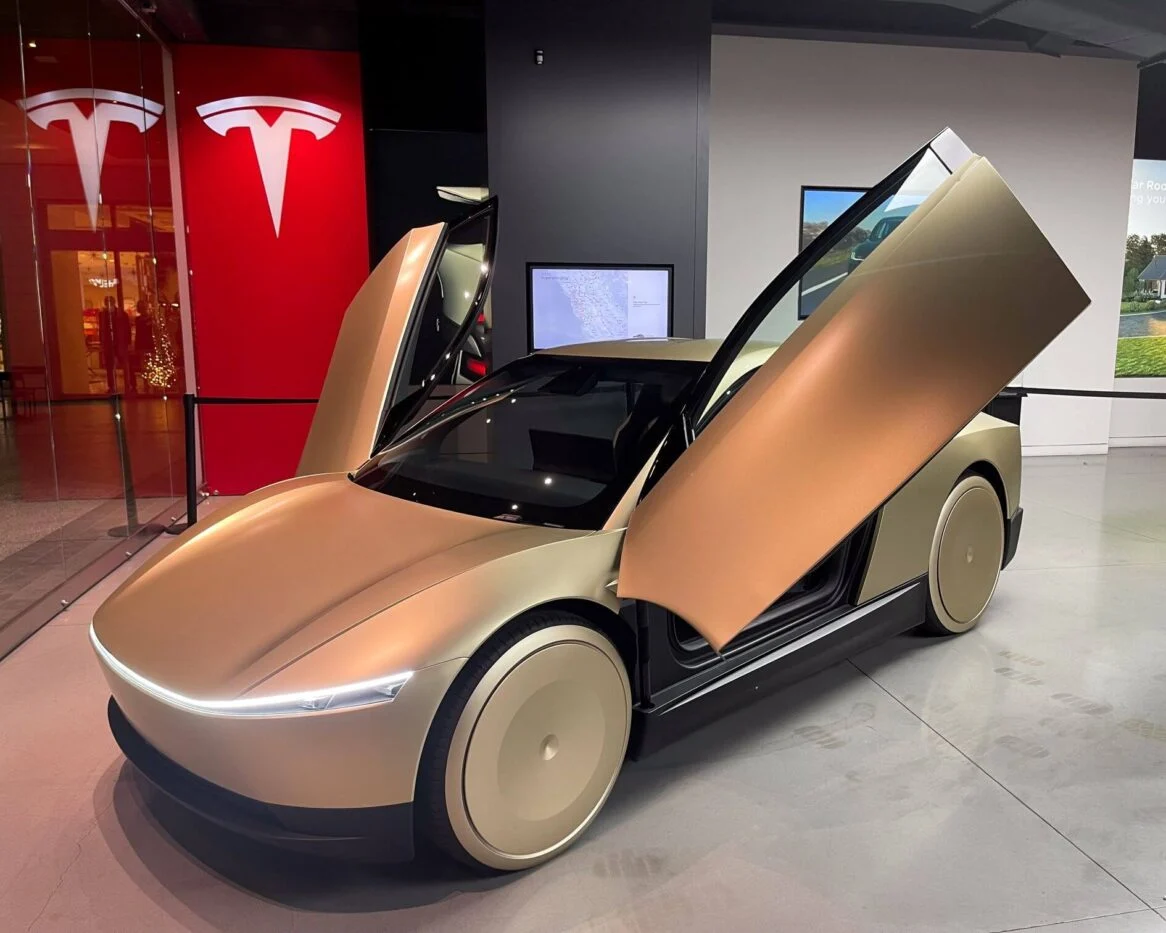
The Cybercab represents Tesla’s autonomous vehicle design featuring two passenger seats, distinctive butterfly-style doors, and completely eliminates traditional driving controls—no steering wheel, brake pedal, or accelerator. Manufacturing operations for the vehicle commenced at the company’s Texas Gigafactory earlier in the current year.

Analysts at RBC Capital Markets characterized the event as providing “limited new incremental disclosure relative to prior announcements,” noting that critical questions surrounding cost structure, manufacturing schedules, and regulatory clearances remain unanswered. Despite these concerns, RBC continues maintaining its buy recommendation on Tesla shares.
Wells Fargo released research titled “TSLA Cybercab Launch Event Underwhelms,” highlighting early technical difficulties emerging from Austin operations. Users have documented issues including incorrect routing, failure to reach intended destinations, and extended pickup delays.
Federal Safety Review Launched
Coinciding with Thursday’s event, the National Highway Traffic Safety Administration initiated an audit investigation into Tesla’s self-certification procedures for the Cybercab. Federal regulators are examining the methodology and supporting technical documentation Tesla employed to declare the vehicle compliant with Federal Motor Vehicle Safety Standards.
NHTSA emphasized concerns regarding the Cybercab’s absence of traditional operator controls, including steering mechanisms, pedals, and side mirrors. Tesla VP of Vehicle Engineering Lars Moravy previously asserted the Cybercab received engineering specifically to meet all federal requirements from initial design phases, enabling the company to pursue self-certification instead of requesting regulatory exemptions.
The exemption pathway restricts manufacturers to producing just 2,500 vehicles annually.
Expansion Beyond Austin
Tesla’s autonomous ride-sharing service has broadened its footprint beyond Austin, now including Dallas and Houston markets. The Cybercab made its initial public appearance approximately two years ago, with serial production launching this past April.
Alphabet-owned Waymo currently dominates the autonomous taxi sector, operating approximately 4,000 self-driving vehicles providing commercial transportation services throughout 14 metropolitan areas.
Musk has indicated that substantial revenue generation from Cybercab operations isn’t expected until 2027 at the earliest.
Get 3 Free Stock Ebooks
Discover top-performing stocks in AI, Crypto, and Technology with expert analysis.
- Top 10 AI Stocks - Leading AI companies
- Top 10 Crypto Stocks - Blockchain leaders
- Top 10 Tech Stocks - Tech giants



