



Key Takeaways
- Bitcoin reached approximately $75,000, posting an 8% daily gain and 18% weekly increase as bearish traders were forcibly exited
- Short position liquidations exceeded $4 billion in just 48 hours, marking the most significant cascade since 2021
- Treasury bond buyback program expansion from $2 billion to $4 billion per session created favorable conditions for cryptocurrency markets
- Ethereum jumped 18% in 24 hours, eclipsing Bitcoin’s performance, as Solana, Dogecoin, and other altcoins recorded weekly gains exceeding 10%
- Congressional action on the Digital Asset Market Clarity Act received presidential backing during a crypto industry meeting at the White House
Cryptocurrency markets experienced a dramatic surge this week as an unprecedented liquidation event eliminated over $4 billion in bearish positions across 48 hours, propelling digital asset prices to levels not seen in weeks.
Bitcoin climbed to approximately $75,000 during Friday’s Asian session, representing roughly 8% daily appreciation and close to 18% weekly growth. The cryptocurrency had been trading around $64,100 merely 48 hours prior.
Catalysts Behind the Surge
Market momentum initiated on August 19 following a U.S. Treasury Department announcement regarding bond buyback operation expansion. Maximum buyback amounts for long-duration securities would double from $2 billion to $4 billion per session, taking effect September 9 and continuing through November 4.
Bond buyback mechanisms function by extracting older, lower-liquidity securities from circulation while introducing new issuances. This process compresses yields on the long end of the curve and creates more favorable environments for higher-risk assets including cryptocurrencies.
Bitcoin jumped from $64,100 to $66,800 within 60 minutes of the Treasury statement. This initial price movement proved sufficient to initiate the first round of automatic position closures on leveraged bearish bets.

Forced liquidations occur when traders establish downside bets using leverage. When prices move against them sufficiently, exchanges automatically terminate positions through market buy orders. These purchases drive prices higher still, creating a domino effect of additional closures.
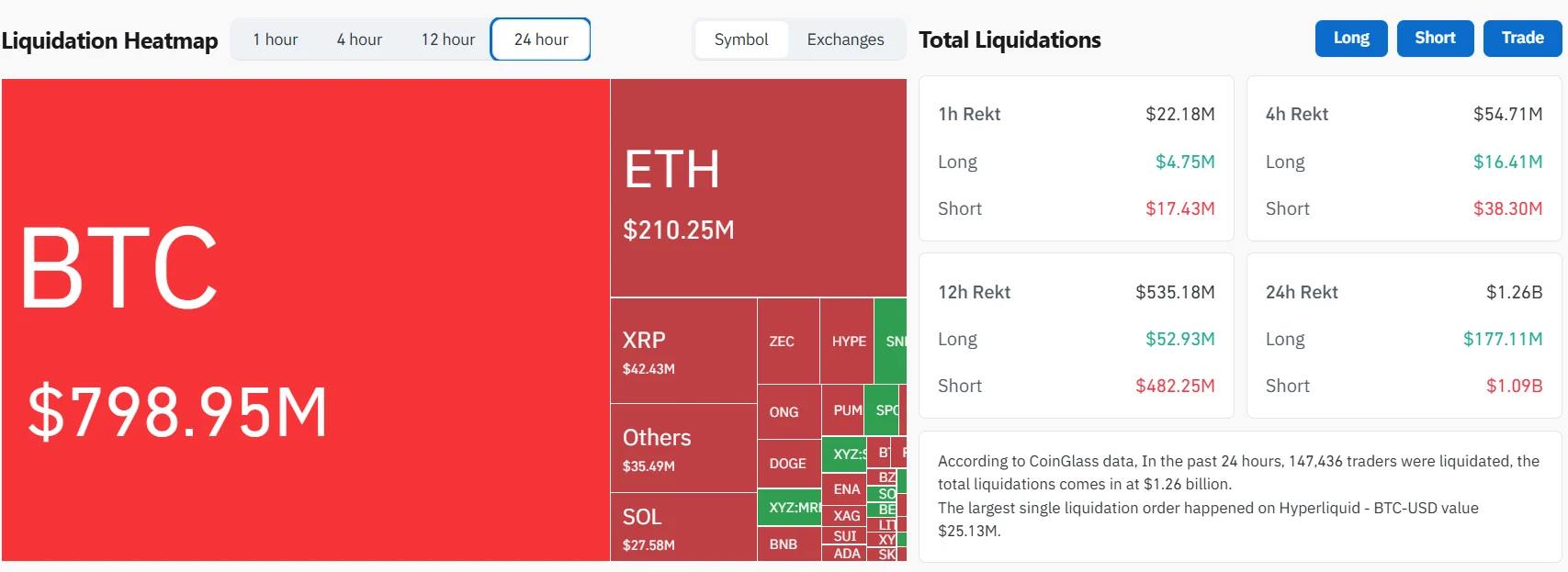
The liquidation chain extended approximately 18 hours. Overall short liquidations totaled around $2.77 billion, representing 92% of all forced position closures. The single largest liquidated position was a $25.13 million Bitcoin position on Hyperliquid.
The Setup for Disaster
Bearish market positioning had accumulated over six weeks preceding the squeeze. Bitcoin perpetual futures funding rates shifted negative in late July and remained there through mid-August. This meant traders maintaining short positions received payments, attracting additional participants seeking yield rather than directional price declines.
On August 18, immediately before the liquidation cascade, short positions comprised over 51% of open interest across Binance, OKX, and Bybit. When the Treasury announcement provided upward price momentum, this positioning structure couldn’t withstand the movement without triggering mandatory buying.
Additional momentum arrived when President Trump called on Congress to pass the Digital Asset Market Clarity Act during a White House gathering featuring executives from Coinbase, Gemini, Ripple, and Chainlink Labs. This development pushed Bitcoin from $68,000 beyond $71,000 on August 20.
Ethereum surged 18% within 24 hours, delivering its most powerful single-day performance since March 2024, partially because Ethereum short positioning was even more concentrated relative to open interest. Solana advanced over 5% daily and 17% weekly. Dogecoin posted nearly 9% gains.
Binance processed approximately $518 million in liquidations. Hyperliquid handled roughly $513 million. Bybit registered around $303 million.
Bitcoin’s total market capitalization currently sits at $1.5 trillion, though this remains approximately 40% beneath its all-time peak exceeding $126,000 established last October.
The Treasury’s enhanced buyback initiative concludes on November 4. Whether price momentum sustains beyond that timeframe will hinge on fresh capital inflows versus simple trader repositioning for subsequent market movements.
Get 3 Free Stock Ebooks
Discover top-performing stocks in AI, Crypto, and Technology with expert analysis.
- Top 10 AI Stocks - Leading AI companies
- Top 10 Crypto Stocks - Blockchain leaders
- Top 10 Tech Stocks - Tech giants



