



Key Highlights
- Crude oil extended gains for a fourth consecutive trading session amid persistent supply concerns
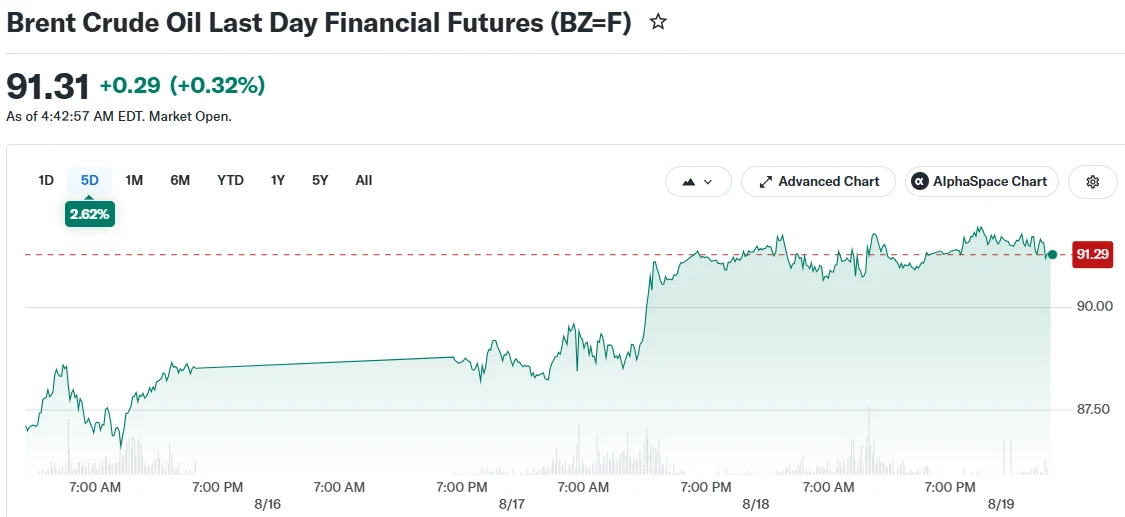
- Brent crude futures climbed to $91.71 per barrel while WTI reached $84.73
- Monday marked the expiration of the U.S.-Iran temporary ceasefire with no indication of extension
- Conflicting statements emerge as Tehran claims Hormuz closure while Washington asserts passage remains open
- Declining U.S. petroleum stockpiles contribute additional bullish momentum to energy markets
Energy markets continued their upward trajectory for a fourth consecutive session Wednesday, driven by persistent uncertainty surrounding the strategic Strait of Hormuz as diplomatic tensions between the United States and Iran remain unresolved.
Brent crude futures advanced 0.76% to settle at $91.71 per barrel, while West Texas Intermediate crude increased 0.8% to $84.73. The benchmarks touched their strongest levels since late July earlier in the week.
The critical chokepoint at the heart of the dispute is the Strait of Hormuz, which historically facilitated approximately 20% of global petroleum flows before hostilities escalated. Maritime tracking systems indicate commercial vessel movement through the narrow passage continues to operate at significantly reduced capacity compared to normal operations.
The brief cessation of hostilities between Washington and Tehran lapsed on Monday without any indication from either government regarding potential renewal discussions.
Speaking Tuesday, U.S. President Donald Trump confirmed no active negotiations were underway with Iranian leadership. He maintained the strategic waterway remained accessible for international commerce. Iranian authorities contradicted this assertion, reiterating that the strait would remain restricted until Washington fulfills commitments outlined in a provisional June agreement.

A high-ranking Iranian government source informed Reuters that the nation has adopted a “fully offensive” strategic military stance following the breakdown in diplomatic channels. However, no new military operations were documented Tuesday.
Trump additionally issued warnings directed at Oman regarding its intermediary position in negotiations with Iran, while demanding Tehran’s adherence to American stipulations.
Alternative Export Channels Explored
Iraq has initiated measures to establish backup crude shipment pathways. The nation’s cabinet authorized arrangements to transport petroleum through both multinational and domestic carriers utilizing diverse export terminals. These agreements span a three-month period commencing September 1.
Two prominent Chinese maritime transport firms have suspended tanker deployments through both the Hormuz passage and the Bab al-Mandeb strait. These companies now coordinate petroleum cargo collection at locations beyond the Persian Gulf region.
Declining U.S. Stockpiles Support Price Rally
Weekly inventory figures released by the American Petroleum Institute revealed decreases in crude oil and distillate reserves, though gasoline supplies increased.
Market analysts surveyed by Reuters anticipated crude petroleum stockpiles declined approximately 600,000 barrels during the week concluded August 14. The official government data from the U.S. Energy Information Administration was scheduled for release Wednesday.
The U.S. Strategic Petroleum Reserve has declined to its weakest position in over four decades, a situation directly linked to the sustained confrontation with Iran.
Diminishing emergency reserves combined with interrupted international supply corridors have sustained the bullish momentum in petroleum markets. Industry observers are monitoring developments for potential diplomatic breakthroughs or continued deterioration of the standoff through the remainder of the month.
Get 3 Free Stock Ebooks
Discover top-performing stocks in AI, Crypto, and Technology with expert analysis.
- Top 10 AI Stocks - Leading AI companies
- Top 10 Crypto Stocks - Blockchain leaders
- Top 10 Tech Stocks - Tech giants



