



Key Takeaways
- Bitcoin has plummeted approximately 50% from its October 2026 peak of roughly $126,080 down to the low-$60,000 territory
- VanEck’s proprietary GEO metric indicates potential bottom formation signals are emerging
- Analysis from CryptoQuant reveals long-term holders experiencing more significant unrealized losses compared to the overall market — a characteristic historically associated with cycle troughs
- Technical analyst Katie Stockton from Fairlead identifies extended oversold conditions and improving momentum indicators for Bitcoin
- Galaxy Research projects a potential downside scenario with prices reaching approximately $28,000 during Q4 2026
The flagship cryptocurrency has experienced a dramatic decline of nearly 50% since reaching its October 2026 all-time high around $126,080, with current prices hovering in the low-$60,000 zone. This substantial correction has shaken investor confidence and reignited discussions about the timing of this market cycle’s conclusion.
Analysis published by VanEck indicates that the ongoing selloff aligns with Bitcoin’s well-documented four-year halving cycle pattern. Following each halving event, the amount of new BTC entering circulation is reduced by 50%, and historically, significant price corrections have occurred after preceding bull runs.
VanEck employs its proprietary GEO analytical framework to assess Bitcoin’s market position, which evaluates Global Liquidity conditions, Ecosystem Leverage metrics, and On-Chain Activity indicators. Currently, two of these three primary signals register as neutral, while the ecosystem leverage component shows constructive readings.
According to the investment firm, these indicators suggest preliminary signs of a potential bottom formation, recommending that investors consider gradually accumulating positions instead of attempting to time a precise market entry point.
On-chain analytics provider CryptoQuant offers additional perspective on the current market conditions. Analyst MorenoDV conducted an examination of adjusted Net Unrealized Profit/Loss (NUPL) metrics and discovered that long-term Bitcoin holders currently face more substantial unrealized losses compared to the overall market participant base. This specific pattern has historically emerged near significant Bitcoin cycle bottoms.

Nevertheless, CryptoQuant stops short of declaring a definitive market floor. During previous historical cycle lows, the long-term holder NUPL metric declined substantially beyond current measurements, suggesting the possibility of another pronounced downturn before establishing a sustainable bottom.
Technical Indicators Point Toward Potential Reversal
Katie Stockton, who founded Fairlead Strategies and manages the Amplify Fairlead Tactical Bitcoin ETF portfolio, shared with Coinage that she’s observing extended oversold readings across two of her primary technical indicators. She further highlighted that long-term momentum metrics have started trending upward following a period of downward acceleration.
“Long-term downside exhaustion signals are already visible in our analysis,” Stockton explained. She emphasized that the simultaneous occurrence of oversold conditions alongside improving momentum was “particularly compelling.”
Stockton additionally observed that implied Bitcoin volatility recently dropped to its lowest levels of the year, while CryptoQuant founder Ki Young Ju documented that hedge funds have shifted to net long positions in BTC futures contracts.
Expert Price Predictions for Bitcoin’s Bottom
Geoffrey Kendrick from Standard Chartered declared Bitcoin’s market bottom at $59,000 last June, proclaiming that “winter is over.” Subsequently, Bitcoin recorded a June 30 closing price of $58,566, marking its lowest daily close in nearly 24 months.
Galaxy Research presents a more conservative outlook, projecting a Bitcoin bottom ranging from $40,000 to $46,000 during Q4 2026, while acknowledging a potential panic-induced worst-case scenario approaching $28,000.
Data from Glassnode reveals 45 distinct Bitcoin metrics currently displaying capitulation signals — representing the most extended period of such conditions since the FTX exchange collapse. Market analysts from Cowen, CryptoQuant, and veteran trader Peter Brandt are projecting a bottom formation timeframe between September and October.
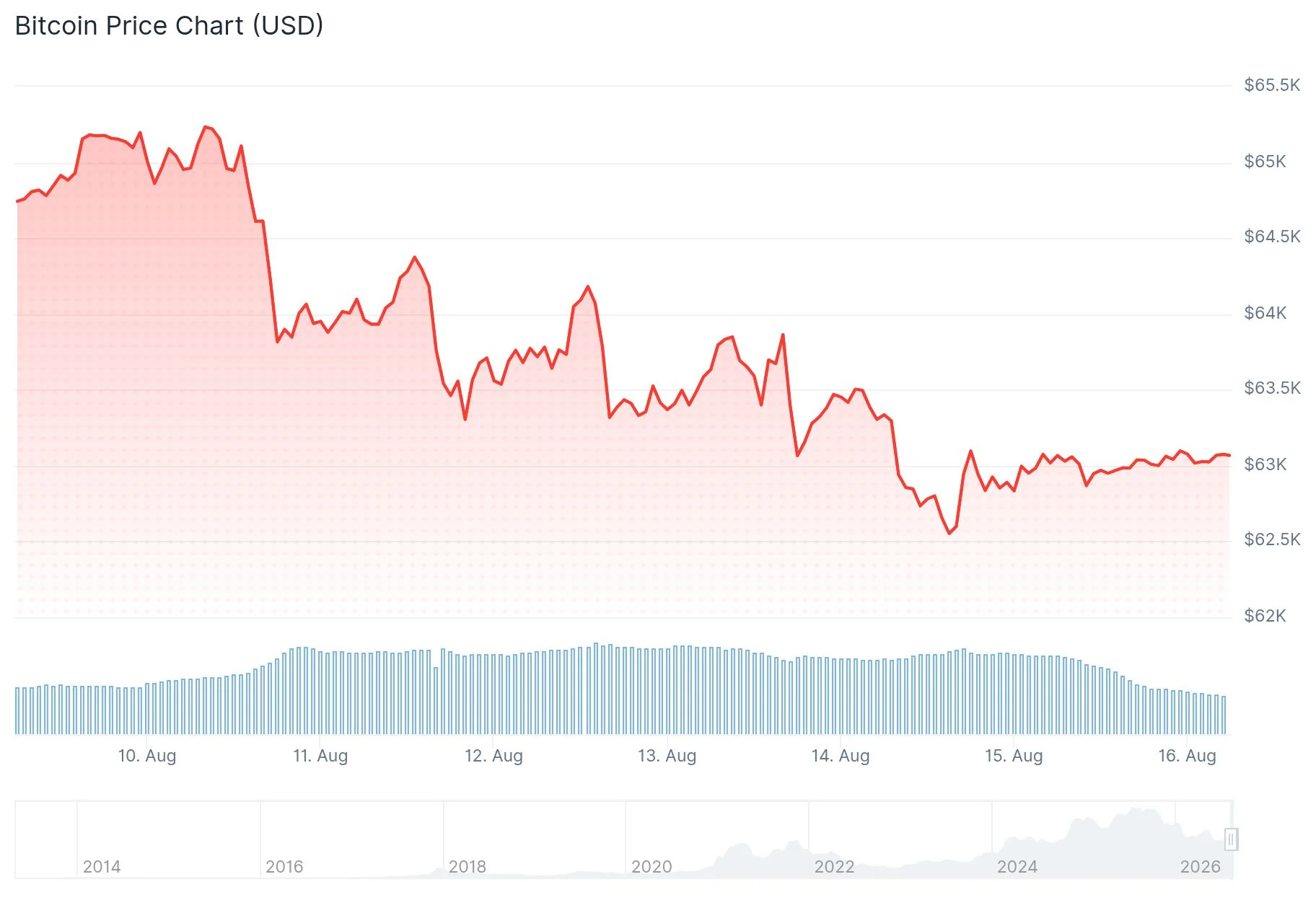
Bitcoin currently trades around $63,000, representing approximately a 49% decline from its record high, as market participants monitor whether long-term holders and institutional buying interest can offset ongoing selling pressure.
Get 3 Free Stock Ebooks
Discover top-performing stocks in AI, Crypto, and Technology with expert analysis.
- Top 10 AI Stocks - Leading AI companies
- Top 10 Crypto Stocks - Blockchain leaders
- Top 10 Tech Stocks - Tech giants



