


Key Highlights
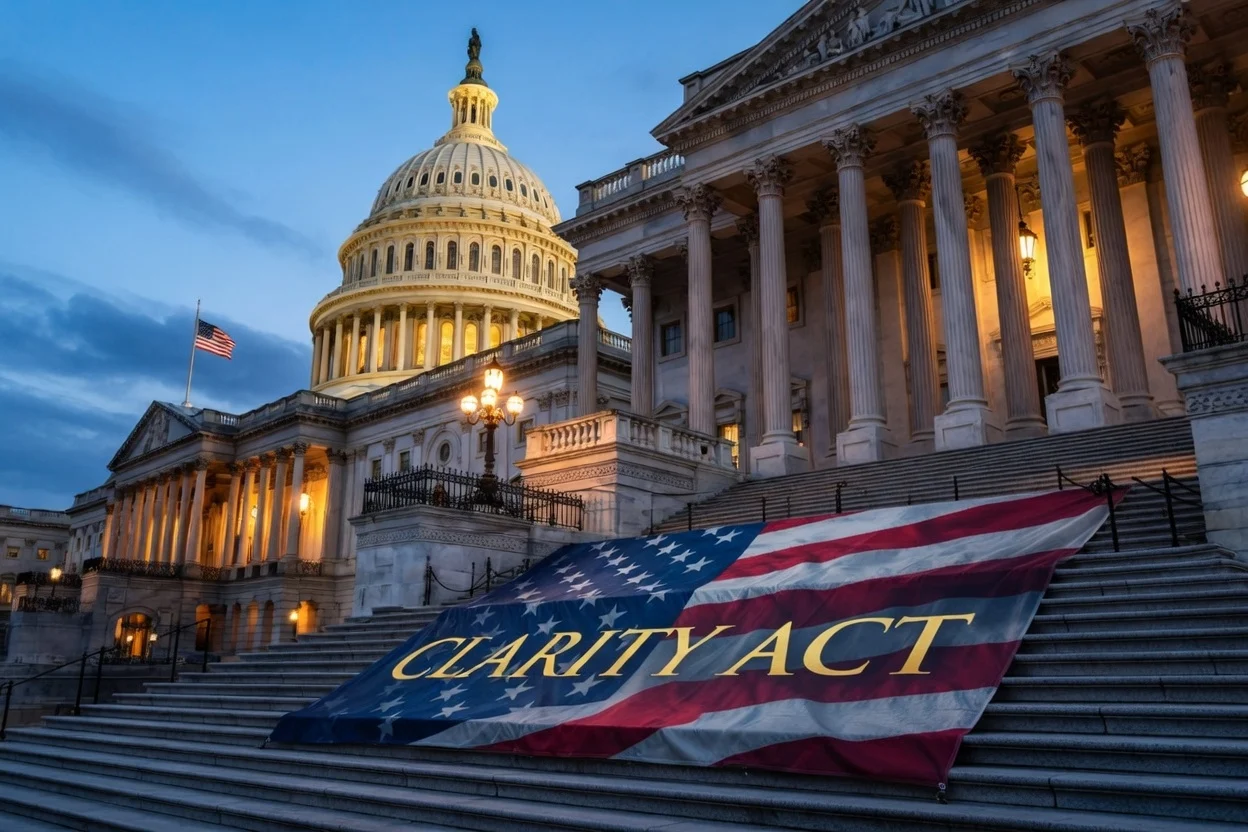
- Senate leadership has postponed the Clarity Act to concentrate on confirming Trump’s nominees and advancing Russia sanctions legislation
- Prospects for a vote appear slim before next week, leaving minimal time ahead of the August 8 congressional break
- Contentious ethics provisions — particularly restrictions on government officials’ crypto involvement — continue blocking progress
- Probability of the Clarity Act becoming law in 2026 has fallen to under 38%
- Should the legislation fail to advance now, the earliest opportunity may be September, or potentially delayed until 2027
The United States Senate has postponed consideration of the Digital Asset Market Clarity Act, opting to prioritize the confirmation of federal appointees and legislation imposing sanctions on Russia, named in honor of the late Senator Lindsey Graham.
John Thune, the Senate Majority Leader, initiated cloture proceedings Monday on a batch of 74 nominations submitted by President Trump. By July 28, the Senate had successfully confirmed Jay Clayton to serve as Director of National Intelligence, subsequently turning its attention to the Russia sanctions measure. This proposed legislation seeks to impose penalties on Russian officials and establish tariffs on nations conducting trade with Russia.
Senator Graham’s memorial service this week additionally diverted Senate attention toward Washington and South Carolina on Tuesday and Wednesday, further constraining the legislative timetable.
Limited Time Remaining Before Summer Break
Given that the Senate’s summer recess commences August 8, the Clarity Act faces just a handful of remaining days to move forward — and that opportunity is rapidly closing.
Observers suggest a floor vote on the cryptocurrency legislation seems improbable before the following week at the very earliest. Senate procedural rules typically permit only one contentious measure to advance simultaneously, requiring the Russia sanctions bill to conclude first.
The Clarity Act has appeared on the Senate’s legislative calendar since early June yet has encountered continuous postponements. Primary obstacles include disputes regarding stablecoin yield regulations and an ethics clause prohibiting senior administration officials, including President Trump himself, from endorsing cryptocurrency ventures.

Last week, Trump consented to accept provisions constraining his participation in digital asset markets. However, Democratic lawmakers immediately responded that these limitations remained insufficient, citing his existing cryptocurrency business interests. Negotiators from both parties indicated discussions would continue.
Resistance Mounts From Various Quarters
Letitia James, New York’s Attorney General, publicly called on Congress to vote down the Clarity Act, arguing the legislation would undermine state and municipal authorities’ capacity to combat cryptocurrency-related fraud.
Senate Democrats have additionally advocated for empowering state prosecutors to enforce the ethics restrictions, rather than limiting enforcement exclusively to the Department of Justice.
Notwithstanding endorsements from prominent financial institutions such as BlackRock, Fidelity, Goldman Sachs, Charles Schwab, and Grayscale, current assessments place the probability of enacting the bill during 2026 at less than 38%.
Cryptocurrency sector representatives have cautioned that additional postponements could defer the legislation until 2027. Should the measure fail during this congressional session, the GENIUS Act addressing stablecoins and continuing regulatory development at the SEC and CFTC represent the most viable alternative pathways toward regulatory certainty.
Both chambers of Congress reconvene in September for several weeks, though available floor time remains constrained. Following November’s elections, Congress transitions into a lame duck period, which historically proves unpredictable.
Should the Senate ultimately approve the Clarity Act, the legislation must return to the House of Representatives for an additional vote before proceeding to President Trump for signature.
Get 3 Free Stock Ebooks
Discover top-performing stocks in AI, Crypto, and Technology with expert analysis.
- Top 10 AI Stocks - Leading AI companies
- Top 10 Crypto Stocks - Blockchain leaders
- Top 10 Tech Stocks - Tech giants



