



Key Highlights
- U.S. spot Bitcoin ETFs witnessed an unprecedented $4.06 billion in net redemptions during June
- Bitcoin’s price has fallen beneath the $60,000 threshold, declining approximately 30% since the start of the year
- BTC faces a potential second straight quarterly decline, currently down 13% for Q2
- The Federal Reserve’s restrictive monetary policy and strengthening dollar continue to weigh on crypto
- Market analyst Ted Pillows forecasts a potential 60–65% correction before reaching a market floor
Bitcoin has slipped beneath the $60,000 mark as June draws to a close, hovering around $59,765 during Monday’s trading session. This represents approximately a 30% decline year-to-date for the leading cryptocurrency.
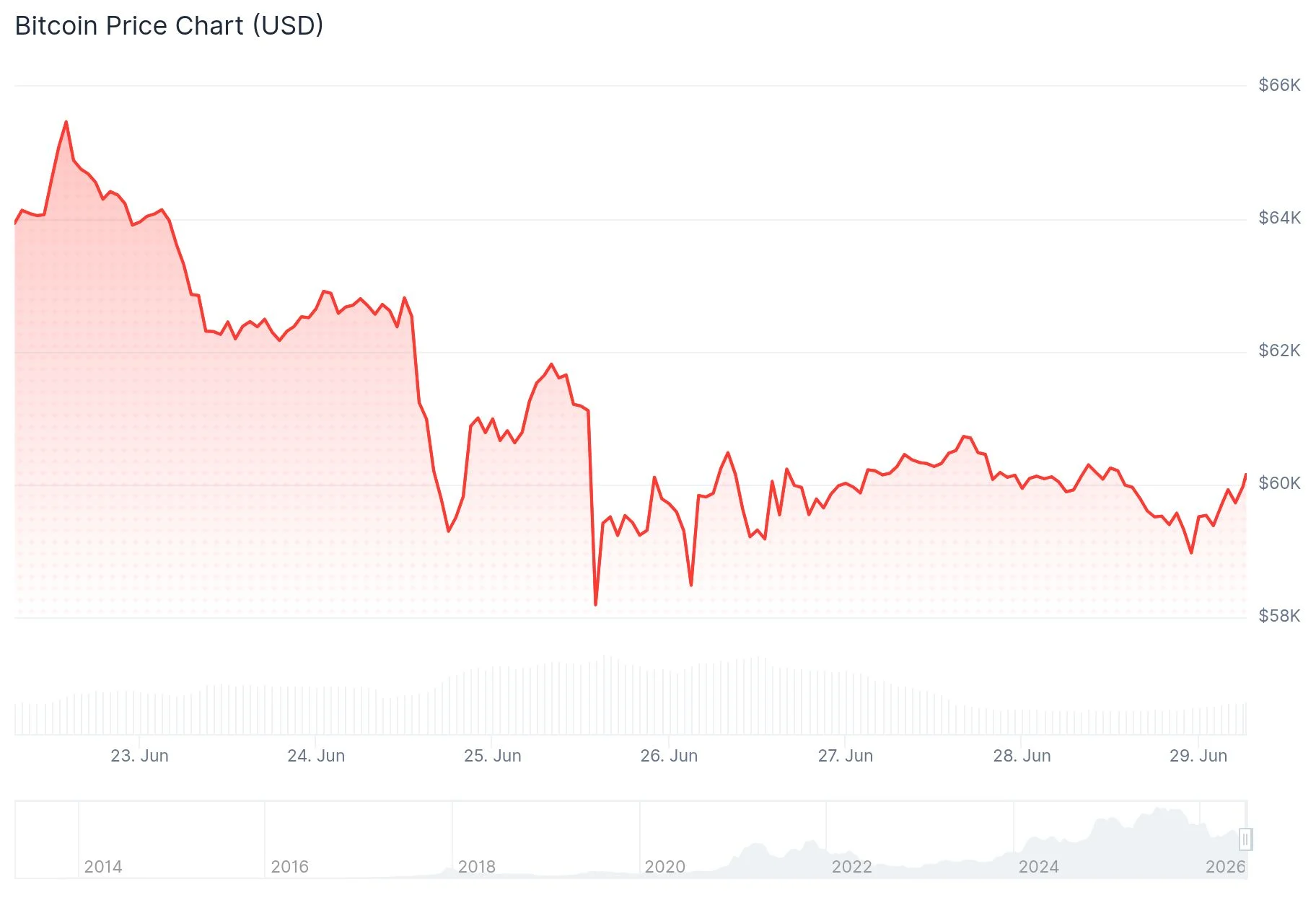
The current quarter’s performance paints an equally concerning picture. Bitcoin appears poised to conclude Q2 with a 13% decline. Should this materialize, it would mark just the third instance in Bitcoin’s trading history where consecutive quarterly losses have occurred.
According to SoSoValue analytics, U.S. spot Bitcoin ETFs have experienced $4.06 billion in net withdrawals throughout June. This figure surpasses the prior monthly record of $3.56 billion established in February 2025.
The previous week alone witnessed approximately $1.79 billion departing these investment vehicles, representing the second-largest weekly exodus since their January 2024 debut.
Accelerating ETF Redemptions Throughout 2026
June’s outflows represent part of a broader trend. May recorded $2.43 billion in net withdrawals, pushing the combined two-month figure near $6.5 billion.

For the first half of 2026, total net outflows from spot Bitcoin ETFs have reached approximately $5 billion.
These investment products serve as a critical barometer for institutional participation in Bitcoin markets. The magnitude of recent withdrawals suggests diminishing interest among major investors.
The retreat in institutional participation has mirrored Bitcoin’s price deterioration. Bitcoin has lagged behind virtually every significant asset category during 2026’s opening half.
Strategy (MSTR), the publicly traded company maintaining substantial Bitcoin holdings, has experienced even steeper losses. The firm’s stock price has plummeted 45% year-to-date.
Federal Reserve Policy and Global Tensions
Beyond ETF dynamics, Bitcoin confronts headwinds from macroeconomic conditions. The Federal Reserve signals its intention to maintain elevated interest rates for an extended period, following recent economic indicators revealing persistent inflation and robust employment figures.
A strengthening U.S. dollar has applied additional downward pressure on cryptocurrency valuations. Market participants have begun factoring in the possibility of rate increases later in 2026.
Geopolitical instability in Middle Eastern regions has also contributed to market uncertainty. Weekend reports of heightened tensions near the Strait of Hormuz temporarily disrupted energy markets, though the U.S. and Iran have reportedly committed to renewed diplomatic engagement.
Cryptocurrency analyst Ted Pillows (@TedPillows) offered his perspective on Bitcoin’s potential trajectory, stating on X: “$BTC bottomed after 87% dump in 2015, 84% in 2018, and 78% in 2022. People are now thinking we’ll bottom after a 50% drop. IMO, Bitcoin will have at least a 60%–65% dump this time before the bottom.” His assessment highlights intensifying discussion regarding the depth of the current market cycle’s correction.
Investors are now focused on Friday’s U.S. employment data release for potential indicators of the Federal Reserve’s upcoming policy decisions.
Get 3 Free Stock Ebooks
Discover top-performing stocks in AI, Crypto, and Technology with expert analysis.
- Top 10 AI Stocks - Leading AI companies
- Top 10 Crypto Stocks - Blockchain leaders
- Top 10 Tech Stocks - Tech giants



