


Key Takeaways
- Section 604 of the Clarity Act has drawn warnings from U.S. law enforcement organizations concerned about crypto crime prosecution.
- Law enforcement leaders believe expansive exemptions could protect entities involved in digital asset movement from proper oversight.
- A formal letter reached the Department of Justice and White House offices on Tuesday.
- Signatories included four prominent national organizations representing prosecutors, police chiefs, and sheriffs.
- Religious leaders from the Catholic community echoed similar concerns, highlighting potential risks related to human trafficking.
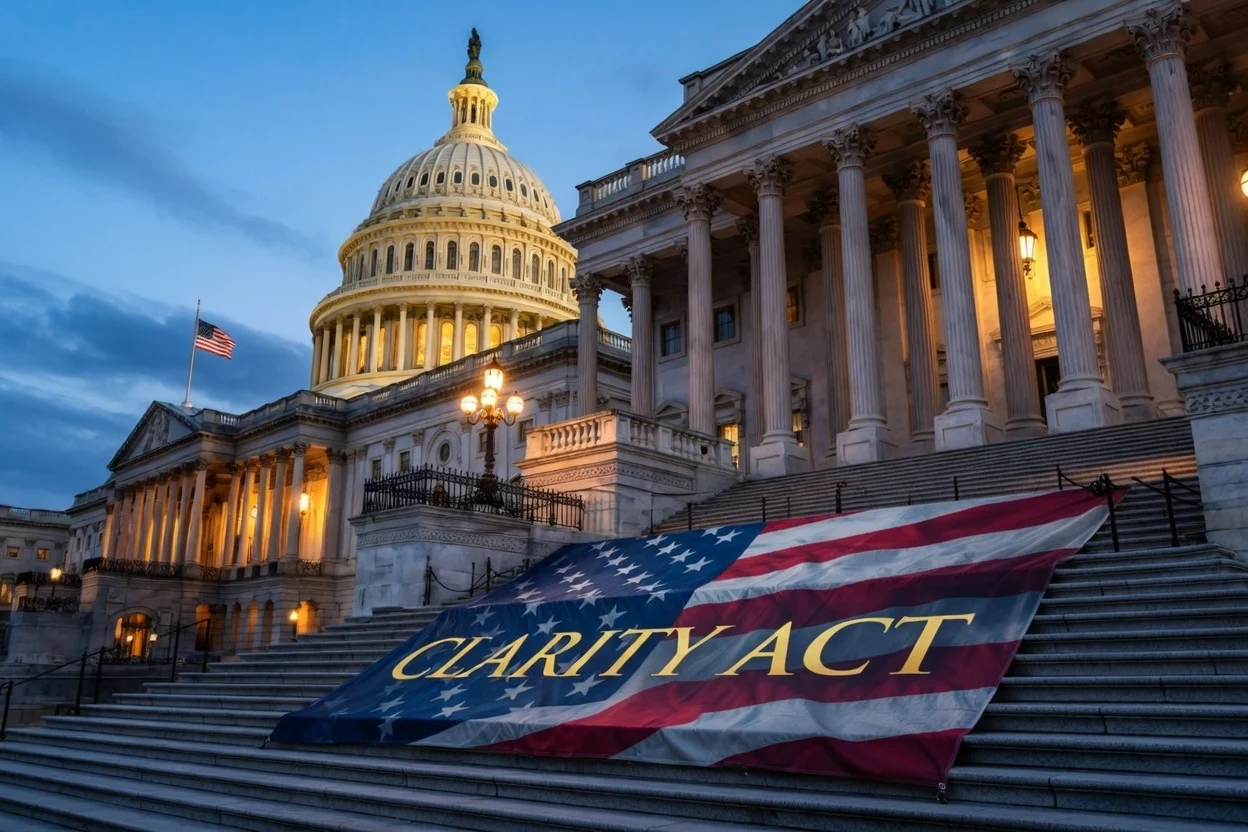
National law enforcement organizations have raised alarms that the Clarity Act may compromise their ability to investigate cryptocurrency-related crimes unless Congress modifies Section 604. Their concerns were outlined in correspondence directed to both the Justice Department and White House. The organizations expressed worry that certain exemptions could diminish regulatory supervision of companies facilitating digital asset transfers.
Law Enforcement Organizations Challenge Clarity Act Provisions
The National District Attorneys Association collaborated with three additional organizations on the correspondence. These co-signers represented federal prosecution offices, police chief associations, and sheriff organizations at the national level.
The organizations stated their position does not target software developers or legitimate technological advancement. Their objection centers on provisions that might shield participants who facilitate cryptocurrency movement.
“Our concern is not with individuals who merely write or publish software code,” the correspondence stated. The organizations emphasized their focus on exemptions that could undermine investigative capabilities.
They further indicated that Section 604 might establish obstacles for both prosecutors and investigators. The organizations contended that the provision’s wording could diminish accountability across digital asset markets.
The organizations highlighted that additional provisions within the legislation could impact anti-money laundering frameworks. They warned these elements could decrease transparency and generate regulatory gaps.
Section 604 has attracted the most intense scrutiny throughout the debate. Law enforcement organizations concentrated on its protective language for non-custodial developers.

This section also bears the designation Blockchain Regulatory Certainty Act. It originated as standalone legislation before being incorporated into the Clarity Act by lawmakers.
Section 604 Raises Questions About Digital Asset Crime Enforcement
The Blockchain Regulatory Certainty Act aims to establish that non-custodial developers do not qualify as money transmitters. Advocates maintain it safeguards developers who lack control over client assets.
Law enforcement organizations presented an alternative perspective in their correspondence. They suggested the exemption could obstruct investigations connected to cryptocurrency-related criminal activity.
Catholic leadership voiced parallel concerns through a Tuesday statement. Approximately 100 religious leaders indicated the legislation might erode protections against human trafficking operations.
Their critique similarly targeted Section 604 and its implications for enforcement activities. They maintained that criminal organizations could exploit diminished oversight mechanisms.
The White House supported the broader legislation through Patrick Witt, its cryptocurrency policy adviser. He characterized the Clarity Act as a “pro-regulatory, pro-enforcement bill.”
Witt emphasized that the United States must establish standards as financial transactions accelerate globally. “If we are not setting standards,” he stated, other nations will determine the framework.
The recent correspondence positions Section 604 at the core of the ongoing policy debate. Justice Department and White House representatives received the notification on Tuesday.
Get 3 Free Stock Ebooks
Discover top-performing stocks in AI, Crypto, and Technology with expert analysis.
- Top 10 AI Stocks - Leading AI companies
- Top 10 Crypto Stocks - Blockchain leaders
- Top 10 Tech Stocks - Tech giants



