


Key Highlights
- SpaceX launched its public offering at $135 per share, securing $75 billion in what becomes history’s largest IPO
- The aerospace company’s complete market capitalization stands at approximately $1.8 trillion upon debut
- CEO Elon Musk maintains roughly 40% ownership while controlling more than 84% of voting authority
- The company’s balance sheet includes 18,712 Bitcoin valued at approximately $1.2 billion
- Blockchain-based tokenized SPCX shares launched simultaneously on Solana infrastructure alongside the traditional Nasdaq listing
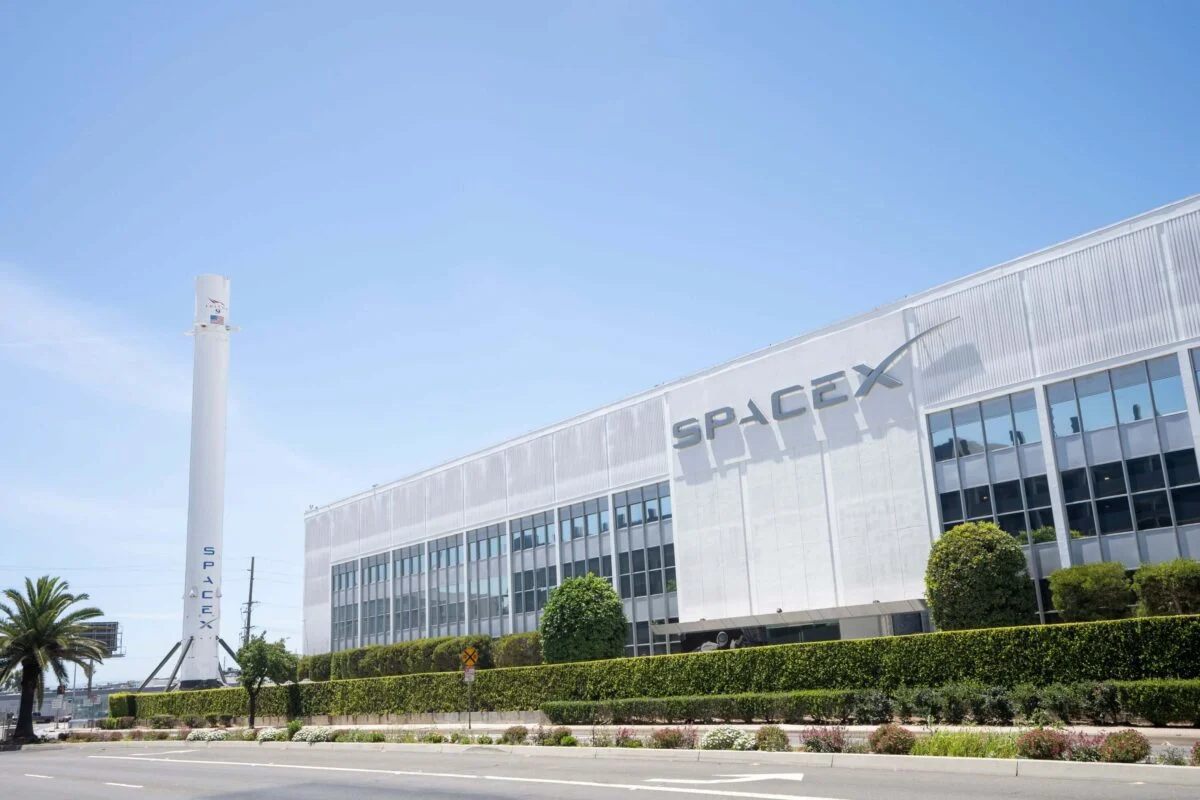
On Thursday, SpaceX announced the pricing of its public market debut at $135 per share, bringing in $75 billion and eclipsing all previous IPO records. Trading under the symbol SPCX begins Friday on the Nasdaq exchange.
The capital raise dramatically surpasses the previous benchmark set by Saudi Aramco’s $30 billion offering in 2019. With shares priced at $135, the company enters public ownership with a complete diluted market cap approaching $1.8 trillion.
The aerospace giant distributed 555.6 million shares during the offering. Financial disclosures indicate the company generated approximately $19 billion in annual revenue, powered by commercial launch operations, federal contracts, and the expanding Starlink broadband network.
Oppenheimer, a leading financial services firm, has already established a $190 share price objective, surpassing the initial offering level. Market analysts anticipate robust interest from institutional fund managers and individual investors alike.
[[LINK_START_0]]Elon Musk,[[LINK_END_0]] currently holding the title of world’s wealthiest individual, stands poised to achieve trillionaire status should share prices maintain or exceed the IPO level. Musk commands approximately 40% of the company’s total ownership through his Class A and Class B share positions.

This ownership structure delivers Musk control over more than 84% of all shareholder voting rights. For context, Meta Platforms’ founder Mark Zuckerberg maintains approximately 60% voting control in his organization.
Due to this concentrated control structure, SpaceX faces no regulatory requirement to appoint independent directors to its governing board. Corporate governance experts from Harvard Law School have observed that company insiders maintain authority over strategic decisions and executive compensation without external supervision.
Bitcoin Assets Now Part of Public Company Portfolio
SpaceX’s holdings included 18,712 Bitcoin as of the first quarter ending March 31. Based on current market rates hovering near $63,500, this cryptocurrency position represents close to $1.2 billion in value.
The public market transition means shareholders now gain indirect cryptocurrency exposure through their SPCX positions. Market observers have shown particular interest in this digital asset position given ongoing speculation about potential integration between SpaceX and electric vehicle manufacturer Tesla.
Tesla maintains one of the most substantial corporate Bitcoin reserves among publicly traded entities, holding over 11,500 Bitcoin on its books.
Blockchain-Based Share Trading Debuts Simultaneously
Coinciding with the traditional Nasdaq launch, SpaceX equity also became available as a digital token on Solana-powered infrastructure. Backpack issued these tokens, which represent genuine ownership stakes in the aerospace company.
Token owners maintain redemption rights for physical shares through Backpack’s licensed brokerage services. Proponents argue this approach democratizes access to major IPOs for international market participants.
Skeptics have voiced concerns regarding regulatory oversight, asset security protocols, and potential market fragmentation. The SpaceX launch represents one of the most prominent experiments in simultaneous traditional and blockchain-based equity distribution for a major American corporation.
Industry watchers view this dual-listing approach as a potential blueprint for other high-profile private enterprises, including Anthropic and OpenAI, both of which have announced intentions to pursue public listings in coming months.
SpaceX previously integrated Musk’s artificial intelligence venture xAI into its operations, which had itself acquired social platform X during 2025.
Tom Mueller, SpaceX’s inaugural employee who now leads Impulse Space, shared with the BBC that the experience has been “an incredible ride,” reflecting on early propulsion system setbacks before achieving the company’s inaugural successful orbit in 2008.
Get 3 Free Stock Ebooks
Discover top-performing stocks in AI, Crypto, and Technology with expert analysis.
- Top 10 AI Stocks - Leading AI companies
- Top 10 Crypto Stocks - Blockchain leaders
- Top 10 Tech Stocks - Tech giants



