


TLDR
- Zcash experienced a severe vulnerability in its Orchard shielded pool that remained undetected since May 2022 until a late May 2026 audit exposed it
- An emergency soft fork on June 2 disabled the compromised pool, with the NU6.2 hard fork implementation completing the fix one day later
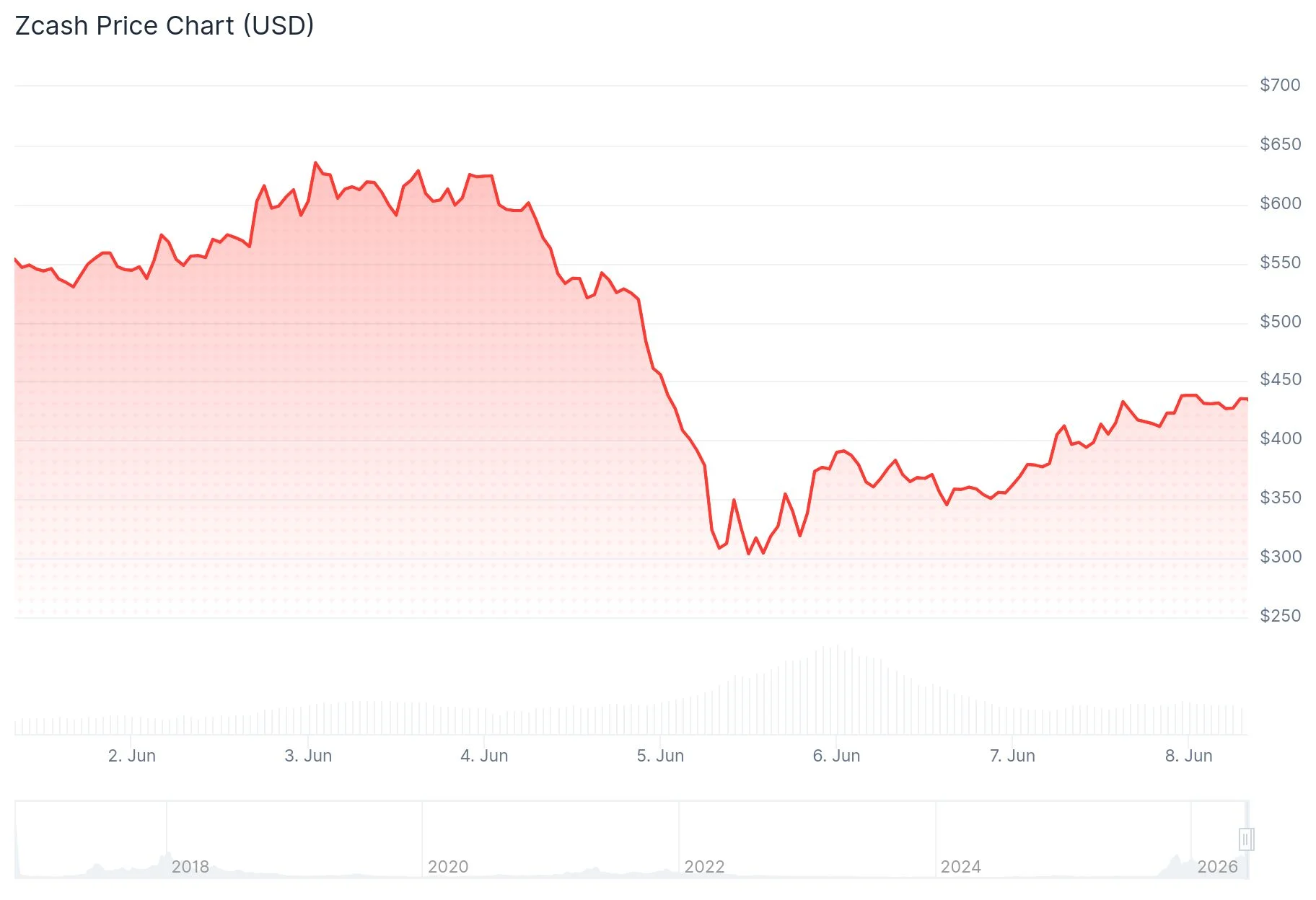
- The token plummeted from approximately $629 to sub-$270 levels before staging a recovery to the $420 range
- Open Interest collapsed from roughly $800M to approximately $418M, indicating massive leveraged position liquidations
- Technical analyst Vuori Trading maintains the original trading plan remains valid — critical resistance zone at $450–$500, with support holding at $390–$400
Zcash has staged a comeback of approximately 16%, climbing back to the $420 level following one of the most brutal selloffs the privacy coin has experienced in recent memory. The rapid decline erased the majority of gains accumulated over several months of steady upward momentum.
The turmoil originated from the discovery of a critical counterfeiting vulnerability embedded within Zcash’s Orchard shielded pool. Despite existing in the protocol since May 2022, the security flaw remained dormant and undetected until Shielded Labs conducted a comprehensive audit in late May 2026.
The implications were severe. Had malicious actors discovered and exploited this vulnerability, they could have generated counterfeit ZEC tokens that would have been impossible to trace or identify, fundamentally undermining the integrity and value proposition of the privacy-focused cryptocurrency.
The development team responded with urgency. With ZEC trading near $587 on June 2, they implemented an emergency soft fork to immediately disable the compromised Orchard pool. Within 24 hours, the NU6.2 hard fork went live, delivering a permanent solution to the security breach.
Dramatic Price Swing: From Peak to Trough
As the emergency patches rolled out, ZEC briefly touched highs just below $629. Then momentum reversed violently. The token sliced through multiple support zones and reached a bottom near $270 on June 5.

The technical picture reveals the damage clearly. ZEC carved out a classic head-and-shoulders topping pattern in the $700 area, violated the critical $500 neckline, and plunged into the $300 territory before finding buyers willing to step in.
Analyst Vuori Trading delivered a defiant take on the collapse: “$ZEC plan has not changed despite this recent dump. They want you out!” This commentary conveyed conviction that the fundamental trading thesis for ZEC remains viable despite the extreme price action.
The futures market experienced severe dislocation. Open Interest contracted from nearly $800 million down to roughly $418 million, reflecting the catastrophic unwinding of leveraged long positions throughout the downturn.
Critical Price Zones Ahead
Despite the carnage, funding rates maintained relative stability with a slight positive bias throughout the period. This dynamic indicates that market participants haven’t adopted an overwhelmingly pessimistic outlook, even following the dramatic flush.
Analyst Ardi observed that ZEC retreated all the way back to its April breakout zone around $250 and characterized the current upward movement as a relief bounce. His projection calls for price to test the $430–$480 resistance cluster.
That said, Ardi warned that failure to maintain support above $350 could trigger another downward impulse.
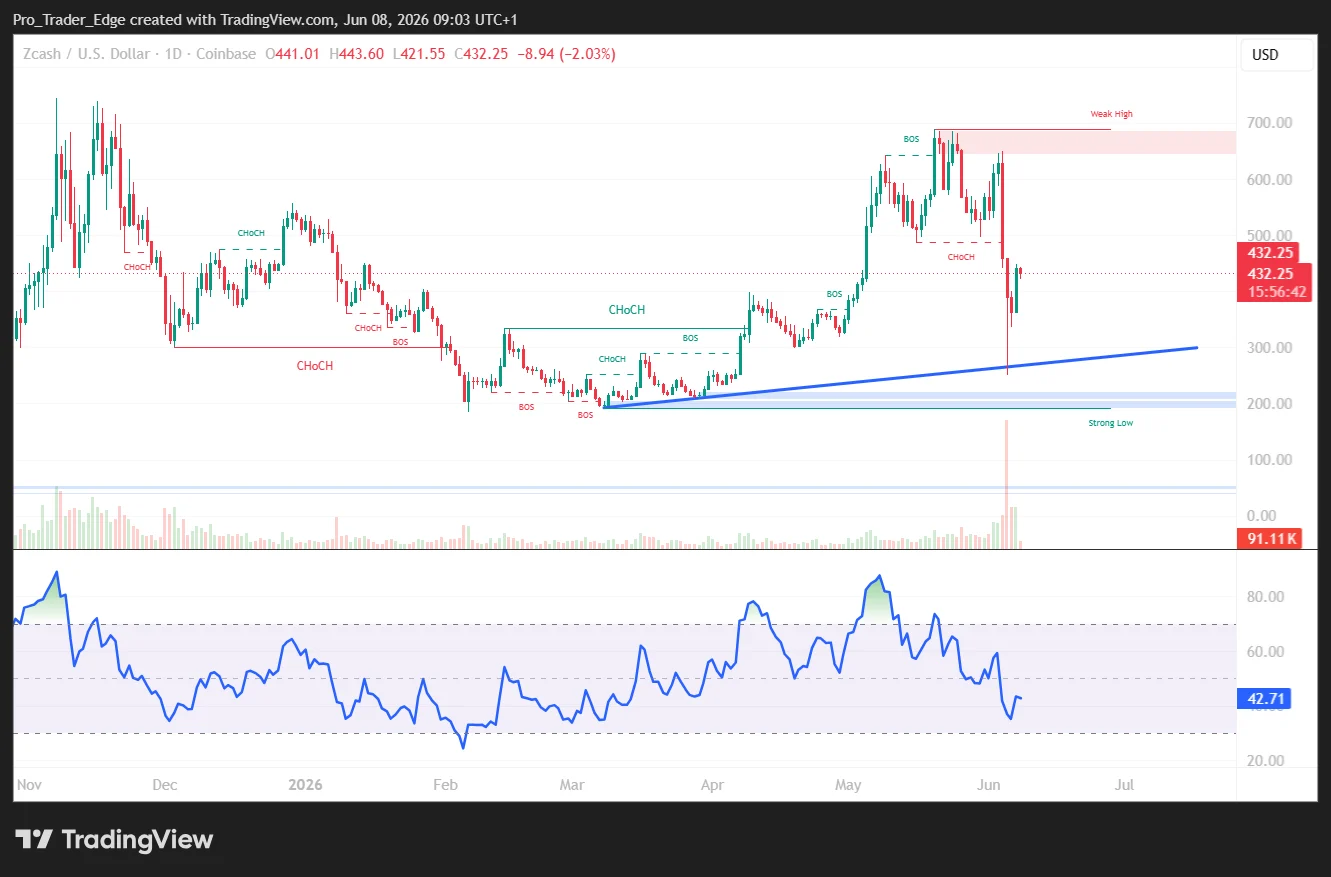
The Relative Strength Index is climbing off oversold territory but continues tracking within a declining channel, leaving room for additional downside pressure. The Average Directional Index reads approximately 28.6, hinting that the next trending move could develop with force.
ZEC currently trades above its 200-day moving average. However, near-term moving average configurations continue flashing bearish signals.
The $390–$400 range represents the critical battleground. Defending this area supports the recovery narrative. A breakdown through this floor would expose the $350 level, followed by the recent $304 low.
On the upside, initial resistance emerges near $450. Clearing this barrier decisively would strengthen the case for an advance toward $550, with $650 representing the subsequent major hurdle.
Get 3 Free Stock Ebooks
Discover top-performing stocks in AI, Crypto, and Technology with expert analysis.
- Top 10 AI Stocks - Leading AI companies
- Top 10 Crypto Stocks - Blockchain leaders
- Top 10 Tech Stocks - Tech giants



