


Key Highlights
- May net sales reached $24.01 billion, marking a 14.5% increase year-over-year
- Same-store sales advanced 12.5%, driven primarily by US operations
- E-commerce revenue surged 21.1% throughout the period
- COST shares have gained approximately 12% in 2025, surpassing competitors Walmart and BJ’s Wholesale
- Wall Street consensus shows Moderate Buy rating with $1,104.95 average target price
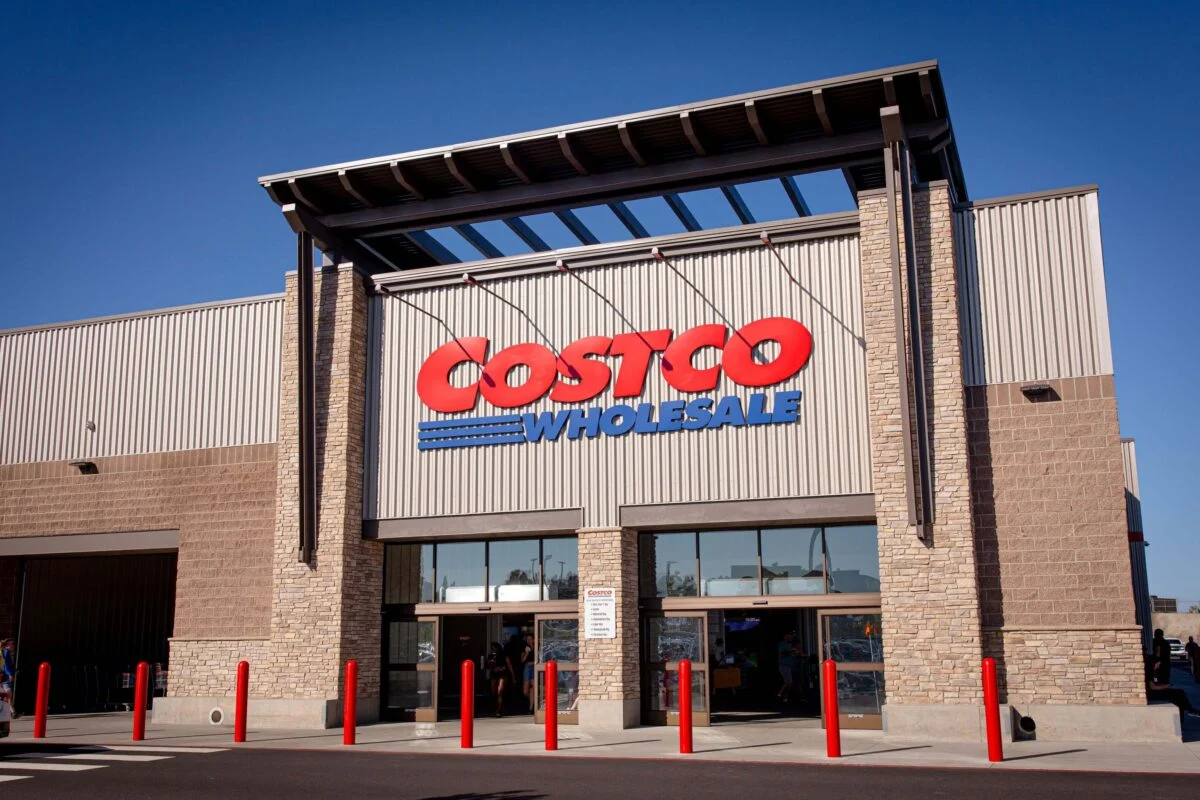
Shares of Costco climbed approximately 1% during Thursday’s pre-market trading hours following the warehouse retailer’s announcement of May net sales totaling $24.01 billion, representing a 14.5% jump from the $20.97 billion recorded during the same month last year.
Costco Wholesale Corporation, COST
This performance adds to an already impressive third quarter for fiscal 2026, which concluded on May 10 with revenue growth of 11.6%. The quarter delivered net income of $2.19 billion and diluted earnings per share of $4.93.
Looking at the broader picture, Costco generated $221.19 billion in net sales during the initial 39 weeks of its current fiscal year—representing a 10% climb compared to the corresponding timeframe in the previous year.
Same-store sales, a critical metric measuring performance at locations operating for a minimum of one year, increased 12.5% in May. Domestic operations in the United States remained the primary growth engine.

E-commerce emerged as another standout performer, with online sales climbing 21.1% during the month. This digital expansion has become a recurring strength for the membership warehouse giant as customers increasingly allocate portions of their purchases to its web platform.
A noteworthy product initiative: Costco introduced O Positiv Health’s URO Vaginal Probiotic exclusively across 235 warehouse locations and on Costco.com. While modest in scope, this launch signals the retailer’s strategic expansion into premium wellness segments to enhance member loyalty and engagement.
Fuel sales contributed significantly to Q3 performance, with gasoline volumes hitting record levels and providing a revenue boost. However, elevated gas sales typically result in margin compression, a dynamic that market watchers continue to monitor closely.
Sources of Analyst Hesitation
Despite impressive revenue figures, Wall Street remains divided. The primary concern centers on valuation—COST currently commands the highest price multiple among large-cap consumer goods companies.
Membership expansion has exhibited signs of slowing, which carries substantial implications considering subscription fees form a cornerstone of Costco’s profit model. Any weakness in renewal rates would signal potential headwinds for the company’s earnings structure.
Gross margin compression across core merchandise categories including groceries, electronics, and apparel represents another challenge that analysts have highlighted in recent commentary.
COST shares have appreciated roughly 12% year-to-date, outperforming both Walmart and BJ’s Wholesale Club. While this performance demonstrates investor confidence in the company’s fundamentals, it simultaneously elevates valuation concerns for some market participants.
Wall Street Perspective
Among 24 analysts who have issued ratings over the past three months, 16 recommend Buy, seven suggest Hold, and one advises Sell—resulting in a Moderate Buy consensus.
The average price target stands at $1,104.95, indicating potential upside of approximately 15% from current trading levels.
Optimistic analysts forecast revenue could reach $376.8 billion with earnings approaching $12.6 billion by 2029. An alternative valuation model suggests a fair value of $1,048, pointing to roughly 9% appreciation potential.
Long-term revenue projections from the analyst community place Costco at $329 billion by 2028, with anticipated earnings of $10.4 billion.
Investors will next focus on Costco’s complete fiscal year results, while the company maintains its practice of releasing monthly sales data throughout the remainder of 2026.
Get 3 Free Stock Ebooks
Discover top-performing stocks in AI, Crypto, and Technology with expert analysis.
- Top 10 AI Stocks - Leading AI companies
- Top 10 Crypto Stocks - Blockchain leaders
- Top 10 Tech Stocks - Tech giants



