



Key Takeaways
- Bitcoin remained stuck around $77,800, unable to surpass the $78,700 resistance level established on Thursday
- Japanese core consumer prices accelerated to 1.8% annually in March, fueling speculation about a Bank of Japan interest rate increase by June
- Iran expanded its naval mine deployment in the Strait of Hormuz, threatening a critical chokepoint for 20% of global seaborne oil shipments
- US equity futures climbed modestly following President Trump’s announcement extending the Israel-Lebanon ceasefire by three weeks
- Intel shares surged 15% in extended trading on earnings strength, while Tesla, IBM, and ServiceNow declined post-results
Bitcoin’s recent upward trajectory has hit a wall as mounting geopolitical pressures and strengthening Japanese inflation data create headwinds for global risk assets.
The leading cryptocurrency was trading around $77,800 during Friday’s early Asian session. It couldn’t pierce through Thursday’s peak of $78,700. The upward move that began in late March from approximately $65,000 has seemingly lost momentum since midweek.
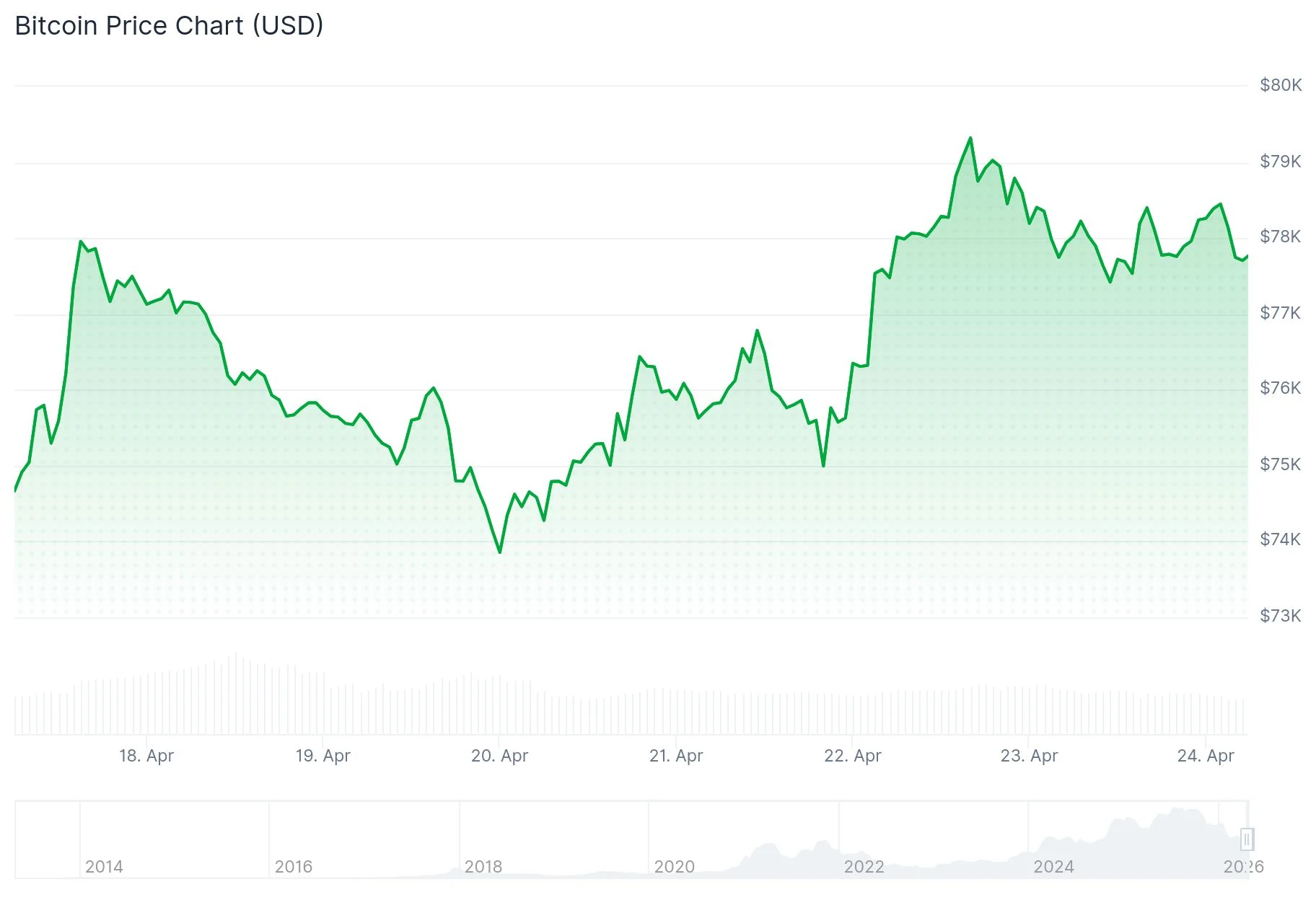
Ethereum declined 0.8% to approximately $2,300, showing greater weakness compared to Bitcoin’s more modest 0.6% decline during the same timeframe.
The cryptocurrency market’s sluggish performance coincides with fresh economic indicators from Japan. The nation’s Corporate Service Price Index registered a 3.1% annual increase in March, exceeding the anticipated 3.0%.
Japan’s core consumer price index advanced to 1.8% in March from February’s 1.6%. This marks the first monthly acceleration in inflation over a five-month period. The broader headline inflation measure increased to 1.5% from 1.3%.

Japanese Central Bank Policy Under Scrutiny
Market watchers are now anticipating the Bank of Japan will maintain current interest rates at its upcoming policy meeting while signaling future tightening. June has emerged as a potential timeframe for monetary policy action.
Should the Bank of Japan adopt a more aggressive stance, the Japanese currency could appreciate substantially. Market participants are currently positioned bearishly on the yen, creating conditions for a dramatic shift in sentiment.
Yen strengthening poses challenges for global risk assets. Historically, the Japanese currency has served as a funding vehicle for leveraged investments in equities and cryptocurrencies. A sustained yen rally could precipitate widespread liquidations across multiple asset classes.
According to Axios reporting, Iran has intensified its naval mining operations in the Strait of Hormuz this week. This strategic waterway facilitates roughly 20% of worldwide seaborne petroleum transport. Maritime activity through the strait has contracted significantly since hostilities escalated in late February.
WTI crude futures have climbed more than 40% to reach $96 per barrel since the Iranian conflict commenced. Japan, heavily dependent on crude oil imports, faces particularly acute exposure to these supply chain disruptions.
Pentagon officials informed Congressional leaders that mine clearance operations would require a minimum six-month timeline, beginning only after conflict resolution. Military analysts also cautioned that persistent US inflation could constrain Federal Reserve flexibility on interest rate reductions.
Equity Market Developments
US stock index futures posted modest gains overnight. Nasdaq 100 futures advanced 0.6%, while S&P 500 futures gained 0.1%. Dow Jones futures retreated 0.2%.
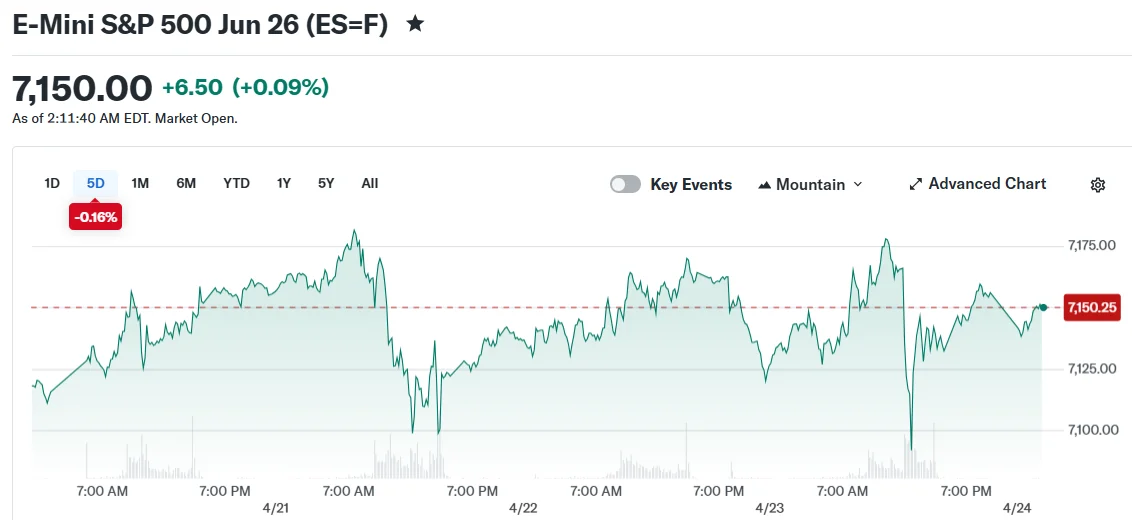
President Trump’s declaration of a three-week Israel-Lebanon ceasefire extension generated limited market enthusiasm. Major US equity indices—the S&P 500, Nasdaq Composite, and Dow Jones Industrial Average—all registered losses in the previous trading session.
Intel Corporation shares jumped approximately 15% in after-market activity following the release of first-quarter financial results that exceeded analyst projections. Conversely, Tesla, IBM, and ServiceNow experienced post-earnings declines.
Meta Platforms and Microsoft have both unveiled workforce reduction initiatives aimed at controlling expenses related to artificial intelligence infrastructure investments.
Friday’s corporate earnings schedule features reports from Procter & Gamble, HCA Healthcare, and Norfolk Southern.
Get 3 Free Stock Ebooks
Discover top-performing stocks in AI, Crypto, and Technology with expert analysis.
- Top 10 AI Stocks - Leading AI companies
- Top 10 Crypto Stocks - Blockchain leaders
- Top 10 Tech Stocks - Tech giants



