



TLDR
- Grayscale Research declares Bitcoin’s bottom occurred in the $65,000-$70,000 zone during February 2026
- Recent coin holders are approaching breakeven levels near $74,000 according to on-chain metrics
- BTC surged to a 3-month peak of $78,417 following Trump’s extension of the US-Iran ceasefire agreement
- The Bitcoin Bull Score Index entered neutral territory for the first time this bear cycle
- Market analysts including Benjamin Cowen and CryptoQuant anticipate additional downside in late 2026
Grayscale Research has made a bold declaration: Bitcoin has already reached its cycle bottom. According to the research firm, BTC established its low point within the $65,000 to $70,000 corridor during February 2026. However, this assessment faces considerable pushback from other market observers.
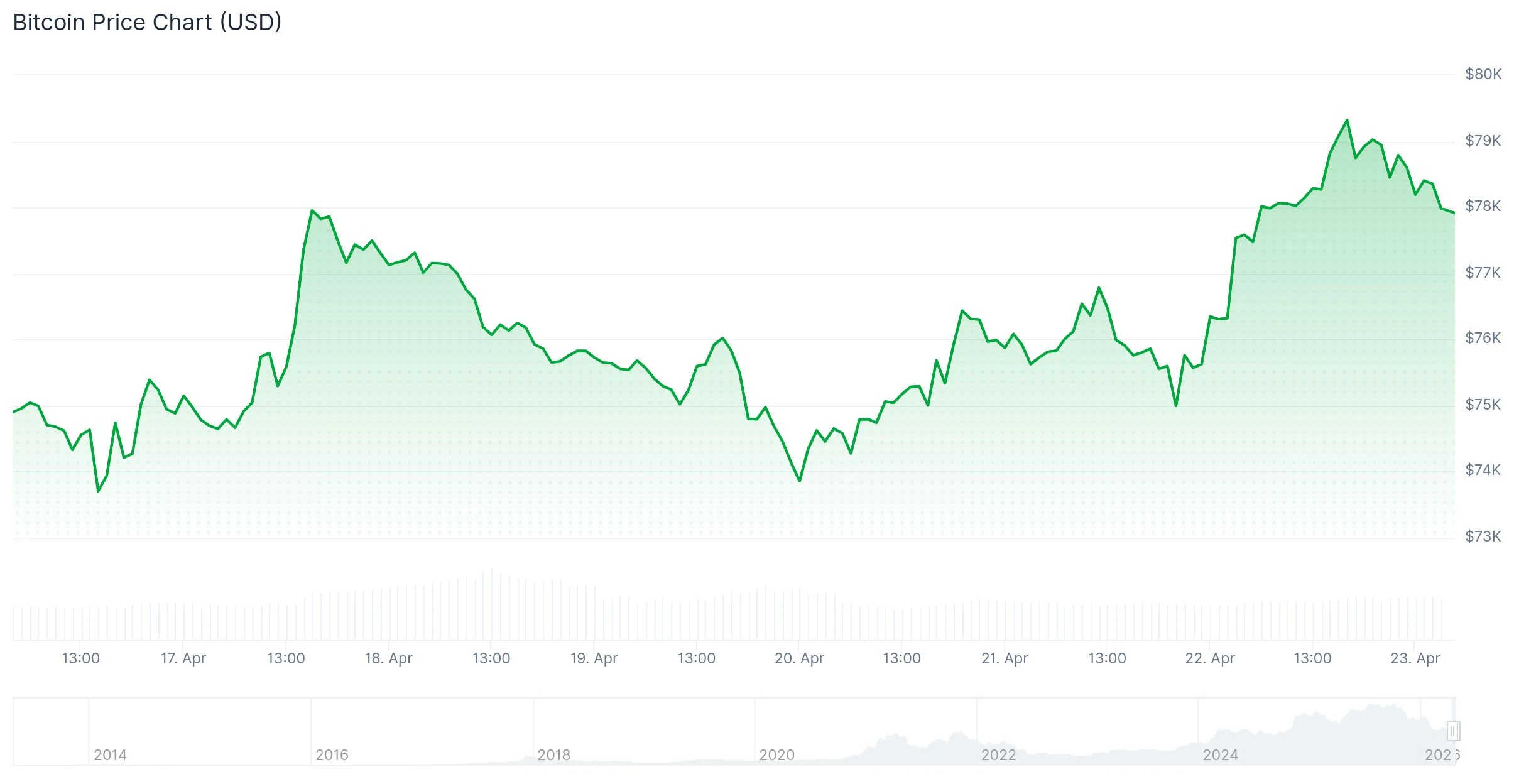
Zach Pandl, Grayscale’s research director and previously a macro strategist at Goldman Sachs, built this conclusion on on-chain analytics. Following a 20%+ surge from Bitcoin’s February 5 bottom near $63,000, recent purchasers have returned to approximately neutral positions.
The primary indicator Grayscale referenced is the realized price measurement. This metric calculates the average acquisition cost of coins based on their most recent blockchain movement. For tokens that transferred within the last one to three months, this realized price hovers around $74,000 — marginally beneath Bitcoin’s current trading level.
“Should Bitcoin’s valuation continue climbing in the near term, additional recent purchasers would enter profitable territory, potentially signaling the initial stage of a bull market,” Pandl explained.
Bitcoin reached a quarterly high of $78,417 on April 22, 2026. This upward movement coincided with President Donald Trump’s decision to prolong the US-Iran ceasefire, sending oil prices retreating below $90 per barrel. At press time, BTC was changing hands near $77,990, with trading volume increasing 14% over 24 hours.
Bull Market Index Shifts for First Time
Julio Moreno, CryptoQuant’s research director, reported that the Bitcoin Bull Score Index has transitioned into neutral status for the first time throughout this bearish phase. While this represents a noteworthy development, Moreno highlighted that a similar brief shift occurred in March 2022 before Bitcoin’s decline resumed.


Derivatives markets similarly displayed optimistic indicators. Aggregate BTC futures open interest expanded nearly 6% to reach $59.53 billion within a 24-hour period. CME open interest grew approximately 1% while Binance registered a 6% increase.
10x Research highlighted that April spot Bitcoin ETF capital flows are trending bullish, despite funding rates maintaining negative territory and trading volumes staying subdued. The research group also observed that institutional accumulation is materializing earlier in this cycle compared to the previous two recovery periods.
Other Analysts Still Expect a Deeper Low
Grayscale’s perspective isn’t universally accepted among crypto researchers. Benjamin Cowen, CEO of Into The Cryptoverse and former NASA analyst, shared with BeInCrypto that his primary scenario places the cycle bottom in October 2026. He emphasized that an earlier trough would require capitulation significantly exceeding historical patterns for mid-term years.
“Bitcoin might bottom earlier, potentially as soon as May. However, achieving that outcome would necessitate substantial capitulation far below historical norms for midterm years,” Cowen stated.
Joao Wedson, CEO of on-chain intelligence firm Alphractal, projects a bottom during late September or early October 2026. CryptoQuant has outlined a broader timeframe spanning June through December 2026, with September to November representing the highest probability window.
Bitcoin has also penetrated above analyst Benjamin Cowen’s bear-market resistance band on weekly timeframes. This threshold has historically represented critical inflection points for the digital asset.
Get 3 Free Stock Ebooks
Discover top-performing stocks in AI, Crypto, and Technology with expert analysis.
- Top 10 AI Stocks - Leading AI companies
- Top 10 Crypto Stocks - Blockchain leaders
- Top 10 Tech Stocks - Tech giants



